



Executing the two-tier local governance model, Điện Biên comprises 45 communes and wards, of which 15 communes with 293 villages and hamlets reside in the border area. The border area is inhabited by 17 ethnic groups, with ethnic minorities accounting for 86.14%; the poverty and near-poverty rate remains at 34.99%. Faced with these specificities, legal dissemination and education work is deployed diversely, oriented strongly toward the grassroots, and tailored to demographic characteristics. Mobile communication models, reaching directly into every village, contribute to overcoming geographical distances and bringing the law closer to the people.
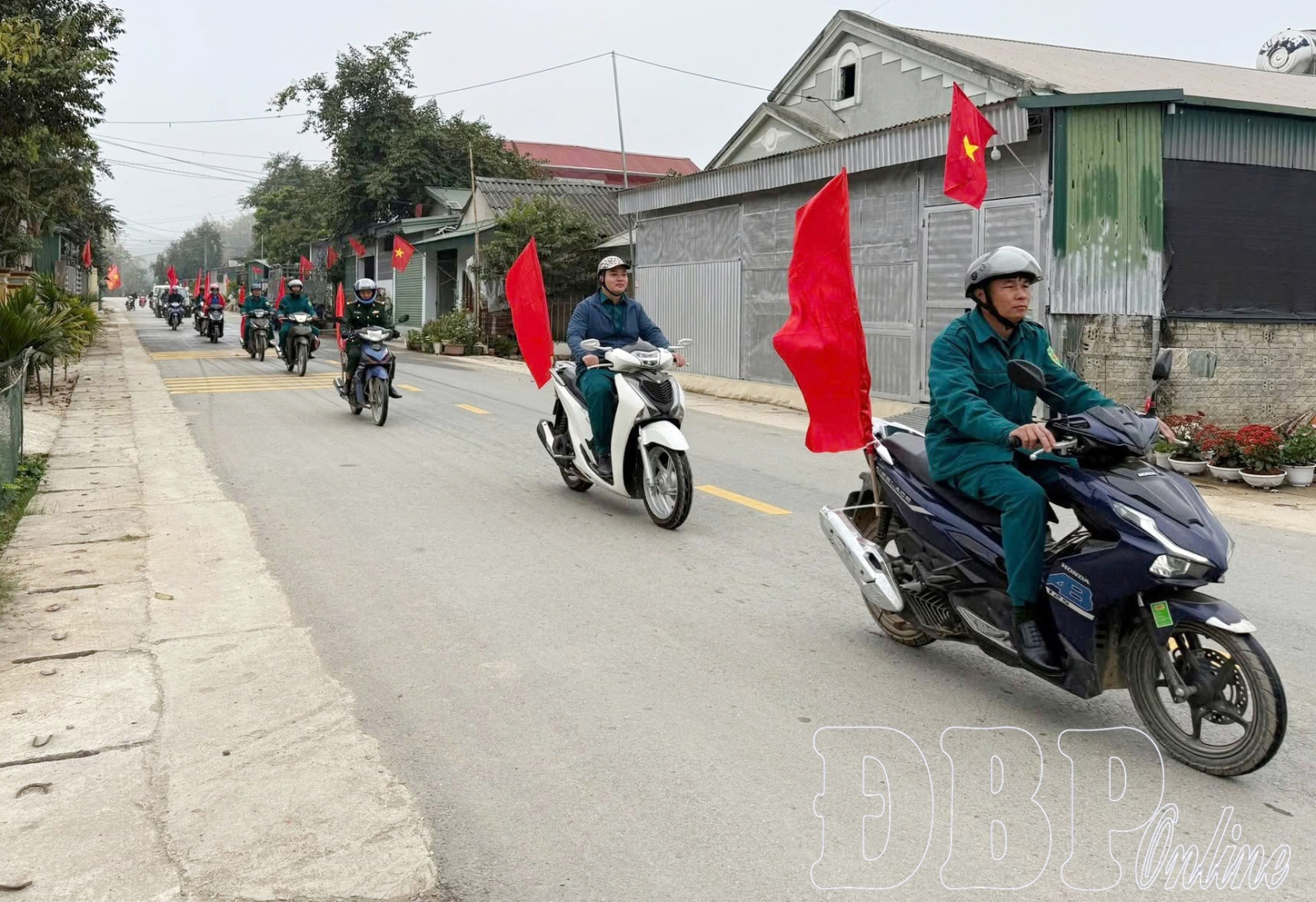
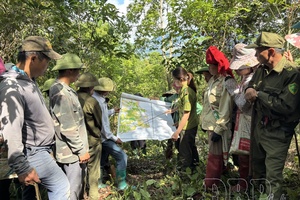
A prime example is the “Border Guard Portable Speaker” model deployed by the provincial Border Guard at Border Posts. Given a vast management area and dispersed population, the Thanh Luông Border Post opted to bring legal information directly to the villages and the people. The unit is assigned to manage and protect a 38.8km borderline with 17 national border markers; and oversees the border commune of Thanh Nưa comprising 37 villages, of which 11 are border-adjacent, harboring 7,126 households and 28,980 individuals. Every week, the portable speaker travels with cadres and soldiers to every village, transmitting practical information about the law and border protection duties.
Lieutenant Colonel Đoàn Thanh Tuấn, Political Officer of the Thanh Luông Border Post, stated: “Through the ‘Border Guard Portable Speaker’ model, content regarding drug prevention and combat, preventing child marriage and consanguineous marriage, and refraining from illegal border crossings... is transmitted directly to residents through relatable, easy-to-absorb formats. Through this, it contributes to elevating the consciousness of law observance, encouraging residents to join the border guard forces in maintaining security and order, and protecting national sovereignty and border security.”
The model’s efficacy is reflected in the shifts in the people’s awareness and actions. From early 2026 to date, the Thanh Luông Border Post organized 24 communication sessions across villages in the area via the border guard portable speaker model. Residents increasingly proactively coordinate, provide information, and denounce crimes, especially drug crimes. From information sources provided by the masses, border guard forces verified and processed 65 sources, 41 of which were valuable; and chaired and coordinated the arrest of 13 cases and special cases involving 15 subjects linked to acts of illegally hoarding and trading narcotics; confiscating 4 cakes and 29.6 grams of heroin, 36,023 synthetic drug pills...
The “Border Guard Portable Speaker” model is deployed across all Border Posts in the province, becoming an approachable, effective channel for legal communication in the border area. From September 2025 to August 2026, the provincial Border Guard organized 1,155 concentrated communication sessions drawing 48,475 participants; and conducted 4,874 hours of broadcasting. Through direct communication sessions and the mobile speaker system, legal regulations progressively move closer to the people, contributing to shifting awareness and elevating the consciousness of voluntary compliance.
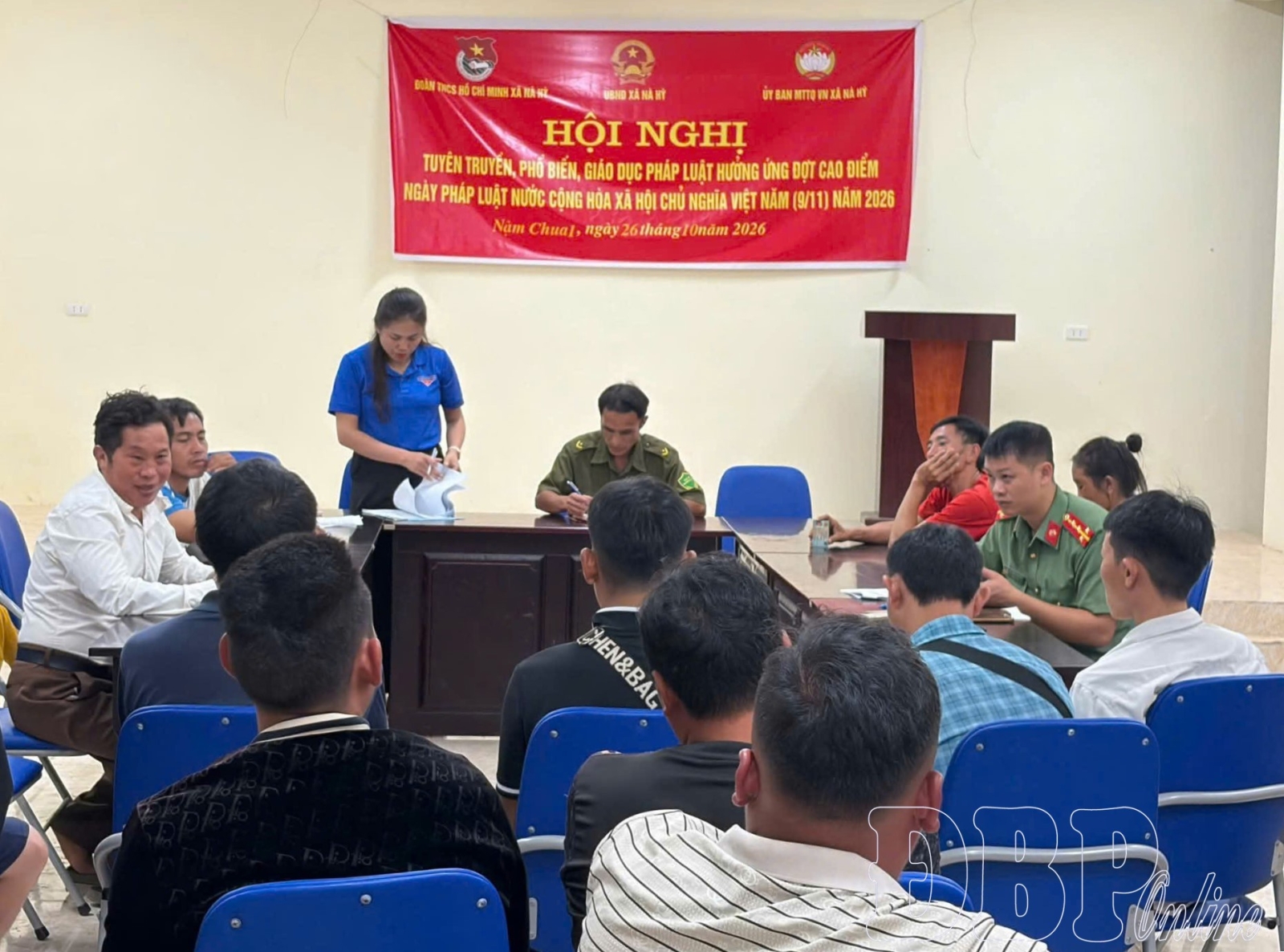
Vừ A Nếnh from Pa Sáng village, Thanh Nưa commune, shared: The village has 116 households, primarily Mông and Thái ethnic minorities. Previously, some people did not clearly understand legal regulations. Receiving regular communication from border guard cadres, villagers better understand what they can and cannot do to avoid violations, and proactively inform functional forces upon detecting suspicious signs.
Not exclusively relying on border guard forces, in highland areas, grassroots administrations proactively bring legal knowledge to every residential area, selecting content tailored to practical needs. In Quảng Lâm commune, on September 13, 2026, the Commune Police coordinated with the Party committee and administration to organize 2 communication sessions in Na Cô Sa 1 and Huổi Thủng 2 villages, attracting over 200 participants. The communication content encompassed numerous practical domains such as traffic order and safety, drug prevention and combat, and preventing child marriage; guiding procedures for issuing ID cards and VNeID electronic identification accounts, social welfare policies, and recognizing fraudulent schemes in cyberspace.
Nguyễn Văn Dũng, Chairman of the Quảng Lâm commune People’s Committee, stated: The territory is vast, the population is distributed across multiple villages, and the residents’ ability to access legal information varies. From the beginning of the year to date, the commune has organized communication across 14/14 villages drawing 1,330 participants. In the coming time, the commune will continue coordinating with police forces and related units to innovate communication formats and select content aligned with reality, contributing to elevating the consciousness of law observance and maintaining security and order right from the grassroots.
From the beginning of the year to date, the entire province organized 2,842 in-person and online legal dissemination and education sessions/drives drawing 181,588 participants; 7 legal knowledge competitions with 33,436 contestants; and distributed 80,661 communication materials. Notably, all 30/30 policies and 87/87 draft legal normative documents slated for communication were deployed. These figures illustrate the effort to expand the scope of legal access, bringing information to diverse target groups and locales.
In 2026, the Law Day of the Socialist Republic of Việt Nam (November 9) in the province is deployed under the theme: “Honoring the Constitution and the law; commemorating 80 years since the National Assembly passed the 1946 Constitution; innovating and elevating the efficiency of law formulation and enforcement, policy communication, and legal dissemination and education; building a culture of legal compliance in Điện Biên province.” Responding to this theme, agencies, units, and localities accelerate communication, tying legal dissemination to political tasks and practical issues in daily life.
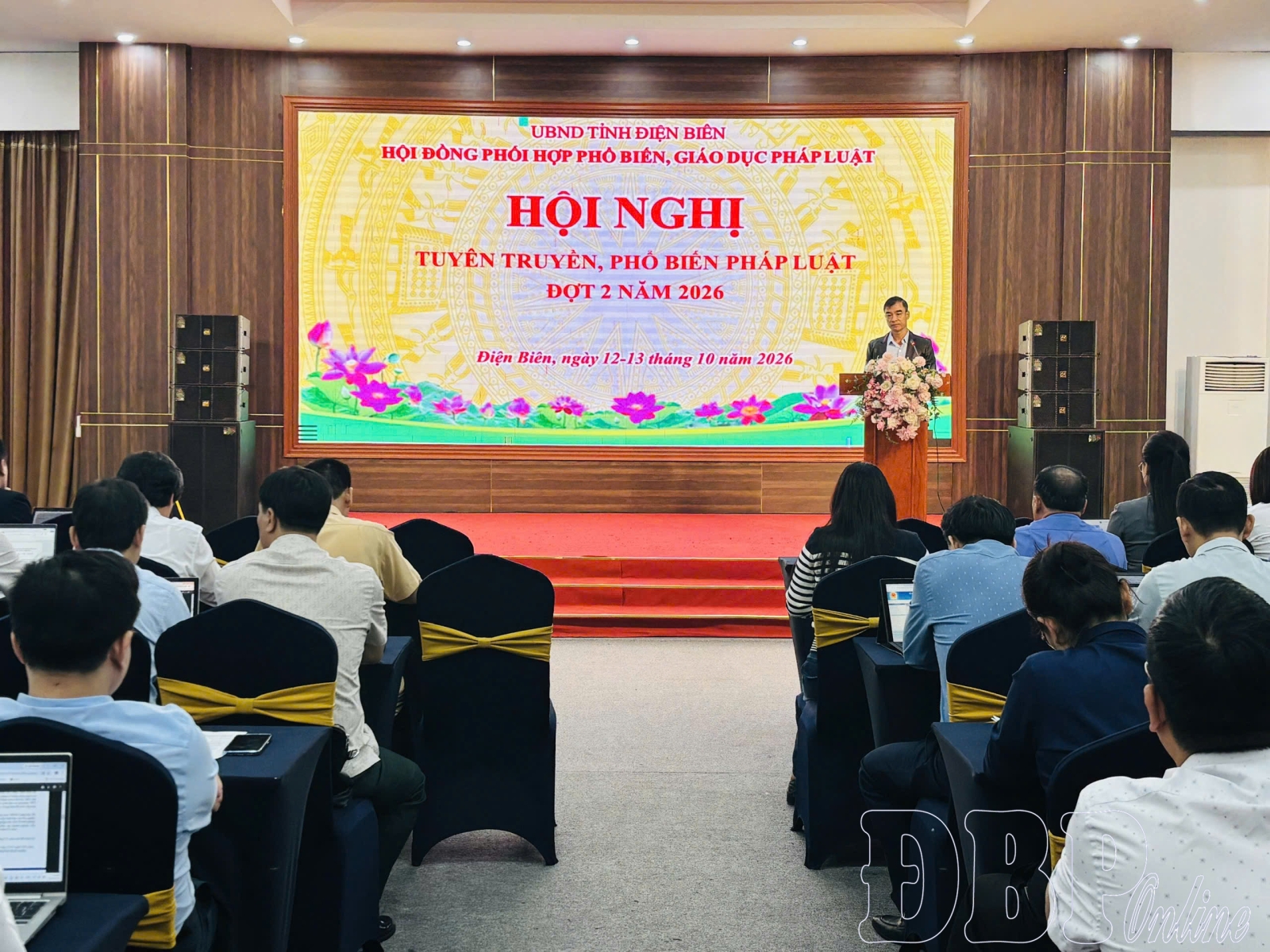
On November 6, Tủa Chùa commune coordinated with the provincial Bar Association to organize a legal dissemination and education and mobile legal advisory conference for 2026, catering to 72 delegates representing 24 villages and hamlets. According to Phạm Quốc Đạt, Chairman of the Tủa Chùa commune People’s Committee, the conference focused on disseminating criminal law regulations regarding the crime of fraud for property appropriation, cyber fraud schemes, and methods of identification and prevention; while concurrently providing information on drug crimes and regulations in drug prevention and combat work. The provincial Bar Association directly advised and answered legal bottlenecks emerging in daily life, helping citizens understand the law and know how to protect their legitimate rights and interests.
According to Trần Thanh Hưng, Director of the Department of Justice, legal dissemination and education work must continue to innovate toward being practical, easy to understand, and tailored to specific target groups and locales, especially remote, isolated, and ethnic minority areas. Through this, it not only helps residents understand the law but, more importantly, fosters a consciousness of voluntary compliance, weaving the spirit of upholding the law into the lifestyle and culture of every community.
From approachable methods in every village and hamlet to the synchronous engagement of levels and sectors, the consciousness of upholding the law is progressively being cultivated in the lives of border ethnic communities. When citizens understand the law and voluntarily abide by it, it establishes the foundation to consolidate the people’s hearts and minds, firmly maintain security and order, and safeguard peace at the Fatherland’s frontier.
Thu Phương











You have 500/500 characters left
Please enter 5 or more characters!!!