



Faced with this reality, elevating the awareness and responsibility of each household and residential community in forest management and protection bears significant importance, contributing to mitigating forest fire risks and safeguarding forest resources and the ecological environment.
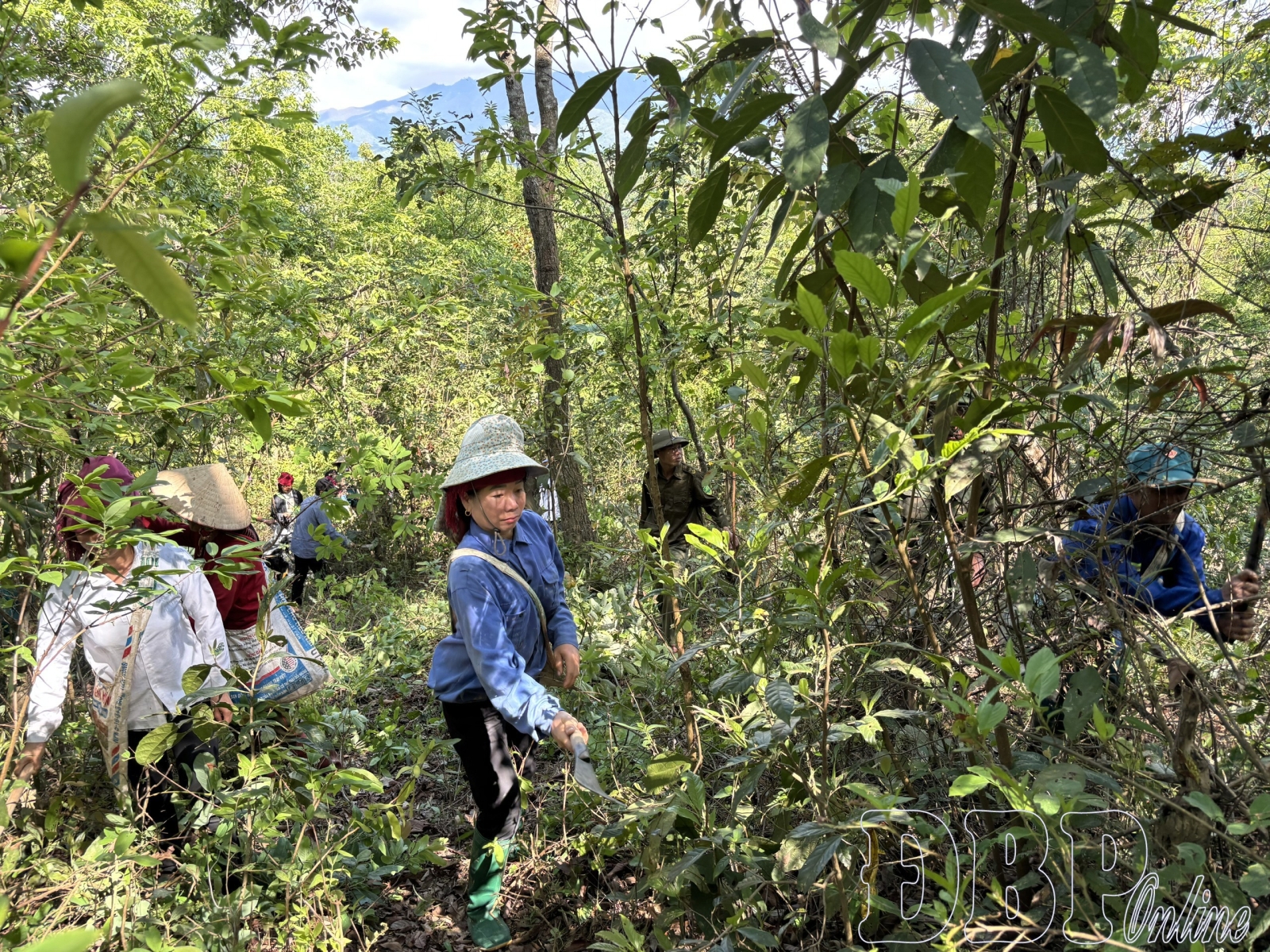
In Nà Luống village, Nà Tấu commune, over 140ha of forest is being jointly managed and protected by the residential community. Protecting the forest area in the locality is identified as the shared responsibility of the entire community, tethered to the residents’ daily lives and livelihoods. The Nà Luống village forest management and protection team has 15 members, assigned tasks to patrol, inspect, clear underbrush, and communicate to the people to raise awareness on forest fire prevention and fighting.
Lò Văn Hiếm, Head of Nà Luống village, Nà Tấu commune, stated: The village regularly communicates and mobilizes residents to protect forests through meetings, the public address system, and the coordination of local forest rangers with the commune administration. Regulations on forest protection and forest fire prevention and fighting are disseminated so that every household clearly understands and proactively implements them. The village established conventions and village codes, stipulating the responsibilities of households and measures for reminding and handling violations.
Before burning underbrush, residents must notify the village head and the forest management and protection team, implement safety measures for forest fire prevention and fighting, create firebreaks to prevent fires from spreading into the forest, and refrain from burning on days when the forest fire risk forecast reaches Level IV or Level V. Through this, the self-discipline of the people has been progressively elevated. To date, the village has experienced no incidents of forest fires, illegal deforestation, or swidden burning causing forest fires.
Beyond communication and mobilization, Nà Luống village effectively leverages funding from payment for forest environmental services. A portion of the funds is used to build roads and repair intra-village traffic infrastructure, while the remainder is paid to households participating in forest patrolling and protection. This approach helps residents clearly see the benefits of preserving the forest while creating added motivation for the community to maintain forest protection activities.
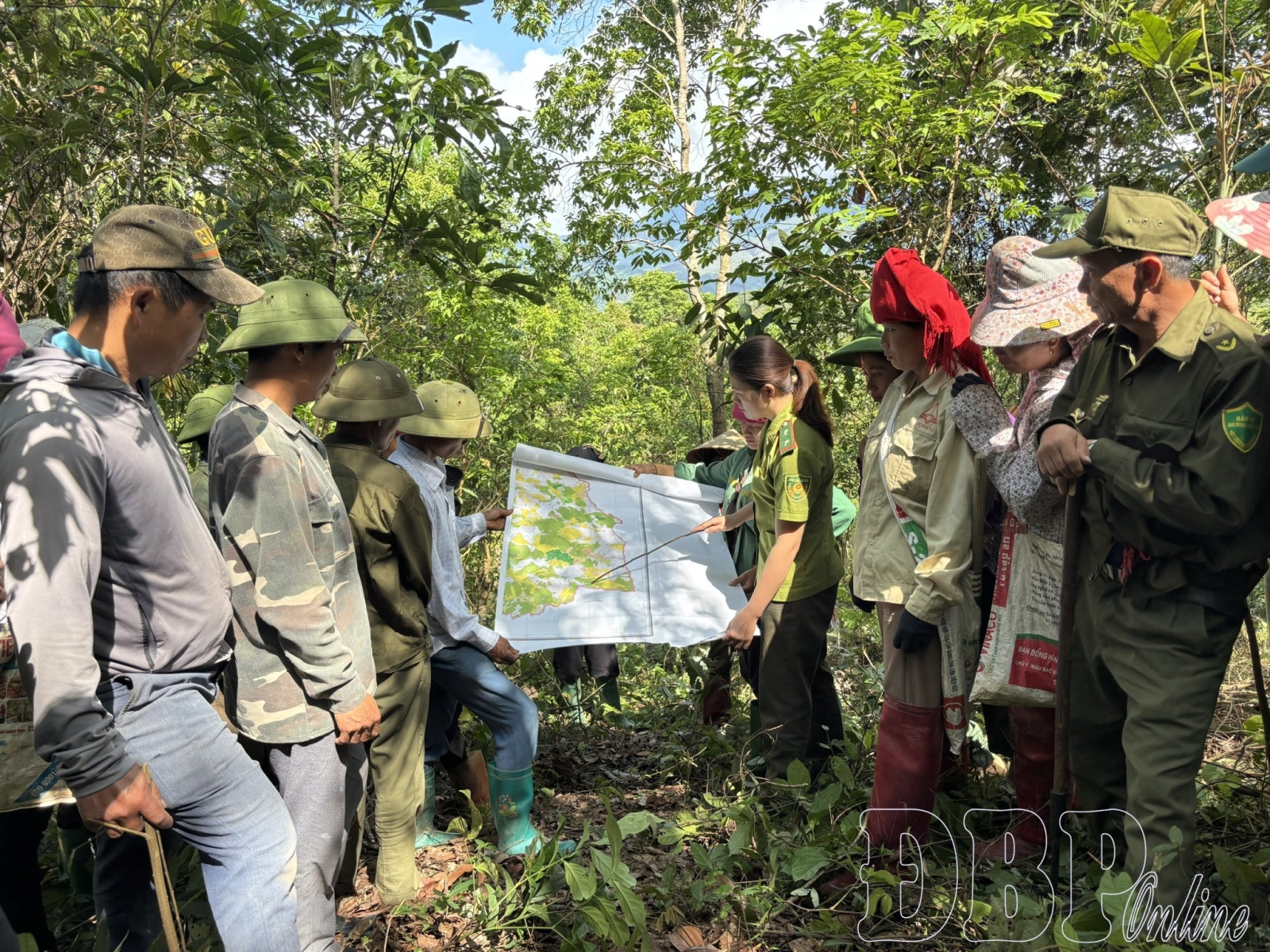
Lò Văn Tiêng, from Nà Luống village, Nà Tấu commune, shared: We determine that protecting the forest is the responsibility of every family. When receiving communication, we better understand the harms of uncontrolled swidden burning, especially during the dry season.
Mường Tùng village, Mường Tùng commune, possesses over 1,000ha of forest, managed and protected through the coordination between the local administration, forest ranger forces, and the people. The village’s forest management and protection team comprises 45 members, regularly coordinating with local forest rangers to organize forest patrols and inspections.
Khoàng Văn Biên, Secretary of the Mường Tùng village Party Cell, Mường Tùng commune, stated: The village coordinated with local forest rangers to organize households to sign forest protection commitments, communicate for villagers to clearly understand their responsibilities, and periodically patrol and inspect the forest. Through this, they promptly detect safety risks and remind residents to strictly abide by regulations, especially when clearing underbrush and burning swiddens during the dry season.
With 16,912.92ha of forested land - of which natural forests account for 16,671ha and planted forests 241.92ha - Mường Tùng commune has a forest cover rate reaching 61.47%. The vast forest area, dissected terrain, and residents’ hill swidden production activities impose requirements to strengthen coordination among forces and the people in forest fire prevention and fighting.
Currently, Mường Tùng commune has consolidated its commune-level Steering Committee for Forest Fire Prevention and Fighting, comprising 32 members; and 18 forest patrol and inspection teams and squads across 13 villages with 242 members. Simultaneously, specific responsibilities are assigned to each village; response plans are formulated, and forces and equipment are prepared under the “4 on-the-spot” motto. During peak periods, the locality maintains 24/7 duties and intensifies patrols in high-risk fire areas. Forest ranger forces coordinate with the police, military, and forest owners to promptly detect and handle violations, and apply technology for monitoring and early detection of fire risks.
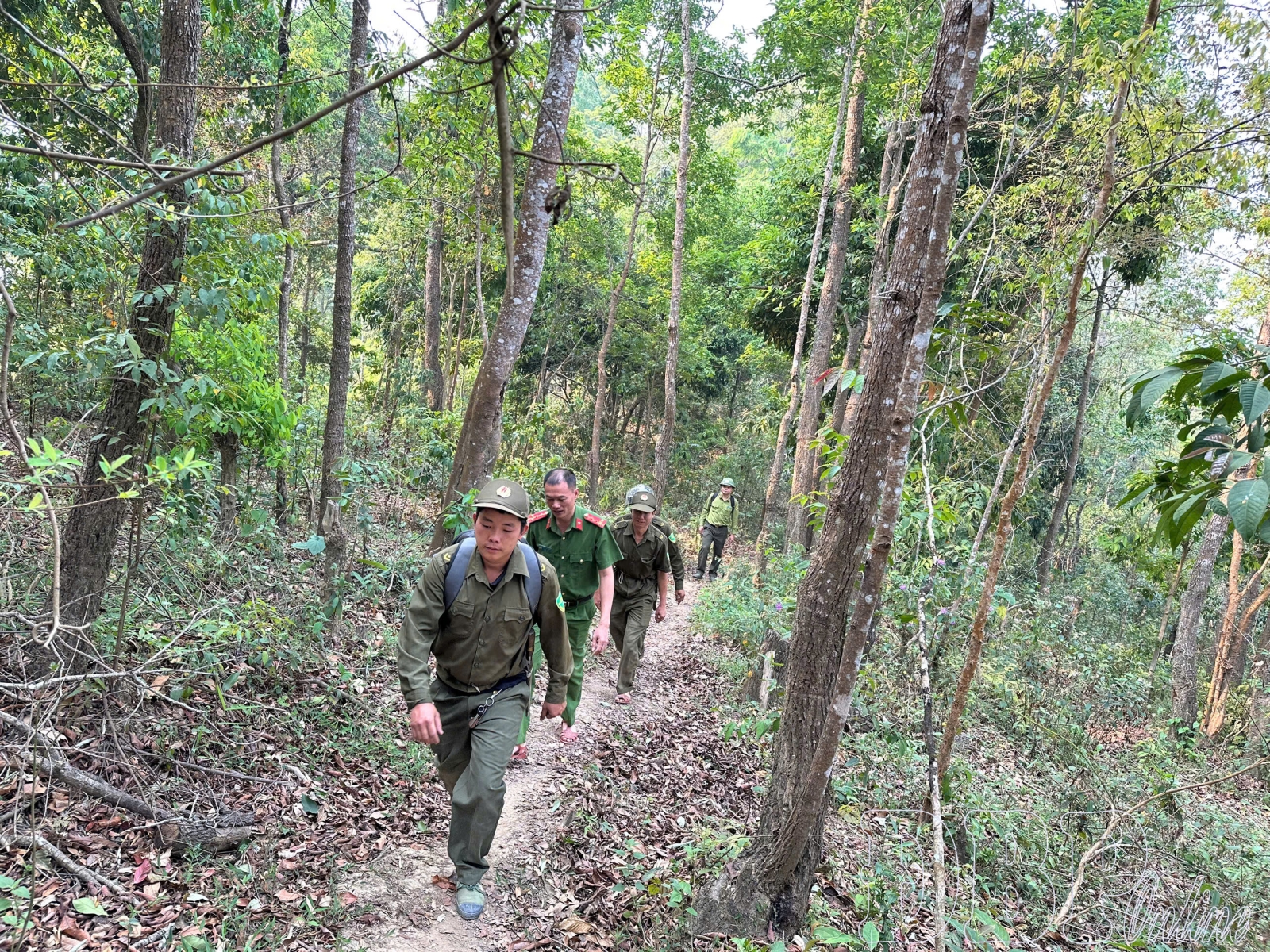
From early 2026 to date, local forest rangers coordinated with commune police, military forces, and patrol teams/squads to organize 67 forest inspection rounds with 412 participants. Through satellite imagery tracking, the locality recorded 98 fire hotspots in the area. Upon field inspection, most of the hotspots originated from swidden burning, underbrush clearance, or grass and shrub fires. When a fire was detected, functional forces mobilized villagers to participate in extinguishing the flames, promptly controlling the fire and mitigating the risk of it spreading.
Điêu Vương Cường, local forest ranger in Mường Tùng commune, stated: During the dry season, we strengthen coordination with village heads, Party cell secretaries, forest management and protection teams, and residents to inspect areas with a high risk of fire. Through monitoring work, upon detecting a fire hotspot, forest ranger forces coordinate with the locality to verify the actual situation and mobilize local residents to participate in handling it. Concurrently, they regularly communicate and remind residents to implement safety measures when burning swiddens and clearing underbrush, proactively preventing the risk of fires spreading into the forest.
Điện Biên currently has over 434,000ha of forest, with a cover rate reaching approximately 45.85%. Entering the 2026-2027 dry season, the risk of forest fires increases due to hot, dry weather and the complex developments of the El Nino phenomenon. From the beginning of the year to date, the entire province recorded over 4,600 fire hotspots, of which 15 hotspots caused damage to over 16.5ha of forest. Many fire hotspots originated from burning to clear underbrush for swidden production and grass and shrub fires.
These figures demonstrate that the risk of forest fires remains ever-present, especially in areas with cultivation and swidden farming activities. To minimize damage, alongside the proactivity of functional forces, every citizen must elevate their responsibility in protecting forests and strictly comply with regulations on forest fire prevention and fighting. Residential communities must continue to leverage their self-management role, maintain patrols, and promptly detect and handle fire risks right from the grassroots.
Thùy Trang















You have 500/500 characters left
Please enter 5 or more characters!!!