



This is a crucial step toward elevating administrative efficiency, supporting innovations in teaching and learning, and progressively resolving difficulties in technological infrastructure to accelerate digital transformation across the entire education sector.
Standardizing student data in digital environments aids schools in elevating administrative efficacy, monitoring enrollments, and compiling reports swiftly and accurately, while reducing processing time for paperwork and records among teachers. Fully and consistently updated data also facilitates student transfers and transition between education levels, establishing the baseline to review and promptly implement statutory support regimes and policies, and step by step roll out digital school report cards.
In the 2026-2027 academic year, Nà Bủng Primary and Secondary Ethnic Semi-Boarding School, Nà Bủng commune, accommodates 917 students across 27 classes. To standardize student data, the school established a steering committee for digital transformation, assigning concrete duties to cadres, teachers, and staff; organized document reviews; and cross-checked information across birth certificates, parent-provided records, and educational management software. Implementation encountered hurdles due to vast terrain, challenging transport links, and unstable internet connections across several areas; certain parents working far from home also experienced limitations in accessing technology, complicating information verification and supplementation. However, thanks to teachers’ proactiveness and coordination with parents and relevant agencies, the school has to date completed the standardization of 100% of student records.
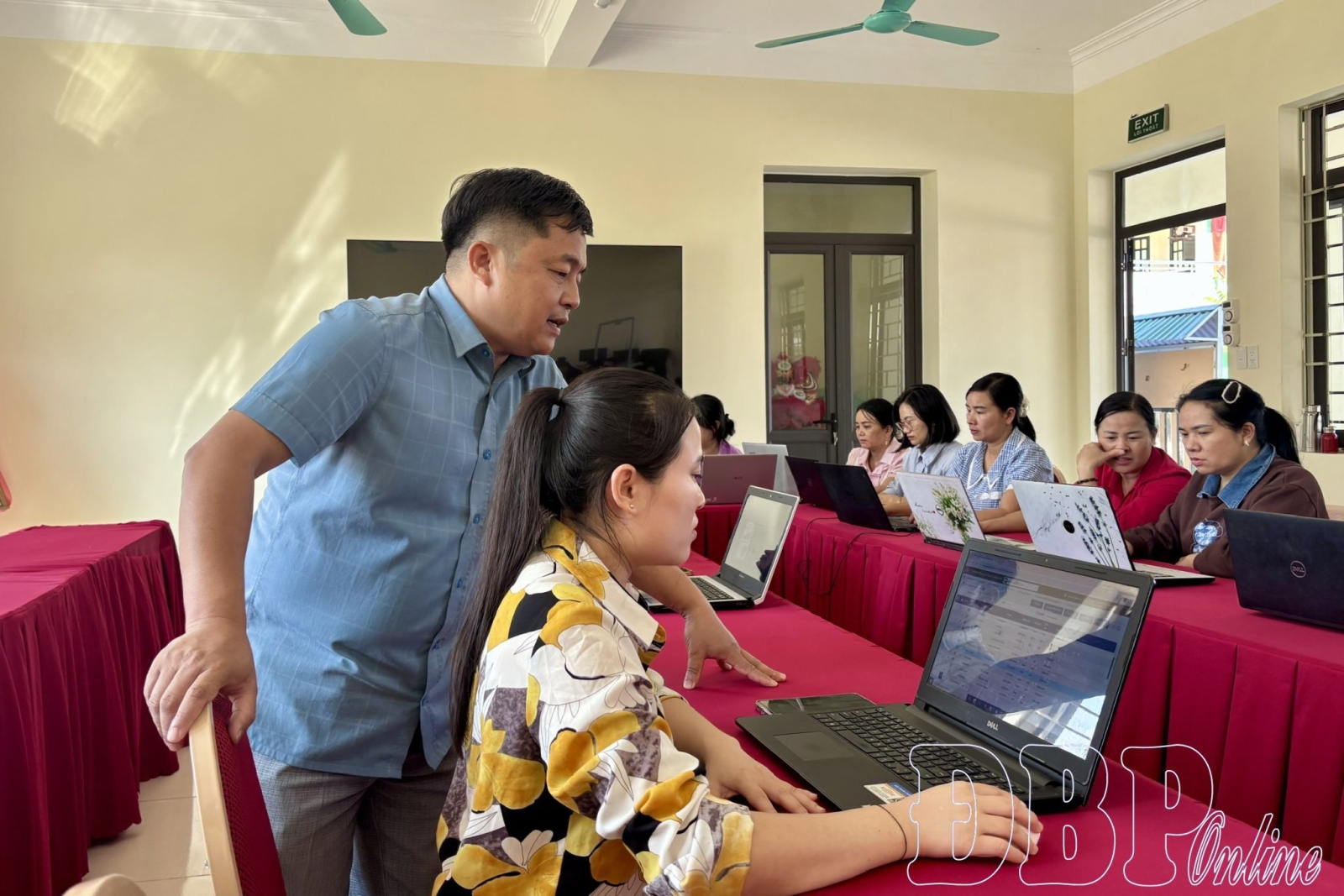
Phạm Quốc Hoàn, Principal of Nà Bủng Primary and Secondary Ethnic Semi-Boarding School, stated: “To ensure data accuracy, the school heightened coordination with the Culture - Social Affairs Division, judicial-civil status civil servants, the communal police, and parents to verify personal identification and residency details. For incomplete or discrepant cases, teachers compiled lists and coordinated with relevant units to verify and supplement data based on verified grounds. The school increased guidance for teachers and staff on using management software; conducted cross-checks to limit duplications and errors; and ensured data was updated strictly according to procedures. We also instituted periodic updating regulations, clearly defining responsibilities for adjusting changed information to keep data consistently fresh, synchronized across departments, and connected with higher-level systems.”
At Mường Tùng Primary Ethnic Semi-Boarding School, Mường Tùng commune, data standardization has been implemented since the 2022-2023 academic year under the guidelines of Project 06 and the Ministry of Education and Training. In the 2026-2027 academic year, the school features 49 classes and 1,193 students, comprising a main school campus, two satellite branches, and eight remote school sites. To date, the school has completed the standardization of 1,193 out of 1,193 student records.
Nguyễn Đức Duy, Principal of Mường Tùng Primary Ethnic Semi-Boarding School, said: “The school assigned homeroom teachers to review information for every student, collecting and cross-checking records before uploading them to the education sector’s database software. Information regarding personal identification numbers, dates of birth, parents, places of residence, and policy beneficiary categories was checked to ensure the accuracy and consistency of each dossier. Given our characteristic multiple remote satellite school sites, reviews had to be conducted across every class and every student. For families working far away whose old documents did not align with national population data, teachers proactively reached out to parents, working closely with communal police officers and village heads to verify and supplement information, or directly visited homes to complete dossiers.”
For classroom teachers, standardizing data has created conditions to focus more intensively on professional teaching activities. Bùi Văn Hiến, a teacher at Mường Tùng Primary Ethnic Semi-Boarding School, shared: “Standardized student data makes classroom management far more convenient, especially in tracking attendance, diligence, and academic outcomes for each pupil. Consistently updated records relieve teachers from manual data entry and report compilation, freeing up time for instructional work. By closely monitoring academic results and individual progress, teachers promptly identify students facing difficulties to offer appropriate support measures.”
Standardizing student data in digital environments is merely the starting point. For data to truly deliver value, schools need to maintain periodic reviews, update changed information promptly, enhance digital skills training for cadres and teachers, and coordinate closely with parents and local administrations. Alongside this, managing access accounts, configuring authorization permissions, and ensuring information security must be prioritized, preventing inaccurate data entries or unauthorized exploitation. When data is maintained with accuracy, completeness, and consistency, educational administration becomes far more streamlined, administrative paperwork pressures are eased, and teachers are empowered to closely follow student learning journeys, progressively elevating the quality of teaching and learning to meet digital transformation requirements in education.
Thùy Trang















You have 500/500 characters left
Please enter 5 or more characters!!!