



Mường Phăng commune, home to 14 schools, faces a unique challenge due to its large population of active and curious children. During the long break, unsupervised gatherings near water can quickly turn into high-risk situations if children are not equipped with the necessary life skills.
.jpg)
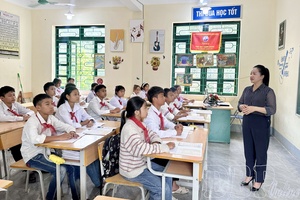
Research suggests that primary students aged 6 to 10 are particularly vulnerable because their natural curiosity often outweighs their ability to recognize danger. A single moment of distraction or an impulsive decision to swim in a stream can lead to serious consequences. At Võ Nguyên Giáp Primary School, the faculty uses engaging, visual methods, from flag ceremony briefings to extracurricular activities, to teach over 200 students how to respond when they or others are in trouble.
.jpg)
Vice Principal Nguyễn Xuân Kiểm highlights that because highland schools often lack swimming pools, physical education teachers must rely on creative demonstrations and practical exercises. These lessons help students internalize safety habits before they head home for the summer. The school also organizes annual summer camps with 100% participation, focusing on drowning prevention, fire safety, and traffic rules. To bridge the gap between school and home, teacher-parent Zalo groups serve as a vital communication bridge for safety warnings and student management.
.jpg)
The stakes are even higher at Võ Nguyên Giáp Secondary School, which sits adjacent to Pá Khoang Lake and a dense network of streams. With over 800 adolescent students, the school has prioritized water safety as a top concern. Their strategy includes daily 10-minute safety broadcasts before class and embedding life skills into core subjects like Biology and Physical Education. The school even assigns staff to patrol high-risk areas every afternoon to deter unsupervised swimming.
Principal Nguyễn Thành Trung notes that these synchronized efforts have successfully prevented drowning incidents for many years. Students like Quàng Thu Nguyệt, a member of class 8D, feel significantly more prepared after these sessions. She shared that she now understands how to call for help, safely bring a victim to shore, and perform basic CPR. This sense of empowerment is exactly what the school aims to cultivate.
.jpg)
Ultimately, proactively building these skills within the school environment provides a protective foundation for children. By raising awareness and fostering practical expertise, the community can significantly limit the risks associated with the summer season and prevent tragic accidents before they happen.
Trần Nhâm
.jpg)


.jpg)
.jpg)
.jpg)
.jpg)
.png)
.jpg)
.jpg)
.jpg)
.jpg)
.jpg)

You have 500/500 characters left
Please enter 5 or more characters!!!