



In recent years, the impact of climate change has prolonged the dry season, drying up many streams, while the demand for water for daily life, production, and urban development is increasing. This poses an urgent requirement for the management, exploitation, and protection of water resources.
According to statistics, the province currently has 1,100 irrigation works, including 14 reservoirs, 967 weirs and canals, 5 pumping stations, and 114 culverts. These works play an important role in ensuring water sources for agricultural production - the economic pillar of the province. Currently, 14 reservoirs in the area have been put into operation with a total capacity corresponding to the normal water level reaching over 67.6 million cubic meters. As of mid-April 2026, the total useful storage capacity reached about 36.43 million cubic meters, equivalent to 54% of the designed useful capacity. The water source basically meets the irrigation demand for the 2025 - 2026 winter-spring crop and prepares to store water for this year’s rainy season. In addition to 2 reservoirs that have basically completed construction - Ẳng Cang and Huổi Trạng Tai reservoirs with a total designed capacity of 6.954 million cubic meters - 2 other reservoirs (Nậm Là and Bản Phủ) are accelerating their construction progress to increase the capacity to regulate and store water for production.
In the central area of the province, including the 2 wards of Điện Biên Phủ and Mường Thanh, and the communes of Thanh Nưa, Thanh An, Thanh Yên, and Sam Mứn, production water is mainly supplied from reservoirs such as Pá Khoang, Nậm Khẩu Hú, Nậm Ngám - Pu Nhi, Huổi Phạ, Pe Luông, Huổi Trạng Tai, Hồng Khếnh, and Bồ Hóng. This is a key agricultural production area of the Điện Biên basin, with a large rice-growing area, so the requirement to ensure water security is always placed on top. During the recent dry season, the reservoirs basically provided enough water for production and daily life in the basin area.
.jpg)
Not only serving agricultural and industrial production activities, water resources also play a particularly important role in ensuring the lives and health of the people. Currently, the province has 10 centralized water supply works in urban areas with a total designed capacity of over 30,000 cubic meters/day and night. Two urban water supply enterprises, Điện Biên Water Supply Joint Stock Company and Quang Phúc Điện Biên Co., Ltd., operate 10 water plants. Meanwhile, the rural area currently has 1,030 centralized domestic water supply works. However, the number of sustainably operating works only accounts for 2.62% (27 works); while over 20% of works are not operating because they have expired and are awaiting liquidation and removal.
Currently, the Provincial People’s Committee has granted licenses to exploit and use water for 13 rural domestic water supply works with a total flow of 1,948.61 cubic meters/day and night. The licensing not only contributes to strictly managing the exploitation of water resources but also ensures water sources to serve the daily needs of rural people in accordance with regulations. Thereby, it step-by-step improves the quality of water supply services, limiting spontaneous exploitation and uncontrolled water use, towards the goal of sustainable exploitation and long-term protection of water resources in the area.
Although the percentage of rural households using hygienic water reaches 96.89%, the percentage using clean water that meets standards is only over 20%. This large gap shows that there are still many challenges in improving the quality of domestic water for people in remote and highland areas.
Especially, under the impact of climate change and natural disasters, water sources in streams are depleted, and many highland communes frequently face severe domestic water shortages in the dry season. Prolonged hot weather and droughts deplete water sources; floods appear with erratic developments, posing significant challenges for water resource management. The increasing demand and the risk of environmental pollution causing a decline in water quality due to production activities, livestock farming, indiscriminate littering, and land leveling activities are also worrying issues.
Agricultural product processing activities generate a large amount of untreated organic matter into the environment, degrading the quality of surface water, polluting rivers and streams, generating foul odors, and affecting the ecosystem and people’s lives. According to the assessment of specialized agencies, most of these activities mainly originate from households, without facilities and measures to treat waste before discharging it into the environment. Meanwhile, the province has not yet formed concentrated canna processing zones or concentrated livestock zones to synchronously control environmental issues.
Currently, the whole province has 57 works licensed to exploit water resources, including 23 hydropower projects, 8 irrigation reservoirs, 10 urban domestic water supply works, 13 rural domestic water supply works, and 3 factories and production facilities. The province has also approved a list of 90 intra-provincial water sources; at the same time, 15 inter-provincial surface water sources have been approved by the Prime Minister.
Based on the dry season water source scenarios of the Red River - Thái Bình River basin and the Mã River basin, the Provincial People’s Committee has issued plans to exploit and use water resources suitable to the actual situation. According to Official Dispatch No.4600/BNNMT-TNN dated May 11, 2026, of the Ministry of Agriculture and Environment, Điện Biên is among the group of 24 provinces and cities that need to proactively respond during the 2026 dry season.
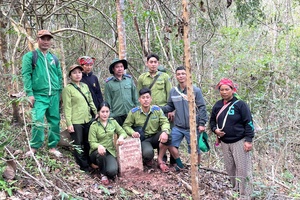
To protect water resources long-term, the province determines the need to synchronously deploy many solutions with water exploitation and use plans suitable for urban areas, rural areas, agricultural production, and electricity generation. These include prioritizing the construction of centralized wastewater treatment systems in industrial parks and urban areas; strengthening the inspection and supervision of water exploitation and use activities at hydropower projects, factories, and production facilities. Along with that is stepping up propaganda to mobilize people to sort waste at the source, not to discharge waste directly into ponds, lakes, rivers, and streams; protecting and developing headwater forests to retain water, prevent erosion, and maintain stable natural water generation sources.
To ensure domestic water in urban areas, supply enough for the water use needs of agencies, organizations, and people, and prevent long-term, large-scale water shortages, authorities will regularly inspect and maintain urban domestic water supply stations to ensure regular and continuous operation without breakdowns, interruptions, or water leaks and waste. The province will also strengthen sanitary inspections and clear water sources to ensure flow circulation and limit water loss. It is necessary to find and supplement water sources to make up for the shortfall, especially for water supply stations with a potential risk of water shortage, such as the central water plants in Na Sang and Nà Hỳ communes, to supplement the water shortage volume, especially during the dry season.
In the context of increasingly unpredictable climate change, water resources are no longer an infinite resource. For Điện Biên province, where agricultural production, daily life, and economic development still depend heavily on natural water sources, the rational management, exploitation, and effective protection of water resources are not only immediate requirements but also long-term tasks.
Bình Nguyên

.jpg)


.jpg)
.jpg)
.jpg)
.jpg)
.png)
.jpg)
.jpg)
.jpg)
.jpg)
.jpg)

You have 500/500 characters left
Please enter 5 or more characters!!!