



While the core objective of this policy is to streamline the organizational apparatus and enhance management efficiency, a move widely considered necessary for modern governance, it has sparked substantial concerns and hesitation at the grassroots level.
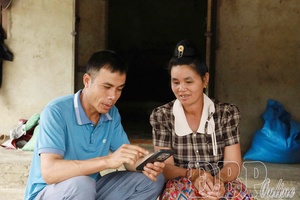
In Ma Lù Thàng village within Mường Tùng commune, 143 households comprising over 700 Hmong people live in scattered residential clusters. Given the current limitations in transportation and infrastructure, residents already face significant daily hardships. To attend village meetings at the central cluster, many must travel long, winding distances across difficult terrain. Faced with the prospect of merging units, the villagers are notably apprehensive.
.jpg)
While they generally support the national policy, specific details regarding the high-altitude terrain and dispersed population stir anxiety. Vừ A Sàng, Head of the Village Front Working Committee, noted that while they align with the State’s vision, the potential merger with neighboring villages like Huổi Lèng and Tin Tốc is worrisome due to their differing ethnic compositions. Since Ma Lù Thàng is entirely Hmong, disparities in language, customs, and traditions could hinder communication and the resolution of community issues. Without a carefully tailored plan, the merger might not only impact administrative efficiency but also risk creating cultural friction and weakening local social cohesion.
Similarly, Huổi Vang village, located in the center of Mường Pồn commune, faces its own set of challenges. Its diverse ethnic makeup creates a rich cultural identity but also presents difficulties in organizing community life if a merger is poorly executed. Thào A Sử, the village head, mentioned that although a specific plan has not yet been received, residents are already voicing concerns about cultural disparities. Language barriers and differing customs could make public meetings and the implementation of policies far more difficult. Furthermore, increased travel distances in the highlands might discourage people from attending meetings altogether, which would inevitably limit the reach of local development programs.
Currently, the province manages 1,446 units, including 1,310 villages and 136 residential groups. Implementing the restructuring policy requires a delicate balance between streamlining goals and the unique characteristics of each area to ensure public consensus. Hù A Dia, Head of Cổng Trời village in Na Sang commune, emphasized that while restructuring is essential for better management, it must reflect the reality of each village to achieve long-term effectiveness.
Despite the anxieties, many residents actually support the merger, particularly because numerous villages and residential groups across the province currently share identical names, leading to significant administrative confusion. Lê Thị Hương, a resident of Điện Biên Phủ ward, explained that duplicate names are common and often lead to a lack of consistency in management. When providing address information, residents frequently have to provide repeated explanations or additional verification documents, which is time-consuming and prone to error. Consequently, the reorganization is viewed by many as a vital step toward a leaner apparatus and better service quality for the people.
.jpg)
The government recently issued Resolution No.105/NQ-CP on April 8, 2026, reaffirming the determination to reorganize the political system for greater efficiency and effectiveness. The Ministry of Home Affairs is leading the guidance for this process within communes and wards, aiming to reduce administrative units while clarifying functions and tasks to prevent overlap. This resolution also pushes for increased decentralization, allowing local governments to be more proactive in serving their citizens.
The Ministry of Home Affairs is currently tasked with building the necessary legal regulations, including a Decree on the organization and operation of villages and residential groups, alongside policies for non-specialized activists, with completion expected in the second quarter of 2026. Furthermore, they are researching a self-governance model for residential communities that fits the practical needs of each region, with a scheduled presentation in the third quarter of 2026. For this policy to succeed, implementation must remain flexible and sensitive to local feedback, as public understanding and consensus are the foundations of a strong local political system in the country’s new phase of development.
Phạm Quang
.jpg)
.jpg)
.jpg)
.jpg)
.jpg)
.png)
.jpg)
.jpg)
.jpg)
.jpg)
.jpg)

You have 500/500 characters left
Please enter 5 or more characters!!!