



That is the result of the synchronous implementation of support activities by the Mường Ảng Area Program across the four communes of Mường Lạn, Búng Lao, Mường Ảng, and Nà Tấu.
.png)
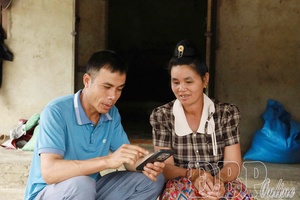
Along with 78 households in the communes of Búng Lao, Mường Ảng, Nà Tấu, and Mường Lạn, in mid-2024, the family of Lường Thị Thảo in Khén village, Mường Lạn commune, received a breeding cow supported by the Mường Ảng Area Program. Receiving the cow from the program, Lường Thị Thảo could not hide her joy because her family belongs to the poor household category, and their main source of income relies on small-scale, seasonal agricultural production, making life very difficult.
The support of a breeding cow has opened up a new opportunity for her family to gradually improve their livelihood. Lường Thị Thảo excitedly shared that her family never dared to think about raising reproductive cows due to a lack of capital. Being supported by the program and guided by officials on care and disease prevention made them feel more secure. To date, the cow has given birth to a calf, and the family is thrilled to have more assets for economic development.
.png)
Similar to the family of Lường Thị Thảo, in many villages of the communes assisted by the Mường Ảng Area Program, the reproductive cow support model is gradually proving effective, helping people gain a stable livelihood and become more proactive in household economic development. From 2022 to the present, 323 reproductive cows have been distributed to households. Not only supporting livelihoods, the Mường Ảng Area Program also focuses on improving living conditions and essential infrastructure in the community. In Búng Lao commune, at the end of April 2026, the Area Program presented the “Lighting up country roads” project for 2026 with a total support budget of nearly VND 100 million.
The project was implemented in the four villages of Cha Cuông, Cha Nọ, Bua 2, and Tọ, featuring 38 solar lights with a capacity of 300W. The lighting system integrates multiple illumination modes according to time frames and allows the adjustment of light intensity using a remote control. The equipment, including solar panels, LED lights, controllers, and galvanized iron poles, was installed in community activity areas, intersections, curved road sections, sharp turns, and locations with potential safety risks at night.
.png)
Kiều Xuân Hoàng, Vice Chairman of the Búng Lao commune People’s Committee, shared that the completion and utilization of the project contribute to improving lighting conditions, helping people travel more conveniently in the evening. It also enhances security and safety in residential areas, creates more community living space, and better serves the needs of the people, especially children. This is one of the practical activities of the Mường Ảng Area Program, contributing to perfecting essential local infrastructure.
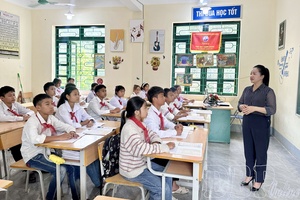
Improving nutrition and enhancing children’s physical conditions is also a focus implemented by the program. According to surveys by functional agencies, the malnutrition status of children in the communes of Mường Lạn, Mường Ảng, Nà Tấu, and Búng Lao has seen many positive changes in recent years. However, the stunting rate remains high, with an average of one in three children affected. In addition, micronutrient deficiencies such as vitamin A, zinc, and iron, along with anemia, are still quite common, significantly impacting the physical and intellectual development of children.
.jpg)
Facing this reality, the Mường Ảng Area Program coordinates annually with the health sector and localities to organize various intervention activities, including check-ups, screening, growth monitoring, and nutritional counseling for pregnant and nursing mothers. At the same time, the program promotes communication to change behavior within the community. Thanks to these efforts, from 2022 to the present, 272 severely ill and disabled children have received treatment support, and 150 malnourished children have been rehabilitated.
Nguyễn Xuân An, representing the Mường Ảng Area Program, stated that they identify poverty reduction not merely as economic support but as something that must simultaneously impact multiple factors such as health, nutrition, education, and community capacity. This is because when people have knowledge, livelihoods, and proactive participation, the effectiveness of poverty reduction will be more sustainable.
.png)
During the 2022-2025 period, the Program implemented several key component projects, including health and nutrition, child protection and participation promotion, livelihood development, community participation, and child sponsorship. Among them, the Sustainable Household Livelihood Transformation project was carried out in multiple villages across the communes of the former Mường Ảng district, funded by World Vision International in Vietnam.
According to the plan, in 2026, the Mường Ảng Area Program will continue to allocate resources to communes in the region to maintain and expand targeted projects. This contributes to sustainably improving social welfare and stabilizing livelihoods, especially for vulnerable groups such as children, women, and families facing difficult circumstances.
.jpg)
.jpg)
.jpg)
.jpg)
.jpg)
.png)
.jpg)
.jpg)
.jpg)
.jpg)
.jpg)
You have 500/500 characters left
Please enter 5 or more characters!!!