



Identifying education as a key to raising intellectual standards and creating development momentum, the province has prioritized the effective mobilization of various resources to gradually narrow the educational gap between low-lying and highland regions.
Located in a challenging highland area, Pu Nhi commune has long been a bright spot in caring for the education of ethnic minority children. With its fragmented, steeply mountainous terrain and difficult socio-economic conditions, maintaining enrollment and ensuring teaching quality used to be a daunting problem. However, through the drastic involvement of the local Party committee, authorities, and the education sector, efforts to illuminate knowledge here are yielding positive signals.
Currently, Pu Nhi commune has eight schools with 120 classes and nearly 3,200 students. The majority of these are children of ethnic minorities living scattered in remote villages. To overcome geographical distances, the semi-boarding ethnic minority high school model has proven effective, becoming a warm common home and providing motivation for students to feel secure in their schooling.
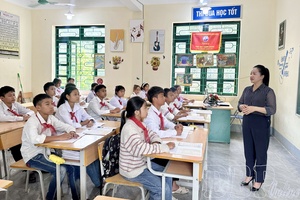
Because her home is far away and travel is difficult, Lường Phương Oanh, a class 9D1 student at Pu Nhi Semi-Boarding Ethnic Minority Junior High School, once intended to stop studying after finishing the primary program. Encouraged by her teachers and facilitated by the school to eat and rest in the boarding facilities, Oanh continued her education with renewed motivation. She shared that studying and living at the school makes both her and her family feel much more secure. The teachers not only guide her studies but also care about every meal, sleep, and daily activity of the students, and she is determined to study well to become a teacher in the future.
.jpg)
At the Nậm Ngám Semi-Boarding Ethnic Minority Primary School in Pu Nhi commune, the 2025-2026 school year sees 14 classes with 328 students, of which over 90% are ethnic minority children. Principal Nguyễn Đức Long noted that thanks to the semi-boarding regime and state support policies, students are fully cared for from meals to sleep. They no longer have to cross streams and forests every day in harsh weather conditions, and parents feel truly secure entrusting their children to the teachers.
Also located in a difficult border area, the Pa Thơm Primary and Junior High School in Thanh Yên commune is the learning place for 242 students across both levels, mostly ethnic minority children. Although it is not a semi-boarding school, recognizing the vast terrain and difficult travel conditions for students, the school proactively arranged boarding and studying accommodations for more than 90 children. This flexible approach not only helps maintain attendance rates but also gradually improves the quality of education in particularly difficult areas. Vice Principal Nguyễn Xuân Hoàng stated that besides improving teaching and learning quality, the school places special emphasis on caring for daily life, fostering life skills, and educating students on cultural identity. The teachers always strive to create a friendly and safe learning environment, helping students become more confident, bold, and comprehensively trained.
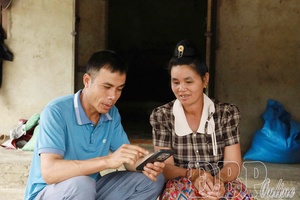
The school’s care has also created deep trust among parents. Lò Thị Thơm, who has a child attending the school, emotionally shared that her family lives far from the center and faces many economic difficulties. Thanks to the teachers providing boarding right at the school, her child is fully cared for, and with these good conditions, she encourages her child to focus on studying and making progress. She feels very secure and trusts the policies of the Party, State, and province in caring for ethnic minority children.
For many years, Điện Biên has steadfastly adhered to the perspective of developing education in a harmonious direction between expanding scale and improving quality. Perfecting infrastructure aims to build a comprehensive learning environment, creating a long-term development foundation for ethnic minority children. On this basis, education in ethnic minority and particularly difficult areas receives comprehensive attention, from organizing teaching to ensuring learning conditions. The entire province currently has nine semi-boarding ethnic minority high schools with 108 classes and more than 4,100 students, as well as 134 semi-boarding schools, including 73 primary schools with about 26,700 students and 61 junior high schools with over 21,700 students. In addition, 85 general schools organize semi-boarding for students, contributing to maintaining enrollment and improving the quality of education in difficult areas.
Despite being a mountainous province where central budget support accounts for over 90%, Điện Biên maintains an annual expenditure level of over 20% of its budget for education and training. During the 2021-2025 period, the province allocated approximately VND 971.8 billion in medium-term public investment capital for this sector. Alongside state resources, the socialization of education has been promoted, mobilizing hundreds of billions of VND to invest in building classrooms, boarding areas, and public duty houses in remote villages while ensuring 100% of students have enough books and learning tools. These efforts have contributed to significantly improving the rate of mobilizing students to school at all levels. Specifically, the rate of 3 to 5-year-old children attending class reached 99.81%, 6-year-old children entering first grade reached 99.91%, and junior high school students reached 98.39%. Notably, the percentage of students in the high school age group and equivalent reached over 78%, exceeding the set plan and showing a clear trend of highland students continuing to higher education.
Hoàng Tuyết Ban, Director of the Department of Education and Training, stated that in 2026, the education and training sector of Điện Biên enters a phase of synchronously implementing the goals and tasks of Resolution No.71-NQ/TW. The enforcement of new laws and resolutions has created an important legal corridor, helping to remove institutional obstacles and opening opportunities for Điện Biên to implement specific policies for ethnic minority and mountainous areas, improve education quality, and ensure equity in educational access. To bring the resolution to life, the Department of Education and Training proactively advised the Provincial Party Committee’s Standing Board to issue Plan No.05-KH/TU and the Provincial People’s Committee Party Committee to issue Plan No.10-KH/ĐU, serving as a basis for concretizing and organizing implementation suitable to local practical conditions. Based on this, the Provincial People’s Committee continues to direct the development of key plans, projects, and programs, creating a legal corridor and resources for educational innovation.
A notable highlight is the investment in the system of inter-level ethnic minority boarding schools in border communes. The province is deploying the construction of 15 schools, of which the Si Pa Phìn Inter-Level Primary and Junior High Boarding School was inaugurated and put into use in early 2026, significantly improving the learning and living conditions for students in the border area. Currently, nine projects are being accelerated, expected to be completed before August 31, 2026, with the remaining projects continuing to be implemented throughout the year.
Hà Linh
.jpg)


.jpg)
.jpg)
.jpg)
.jpg)
.png)
.jpg)
.jpg)
.jpg)
.jpg)
.jpg)

You have 500/500 characters left
Please enter 5 or more characters!!!