



These efforts not only help restore the names of heroic martyrs who sacrificed their lives for the nation, but also fulfill the wishes of their families, reflecting the Vietnamese tradition of “remembering the source when drinking water.”
Recognizing the search for and recovery of martyrs’ remains as a particularly important political mission - both urgent and long term - the provincial Steering Committee 515 has directed relevant forces to implement numerous coordinated and flexible measures. Key priorities include reviewing and completing records and lists of martyrs, as well as collecting and verifying information. The application of information technology in data management, search mapping, information analysis, and comparison has also been strengthened. Thanks to these efforts, many sets of remains have been discovered, recovered, and reburied, helping ease the prolonged pain and longing of martyrs’ families.
The work of reviewing records, completing documentation, and mapping search and recovery operations has been carried out systematically and scientifically. The entire province has completed locality assessments for all 1,441 villages, hamlets, and residential groups. Through the review process, authorities identified 8,933 martyrs who were initially buried within the province, of whom 4,903 sets of remains have been recovered.
Among the recovered remains, 4,803 martyrs were reinterred in local martyrs’ cemeteries, dozens were handed over to families for care and worship according to relatives’ wishes, and 69 sets of remains were transferred to other localities.
.jpg)
During the 2021-2025 period alone, through nine organized missions, authorities recovered 83 sets of martyrs’ remains. Since 2021, the province has exhumed and gathered 14 sets of remains within the local area. Following recovery, memorial ceremonies and solemn burial services were held at martyrs’ cemeteries or the remains were returned to their hometowns in accordance with family wishes. In addition, 31 martyrs’ graves were relocated to other localities, and introduction letters were issued to six families receiving the remains of their loved ones.
Alongside search and recovery activities, efforts to identify unidentified martyrs’ remains have also been intensified. The collection, connection, and processing of information related to martyrs and martyrs’ graves are conducted regularly and continuously. Relevant agencies have collected 43 biological samples from martyrs’ remains for DNA testing, gradually serving the process of identification. At the same time, through verification methods, information on 76 gravestones has been corrected at the request of local authorities.
However, the province still has 1,040 sets of martyrs’ remains yet to be found and recovered, while information on 2,990 martyrs remains incomplete. At local martyrs’ cemeteries, 5,800 out of 7,256 graves have not yet been identified. Following reviews, 5,128 graves have been proposed for DNA sampling and analysis. The main difficulties stem from the long passage of time, lost information, and the decreasing number of witnesses. Harsh natural conditions have also affected the quality of biological samples, creating major challenges for DNA testing.
With the goal of recovering 20-25 additional sets of martyrs’ remains by 2030 while accelerating identification through DNA analysis, the province aims to further strengthen the role of the entire political system, expand the application of science and technology, and enhance international cooperation. Public communication plays a key role in implementing this mission. Providing complete and accurate information about the purpose, significance, and procedures involved will help people better understand, support, and actively participate in the effort. In particular, encouraging martyrs’ relatives to provide comparative DNA samples is considered crucial to the success of the identification process.
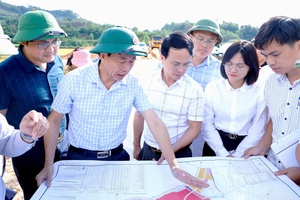
At a conference organized by Steering Committee 515 of Military Region 2 on April 10, Vice Chairman of the provincial People’s Committee Nguyễn Văn Đoạt proposed that the Ministry of National Defense, the Military Institute of Forensic Medicine, and the DNA Identification Center unify technical procedures to ensure that sample collection is conducted in accordance with regulations.
Coordination among agencies, he emphasized, should be synchronized and interconnected in order to avoid overlap and waste of resources. Priority should be given to cemeteries with large numbers of unidentified graves. This approach would improve efficiency and shorten implementation time. At the same time, DNA sampling should be conducted selectively, focusing only on cases with a high likelihood of successful identification in order to avoid unnecessary costs and delays.
The achievements made during the 2021-2025 period provide an important foundation for the province to continue effectively implementing DNA identification work in the coming years. Although many difficulties and challenges remain, the determined involvement of the entire political system, the support of central agencies, and the consensus of the people will help bring more positive results to the journey of restoring the names of fallen heroes.
Every set of remains recovered and every identity restored is another moment in which history is called by name once more, another family finding comfort after years of longing. It is also a testament to the enduring moral tradition of the Vietnamese people - always honoring, remembering, and expressing gratitude to those who sacrificed their lives for the independence and freedom of the Fatherland.
Thu Phương

.jpg)
.jpg)
.jpg)
.jpg)
.jpg)
.jpg)
.jpg)
.jpg)
.jpg)
.jpg)
You have 500/500 characters left
Please enter 5 or more characters!!!