



During the pineapple harvest season, Pu Lau village in Mường Nhà commune becomes lively with groups of tourists visiting for experiential tours. Amid the cool green expanse of sprawling pineapple fields, visitors can observe cultivation processes firsthand, taste sweet honey pineapples right on the hillsides, and enjoy the fresh mountain atmosphere.
Introduced by relatives and friends, Lê Thị Hoa, a tourist from Hưng Yên province, learned about the pineapple hills in Pu Lau village. Arriving here, Lê Thị Hoa immersed herself in the verdant setting, directly experiencing the pineapple-growing region and expressing admiration for the pristine, peaceful natural landscape.
.jpg)
Lê Thị Hoa shared that the atmosphere is very refreshing and the natural scenery is scenic. Walking through the pineapple slopes, learning how locals plant and care for pineapples, and enjoying fresh produce on-site makes for an engaging experience, noting that if the locality invests in additional experiential services, this will become an even more appealing destination.
Currently, Mường Nhà commune has nearly 300 hectares of honey pineapple. In recent years, pineapples have become a key crop, helping numerous households secure stable incomes.
Among local initiatives, the Pu Lau Honey Pineapple Cooperative is an exemplary model involving over 20 members cultivating around 30 hectares of honey pineapples. In addition to improving productivity and product quality, cooperative members are progressively recognizing the value of scenic pineapple landscapes in developing experiential tourism.
Thào A Giàng, Director of the Pu Lau Honey Pineapple Cooperative, stated that lush green pineapple hills with large, uniform fruits leave a positive impression on tourists. The cooperative currently manages about 30 hectares of honey pineapples and is focusing on meticulous care to enhance fruit quality while aiming to combine farming with on-farm tourism activities. When visitors arrive, farmers have direct sales opportunities, thereby increasing the value of pineapples and boosting household revenues.
.jpg)
Several models integrating agricultural production with experiential tourism are also emerging across Mường Phăng commune. Taking advantage of extensive garden grounds near the Mường Phăng Historical Relic Site and not far from the provincial center, the family of Lường Văn Thành invested in an integrated farm model linked with experiential tourism.
On an area of over 3,000 square meters, Lường Văn Thành’s family cultivates Hana strawberries and Hạ Đen black grapes while offering homestay accommodation services. Lush green vineyards and strawberry patches, close-to-nature spaces, and on-site fruit picking activities have attracted large numbers of locals and tourists.
Lường Văn Thành shared that visitors come to sightsee, pick strawberries and grapes, and stay at the homestay. His family strives to preserve natural surroundings, minimize environmental impacts, and create a cozy, comfortable atmosphere for guests, which has also helped his family’s farm produce gain wider recognition.
Practical realities indicate that green tourism in the province remains small in scale, products are uneven, and supporting infrastructure and services at certain sites remain limited. Nonetheless, the increasing emergence of community-based, eco-friendly, and agro-tourism models demonstrates that environmentally conscious resource utilization is gaining growing public interest.
.jpg)
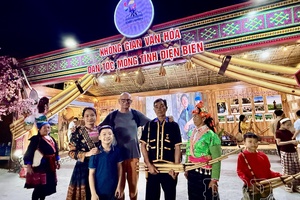
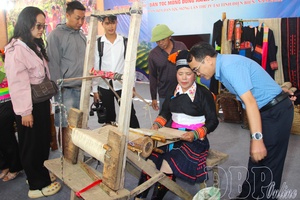
Notably, in developing green tourism, provincial departments, sectors, and localities integrate tourism closely with cultural preservation. Highland ethnic minority villages, traditional house architecture, handicrafts, culinary arts, attire, folk songs, folk dances, and distinctive customs can all become compelling tourism products when harnessed appropriately. Concurrently, expanding agro-tourism offers visitors nature-oriented experiences, opportunities to explore indigenous cultures, and choices for safe, eco-friendly destinations.
Nguyễn Thị Thanh Chuyên, Deputy Director of the Điện Biên Provincial Department of Culture, Sports and Tourism, stated that moving forward, the sector will concentrate on developing agriculture-linked tourism, gradually forming distinctive products founded upon advantages in land, landscapes, and local specialties. The central focus is tying tourism products to the province’s characteristic agricultural production zones. From crop fields and farms to fruit orchards and OCOP products, localities can build spaces for sightseeing, experiential activities, homestay accommodation, and on-site agricultural tastings.
With advantages in natural landscapes, cultural identities, and diverse agricultural production, Điện Biên is paving the way for sustainable green tourism development, in which agro-tourism is identified as a highly promising direction. Connecting production zones and specialty produce with hands-on experiences, accommodations, and indigenous cultures adds appeal to destinations while elevating agricultural value, creating livelihoods, and increasing incomes for local people.
Phạm Quang
.jpg)
.jpg)
.jpg)
.jpg)
.jpg)

.jpg)
.jpg)
.jpg)
You have 500/500 characters left
Please enter 5 or more characters!!!