



From infrastructure and production to public services, the post-rearrangement transformations show a clear reality: when people see development opportunities right in their homeland, trust is no longer a matter of slogans or encouragement but a concrete feeling in daily life.
However, behind these movements, there remain gaps that need to be filled for the highland development process to go further and become more sustainable. The most profound change after the merger in Quài Tở does not lie in the organizational model, but in how the people view the development capacity of their own homeland. From a scattered, unlinked production space, Quài Tở is gradually forming concentrated production zones connected with improved infrastructure and public services. This is not just an economic shift but also a transition in the people’s perception of development opportunities right on the highland soil.
.jpg)
Vàng Dũng Dủa from Xá Tự village recalled that when he first heard about the merger policy, he worried that a larger commune would mean the government would be further away from the people. Yet, the subsequent reality completely changed his mind as inter-village roads were expanded, grassroots-level officials visited the village more frequently, and many administrative procedures were resolved faster and more conveniently. “Now I understand that the important thing is not whether the commune is large or small, but whether the people benefit from it,” Vàng Dũng Dủa added.
Practical experience demonstrates that the effectiveness of arranging administrative units does not lie in changing boundaries but in the ability to reorganize resources to better serve development and the people. In highland areas, residents can accept hardships, but it will be very difficult for them to place trust if their lives do not see opportunities for change.
Restructuring agricultural production
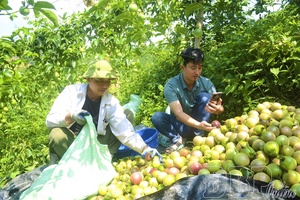
On the hillsides of Quài Tở, areas previously dedicated to maize and cassava are gradually being replaced by coffee and macadamia. The conversion process is not taking place simultaneously, but it has clearly formed a trend of developing concentrated raw material zones linked with commercial production orientations. Up to now, the entire commune possesses more than 1,635 hectares of coffee and over 793 hectares of macadamia. In 2025 alone, the locality newly planted more than 640 hectares of coffee and 310 hectares of macadamia. From hills that were once cultivated in a fragmented manner, Quài Tở is step-by-step forming larger-scale raw material zones, opening up expectations for stable livelihoods for highland residents.
If production was previously mainly self-sufficient, many households have now begun to approach a market mindset, paying close attention to cultivation techniques, product quality, and consumption outlets. The use of smartphones to update prices, exchange technical knowledge, and connect with the market has become increasingly popular in many villages.
.jpg)
Mùa A Nhìa, who spent many years working as a hired laborer outside the province, has now returned to develop the economy in his hometown. He noted that he used to think it would be very difficult to change his life in his hometown. However, as transport became convenient, state economic development support policies for ethnic minorities proved practical and effective, and officials provided closer guidance on cultivation techniques, he decided to convert nearly 2 hectares of upland rice to coffee. He shared that in the past, he only thought he had to go far away to find opportunities, but now, with methodical work, he can stabilize his life right in his hometown.
The shift of young laborers from “leaving the village” to “returning to the village” reflects a change that is even more important than economics, showing that residents are beginning to see their future right in their homeland, which is precisely when arguments sowing skepticism gradually lose their ground to exist.
In Quài Tở, public trust is not formed by slogans but from visible changes in daily life. By the end of 2025, the multi-dimensional poverty rate of Quài Tở dropped to 19.56%, while the average per capita income reached nearly VND 45 million per year. All villages have been connected to the national power grid, with the rate of households using electricity exceeding 99.5%. Inter-village transport routes have been completed, creating clear convenience for daily activities and production. The first night with electricity in Háng Tàu village, when the lights turned on amidst the mountain mist, was not just an infrastructure project but a milestone indicating that highland life was beginning to transform.
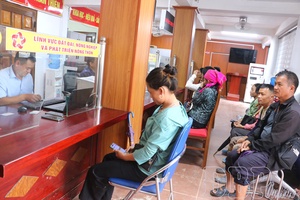
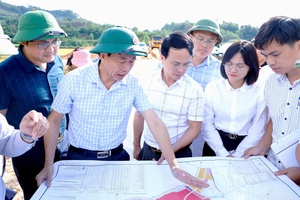
Concurrently, administrative reform has seen a distinct turnaround. More than 2,100 dossiers were received and resolved, with an on-time rate reaching nearly 99.72%, and 100% of eligible dossiers were received online. The grassroots government apparatus operates in a manner that stays closer to the people and the grassroots. Although some opinions previously suggested that mergers would distance the government from the people, the reality in Quài Tở shows the exact opposite, as the number of official visits to the grassroots has increased significantly and many tasks are resolved right in the village, drastically reducing travel time for residents. In the effort to sustain trust at the grassroots, an official visiting the village at the right time is sometimes far more persuasive than generic dissemination.
Facing challenges and bridging the gaps
Nonetheless, Quài Tở still faces numerous challenges. A vast area increases management pressure, while the distance between residential areas remains large. A segment of the elderly population has not yet adapted to online public services, infrastructure in several areas remains asynchronous, and the risk of falling back into poverty still exists. At certain times, grasping the people’s thoughts has not been entirely prompt, and dissemination in some places remains formalistic. Consequently, information gaps can still be exploited to create distorted perceptions of the policy to rearrange the organizational apparatus.
.jpg)
When the people have not clearly felt development achievements in their lives, skepticism can easily be incited by distorted information in cyberspace. A development gap, if not filled with the efficiency of serving the people, can easily turn into a trust gap. The people’s trust is not maintained by mere explanations; it is expressed through the roads to the villages, harvests with consumption outlets, bright electric lights in every home, and the substantial presence of the grassroots government. Therefore, development linkage is not only an economic requirement but also the direct foundation for maintaining social trust from the grassroots.
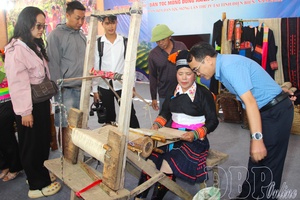
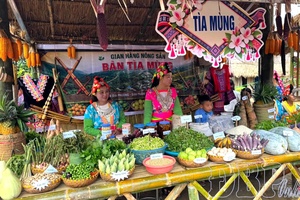
Situated on the connection axis of Pha Đin Pass, the eastern gateway of Điện Biên province, Quài Tở is gradually forming a new development space linked with industrial crops, commercial agriculture, and highland community tourism. Beyond production movements, the locality has begun to shape a direction for Mông ethnic community tourism associated with experiential travel. In March 2026, Lồng village officially inaugurated its community tourism village, marking the first Mông ethnic community tourism village in Điện Biên province. This initiative opens up expectations of turning Lồng village into an attractive destination on the provincial tourism map, step-by-step affirming the highland community tourism brand tied to distinctive cultural identities. As culture becomes a development resource, the residents also begin to see the value of preserving their identity right in their own homeland.
Development linkage in Quài Tở is thus not just about connecting infrastructure or production, but also a process of connecting the people’s trust with the future of their own homeland. From the movements currently visible across highland villages today, Quài Tở is entering a new phase, a phase where trust is kept not only by correct policies but by changes that the people, as the core subjects, experience for themselves in their daily lives.
(to be continued)
Lường Phượng

.jpg)
.jpg)
.jpg)
.jpg)
.jpg)
.jpg)
.jpg)
.jpg)
.jpg)
.jpg)
You have 500/500 characters left
Please enter 5 or more characters!!!