



When people’s lives face numerous difficulties, it is precisely when information gaps are easily filled with incomplete or even distorted interpretations. From that reality, the story of arranging administrative units and reorganizing the development space in Quài Tở is not only a management problem but also a yardstick for consolidating trust right from the grassroots level, where direct contact with the people’s lives occurs.
Looking back ten months ago, when the policy to rearrange administrative units and deploy the two-tier local government model began to enter reality, a stark mix of sentiments clearly appeared in many highland villages: expectation of change but also considerable anxiety over whether reorganizing the apparatus would distance them further from the center or narrow development opportunities.
On dirt roads that remained muddy and slippery after rains, the heavily discussed topics did not revolve around administrative concepts but around very specific things: whether harvests would be more stable, whether travel would be less arduous, whether support policies for difficult areas would still apply, and most importantly, whether life would truly change.
The multi-dimensional development gaps
In Quài Tở, the development gap often does not appear on the map. It lies in the steep slopes extending through distant villages like Thẩm Nặm and Xá Tự; it lies in the distance people must overcome whenever going down to the commune center during the rainy and flood season; and it lies in the disparity of opportunities between regions within the same area. This very dispersion not only slowed the pace of development but also created “double gaps” in infrastructure and trust.
.jpg)
Post-rearrangement, Quài Tở was formed on the basis of merging a lowland area predominantly inhabited by the Thái ethnic group with two highland communes where the majority of the population belongs to the Mông ethnic group. The differences in terrain, production habits, and living standards had long existed, now placing a high demand on reorganizing the development space toward a more unified direction without erasing the specific characteristics of each region.
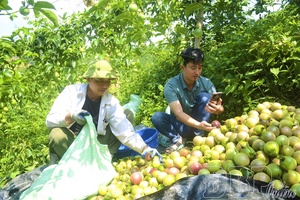
Reality showed that while some places had formed initial commercial production, many highland villages still relied primarily on traditional terraced fields for years. Asynchronous infrastructure and degraded traffic during the rainy season caused the circulation of goods to be cut off periodically rather than driving development needs.
In previous years, the local poverty rate stood at a high level. Many households possessed production land but lacked the conditions to organize production toward a commercial direction. Agricultural products were mainly consumed through small, scattered traders, with volatile prices depending heavily on the weather and spontaneous markets. Meanwhile, young laborers tended to leave the village to work as hired hands, leaving behind fragmented fields and gaps in long-term development.
Vì Thị Sua from Thẩm Nặm village still clearly remembers taking her small grandchild down to the commune center for a medical examination in the middle of the rainy season. The dirt road was muddy and slippery, requiring them to walk the motorcycle through many sections. She shared that it took nearly half a day to arrive, hoping that the roads would be easier to travel in the future so the children would suffer less, her eyes lingering on the misty slope at the end of the village.
In such regions, the people’s trust does not begin with large concepts. It is formed by very specific changes, such as a road that is passable in all four seasons, safer, and more convenient.
Vàng Dũng Dủa, a village elder of Xá Tự village, stated that in the past, each trip down to the commune center was a long journey, highly dependent on the weather. Looking back at the period when connectivity between regions was very limited, he noted that each village had to manage on its own and everyone acted individually, making even development difficult. A scattered population, a vast terrain, mostly small-scale cultivation areas mainly growing low-yielding maize, cassava, and upland rice, and a lack of chain linkages meant that the potential for commercial development was not properly exploited. Consequently, the development gap between areas became increasingly visible. Among a segment of the populace, an anxious sentiment emerged over whether major policies would truly enter daily life or if the highlands would continue to stand on the margins of the development process.
.jpg)
Addressing the digital front and information vacuums
At the same time, cyberspace began to exert a stronger impact on highland life, with correct and incorrect information intertwined and difficult to distinguish. Some elements took advantage of grassroots hardships to distort the policy of arranging administrative units, sowing seeds of doubt by claiming that the merger would increase the distance to the local government or cause the highlands to be “left behind” on the margins of development.
Notably, this information often directly targeted the already sensitive psychology of the people in difficult regions. The most dangerous gap does not lie in a lack of information but in the fact that the people have not seen the path of development clearly enough within their own lives.
From that reality, the requirement to change the development approach began to be set out more clearly. It was impossible to continue maintaining a situation where each village followed its own isolated direction, let alone allow fragmented production mindsets to drag on in a context where the demands for commercial production and regional linkage were becoming increasingly urgent.
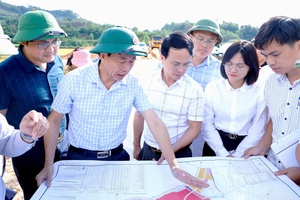
Several grassroots-level officials recognized that without reorganizing the development space, investing in synchronous infrastructure, and creating production linkage chains, the highlands would find it difficult to escape the vicious cycle of poverty and resource dispersion. Therefore, the story of arranging administrative units, streamlining the apparatus, and enhancing regional linkage was no longer an organizational requirement but a demand stemming from development needs themselves.
.jpg)
According to Giàng A Dế, Secretary of the Party Committee and Chairman of the People’s Council of Quài Tở commune, the greatest difficulty in the initial stage of implementation was not rearranging the organizational apparatus but ensuring that the people could see changes tied to their practical interests.
“In highland areas, if the people have not seen specific changes, it is very easy for anxious sentiments to arise. Therefore, the important thing does not lie in dissemination, but in letting the people see roads being opened, production having a direction, and the government truly being closer to the people,” Giàng A Dế added.
In the current story of protecting the Party’s ideological foundation, a major issue is raised: if the people’s lives do not change and prolonged hardships are not resolved through specific actions, trust can easily be affected by toxic information. That reality suggests a fundamental point, which is that trust cannot be consolidated by pure explanation but must be nurtured by specific development results in daily life.
In highland areas, the people do not view policies through abstract concepts. They look through the road leading into the village, harvests with guaranteed outlets, the education of their children, and the close presence of the grassroots government. The people’s trust, therefore, is not only a goal but the most sustainable foundation of the ideological battlefield.
In Quài Tở, despite many hardships ahead, the clearest thing is that the residents always wish to see a substantive change, where major guidelines do not stand outside of life but go straight into every home, every road, and every village.
(to be continued)
Lường Phượng

.jpg)
.jpg)
.jpg)
.jpg)
.jpg)
.jpg)
.jpg)
.jpg)
.jpg)
.jpg)
You have 500/500 characters left
Please enter 5 or more characters!!!