



In Na Khoang village, former maize and cassava fields have now given way to pineapple and coffee plantations, gradually creating a new direction for local agricultural production. The shift follows the village Party cell’s efforts to translate the commune Party Committee’s resolution into specific actions and encourage Party members and residents to restructure crops toward higher productivity and economic efficiency.
.jpg)
Lò Văn Phin, Secretary of the Na Khoang village Party Cell, said: “After the resolution was introduced to the Party cell, its contents were further disseminated among Party members and local residents. The Party cell has focused on encouraging people to grow pineapple and coffee. So far, the village has 35ha of pineapple and 15ha of coffee.”
Party members are leading by example through concrete production models. Lò Văn Hoa is among those who boldly replaced cassava and maize with pineapple. His family now grows more than 1ha of pineapple alongside livestock farming, generating a combined annual income of around VND100 million.
“Implementing the resolution on crop restructuring, I decided to switch from cassava and maize to pineapple. The results have been encouraging, and some other households have followed suit,” Lò Văn Hoa said.
.jpg)
Alongside pineapple, coffee has also been chosen by Na Khoang residents as an alternative to less profitable crops. Lò Văn Khụt’s family previously grew maize and cassava, but yields and incomes remained modest. Following the commune’s resolution, the family converted 2ha to coffee. The coffee plants are now growing well, and the family expects them to generate higher returns than their previous crops. Such practical models led by Party members and local residents are helping turn the policy of restructuring agricultural production into reality.
In recent years, the Mường Nhà commune Party Committee has identified the development of commercial agriculture as a key direction for improving production efficiency and people’s livelihoods. The committee issued Resolution No. 09 on developing agricultural and forestry production in conjunction with new rural development in Mường Nhà commune for 2026-2030, with a vision to 2035. The resolution sets targets for developing concentrated production areas, including 100ha of coffee, 2,000ha of macadamia and 600ha of pineapple.
.jpg)
Implementation of the resolution is closely linked to Resolution No. 11 of the provincial Party Committee on restructuring the agricultural sector. On that basis, the commune has developed an implementation plan and encouraged residents to replace low-efficiency maize and cassava fields with industrial crops and fruit trees for commercial production.
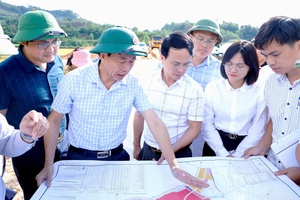
Close attention and direction from authorities and relevant agencies at all levels have helped the commune Party Committee promptly address difficulties and obstacles at the grassroots level. Party policies and resolutions have been translated into measures suited to local conditions, helping build consensus among officials, Party members and residents.
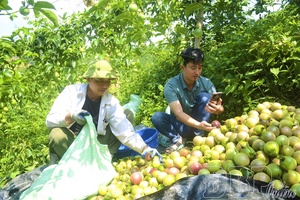
To date, the commune has planted more than 500ha of honey pineapple, including over 200ha newly planted. Yields have reached 300 quintals per hectare, with total output exceeding 9,000 tonnes. This marks an initial step toward establishing a concentrated pineapple-growing area in the locality.
.jpg)
Alongside pineapple, Mường Nhà commune has expanded its macadamia and coffee acreage. The commune now has 1,361ha of macadamia, including 1,200ha planted by the Macadamia Growing and Processing One Member Co., Ltd., 120ha under a linkage project and 41ha planted independently by local residents. Coffee acreage stands at 179ha, including 120ha under linkage projects and 59ha planted by residents.
These initial results point to a clear shift in Mường Nhà’s agricultural production structure. Moving away from traditional crops that generate relatively low returns, residents are gradually adopting crops with stronger commercial potential, linked to concentrated production areas and production-linkage projects.
Lò Minh Hải, Permanent Deputy Secretary of the Mường Nhà commune Party Committee, said: “In addition to planning, encouraging and mobilizing residents, the commune is implementing national target programs. At the same time, we are attracting and inviting organizations to establish and lead production linkages with the commune and local farmers, including through product purchase arrangements and support programs.”
.jpg)
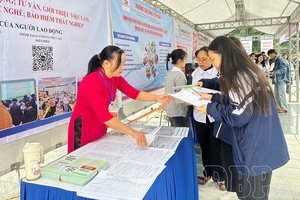
In the first eight months of the year, the commune established one cooperative, laying the groundwork for gradually strengthening and developing production linkages between farmers and businesses. The cooperative plays an important role in organizing production, bringing households together, connecting them with businesses and facilitating access to support programs. This is also a necessary step toward developing pineapple, coffee and macadamia production on a commercial scale rather than through fragmented, uncoordinated household production.
The pioneering role of Party members, strong support from local residents and the Party and authorities’ focus on developing commercial agriculture are providing a foundation for Mường Nhà to further improve production efficiency and work toward higher incomes and better living standards for local people in the years ahead.
Nguyễn Anh
.jpg)
.jpg)
.jpg)
.jpg)
.jpg)
.jpg)
.jpg)

.jpg)
.jpg)
.jpg)
.jpg)
You have 500/500 characters left
Please enter 5 or more characters!!!