



To fulfill the 2026 budget estimates and support the target of double-digit economic growth, the province is concentrating on tapping revenue sources with available room, curbing revenue losses, and resolving bottlenecks to generate additional revenues from land.
In 2026, Điện Biên set a state budget revenue target of VND 2,310 billion, including domestic revenue of nearly VND 2,160 billion.
.jpg)
According to data through August 11, total state budget collection in the province was estimated at VND 1,210.96 billion, reaching 52.39% of the estimate assigned by the provincial People’s Council, 79.36% of the central estimate, and 78.8% compared to the same period last year. Domestic revenue reached VND 1,182.966 billion, equal to 54.77% of the provincial estimate. These results indicate positive momentum, especially among key revenue streams.
Revenues from taxes, fees, and other collections cumulatively reached approximately VND 940 billion as of August 11, equivalent to 75.2% of the annual plan. To meet the annual estimate, the provincial Tax Department must collect over VND 328 billion in taxes and fees from now until the end of the year, even as certain tax exemption and reduction policies continue to impact collections.
Since late March 2026, the environmental protection tax rate on petroleum products has been applied at VND 0 to mitigate rising fuel prices.
.jpg)
According to assessments by the Điện Biên provincial Tax Department, this policy has significantly reduced local budget collections. On average, environmental protection taxes on petroleum contribute roughly VND 11 billion per month. With the zero-tax policy maintained from April through September, provincial budget revenue is expected to drop by around VND 66 billion; if extended through year-end, the shortfall could reach approximately VND 90 billion.
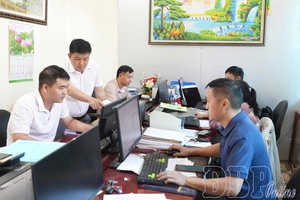
Facing this reality, the Điện Biên provincial Tax Department reviewed each revenue stream to identify areas with untapped potential for the final months of the year. One priority identified by the tax authority is strengthening the management of withholding taxes, particularly from out-of-province contractors and enterprises implementing projects within the province.
Nguyễn Quang Việt, Head of the Điện Biên provincial Tax Department, stated that the tax authority will propose that the provincial People’s Committee and the Department of Finance require out-of-province entities executing local projects to register branches or representative offices to declare, deduct, and pay taxes locally, thereby tightening revenue management and supplementing budget resources to offset policy-driven deficits.
Taxes, fees, and other revenues continue to be monitored, urged, and tapped effectively. Inter-agency coordination between tax authorities, departments, and localities has been strengthened to manage revenue streams tightly and curb tax leakages, particularly across high-potential sectors.
.jpg)
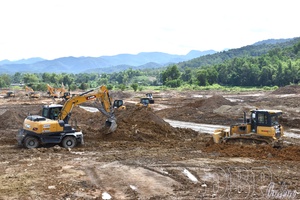
In the revenue picture for the final months of the year, land-related revenues are identified as a vital source to generate additional resources.
Cumulatively through August 11, total land-related revenues across the province reached nearly VND 243 billion. To fulfill the assigned target, land revenues must generate an additional VND 660 billion from now until year-end. This is a demanding task, as this stream depends directly on procedural progress, site clearance, and project commissioning, particularly for non-budget investment projects.
To expand land revenues, the province is focusing on resolving bottlenecks and accelerating non-budget investment projects. According to Lê Xuân Cảnh, Director of the Department of Agriculture and Environment, from now until the end of the year, the department will coordinate with sectors and localities to settle land-related issues definitively and accelerate site clearance, enabling faster execution of non-budget projects.
As the central economic driver of the province, Điện Biên Phủ ward accounts for a major share of the budget, with land revenues playing a key role. Year to date, total state budget collection in the ward reached VND 572.6 billion, reaching 127.5% of the assigned estimate.
In the final months of the year, alongside coordinating tax and fee collection measures, the ward is focusing on clearing site bottlenecks and accelerating non-budget projects to create additional revenue streams.
.jpg)
According to Hà Thanh Tùng, Chairman of the People’s Committee of Điện Biên Phủ ward, based on reviews of urban planning, land use status, land recovery projects, auctionable land funds, investment-attracting land reserves, and development capital needs, the ward formulated a land revenue generation scenario and proactively invested in land bank development for the 2026-2030 period. In 2026 alone, Điện Biên Phủ ward projects land-related revenues to exceed VND 90 billion.
Budget collection and economic growth maintain a reciprocal relationship: economic expansion generates revenue, while guaranteed budget resources finance infrastructure, stimulate production and business, and broaden development space.
For Điện Biên, this requirement is imperative given its double-digit growth target for 2026. In the context of certain revenue streams impacted by national relief policies, fulfilling budget estimates requires flexible, decisive measures in the year’s final stretch. From tightening tax administration and preventing revenue loss to untying land bottlenecks, accelerating site clearance, rolling out non-budget projects, and building clean land funds, every solution aims to expand resources for local development.
Budget collection in the final months carries substantial pressure. However, by clearly identifying vulnerable collection lines, actively seeking offsetting sources, and resolving bottlenecks to generate new revenues, Điện Biên is progressively establishing a proactive posture in financial and budgetary tasks, securing resources for rapid and sustainable growth.
Phạm Trung
.jpg)
.jpg)

.jpg)
.jpg)
.jpg)


.jpg)
.jpg)
.jpg)
You have 500/500 characters left
Please enter 5 or more characters!!!