



In a spirit of solidarity and proactivity, the locality is concentrating on effectively tapping local resources, mobilizing investment, driving socioeconomic development, steadily improving the living standards of the people, and creating momentum for breakthroughs in the new era.
Following administrative mergers, Mường Chà commune has expanded its development space while gaining substantial room to exploit and maximize the potential of diverse ecological zones and distinctive landscapes. Alongside infrastructure, trade, and services receiving gradual investment and completion, Mường Chà enjoys expanded headroom and added motivation to accelerate socioeconomic progress.
Mường Chà’s socioeconomic landscape continues to record positive transformations. By the end of 2025, average per capita income reached VND 29.2 million per person per year, while the poverty rate dropped to 21.43%. To date, Mường Chà commune has 10 out of 24 villages meeting new-style rural standards.
Nguyễn Hữu Đại, Chairman of the People’s Committee of Mường Chà commune, stated that after the merger, Mường Chà expanded its development space while converging diverse potentials and advantages, creating room and momentum for socioeconomic growth. Currently, the commune focuses on awakening internal potential, upholding solidarity, and effectively leveraging strengths in agriculture, forestry, and community-based tourism, while mobilizing infrastructure investment resources to establish a solid foundation for rapid, sustainable socioeconomic development and driving Mường Chà toward phased breakthroughs.
.jpg)
Agriculture continues to be defined by Mường Chà commune as the economic pillar, oriented toward intensive depth, science and technology applications, and value-chain integration. Leveraging local land, climate, and regional strengths, the commune focuses on restructuring crop and livestock patterns appropriately to improve productivity, quality, and product value. At the same time, it accelerates effective production models, tightens linkages among farmers, cooperatives, and enterprises, and progressively builds a modern, sustainable commodity agriculture.
In the first six months of the year, agricultural production across the commune remained stable with positive results. Total food crop cultivation reached 552.81 hectares, while short-term industrial crops spanned 77.32 hectares. Animal husbandry received continued support, bringing the commune’s total livestock herd to 126,116 head, contributing to securing food supplies, boosting incomes, and providing stable livelihoods for local residents.
Mường Chà is an exemplary locality in developing economic models under forest canopies. With a forest cover rate of 63.85%, the commune effectively utilizes under-canopy economic potential through cardamom cultivation and especially wild beekeeping for honey, which is steadily becoming a sustainable livelihood that elevates incomes and builds the Chà Nưa honey brand.
Currently, the Chà Nưa Wild Beekeeping Cooperative has 11 members maintaining around 200 wild bee colonies, harvesting 700 to 800 liters of honey annually and providing stable revenue for cooperative members. Building on the model’s success, Mường Chà commune developed Chà Nưa Honey into a certified 3-star OCOP product.
.jpg)
Pòong Văn Nghiệp, Director of the Chà Nưa Wild Beekeeping Cooperative, shared that wild beekeeping not only enables villagers to utilize natural forest advantages, but also raises forest protection awareness. To produce quality honey, beekeepers must follow proper care procedures, avoid chemicals, and preserve the ecological environment so bee colonies thrive healthily.
Having engaged in beekeeping for many years, Thùng Văn Ánh in Na Quang village maintains 12 domesticated wild bee colonies. Each year, the colonies yield over 30 liters of honey per harvest, selling at a stable price of approximately VND 250,000 per liter. Thùng Văn Ánh noted that domesticated wild beekeeping requires neither substantial land area nor heavy capital investment, but demands patience and mastery of care techniques. Favorable natural conditions allow the bees to produce consistent, high-quality honey, providing his family with a stable annual income of around VND 15 million.
Determining coffee and macadamia as core, long-term drivers in agricultural restructuring, Mường Chà commune has intensified communication to encourage farmers to restructure crop varieties, boldly converting low-yield plots to high-value crops. Local authorities have also provided seedlings, technical care guidance, and farming training sessions. To date, the commune has planted 304.61 hectares of new coffee and macadamia trees, establishing an important foundation for sustainable agricultural development.
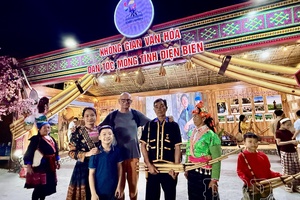
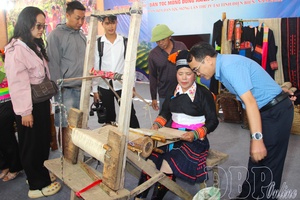
Alongside agricultural progress, Mường Chà commune is progressively tapping potentials in natural landscapes and ethnic cultural identities to develop community-based tourism, helping diversify livelihoods, generate jobs, and raise public incomes.
.jpg)
Located along National Highway 4H and endowed with majestic mountainous scenery, rich cultural identities, and distinctive traditional customs, Nà Sự village is steadily emerging as an appealing destination for tourists. Under Resolution No.12-NQ/TU of the Executive Board of the provincial Party Committee on tourism development in Điện Biên province for the 2026-2030 period with orientations to 2035, the province aims to develop seven community-based tourism villages by 2030, with Nà Sự village in Mường Chà commune targeted to achieve ASEAN Community-Based Tourism Standards.
Currently, the locality is progressively developing OCOP products linked to community tourism, while organizing training courses on hospitality skills, service delivery, and digital promotional outreach.
Thùng Thị Lâm, a member of the management board of Nà Sự community-based cultural tourism village, shared that villagers are enthusiastic and proud that the village was selected for community tourism development. This provides motivation to preserve cultural identity, protect landscapes, develop tourism collaboratively, elevate living standards, and build a flourishing village, where every resident acts as an ambassador showcasing the beauty of the homeland so that Nà Sự attracts increasing numbers of visitors.
With high political determination, decisive involvement across the political system, and public consensus, Mường Chà is progressively exploiting its potentials and advantages to foster sustainable economic growth. This serves as an important foundation for the locality to become a bright spot in provincial economic development, gradually affirming its status as a dynamic land rich in potential and development aspirations.
Sầm Phúc
.jpg)
.jpg)
.jpg)
.jpg)
.jpg)
.jpg)
.jpg)
.jpg)
You have 500/500 characters left
Please enter 5 or more characters!!!