



As a mountainous commune with rugged terrain, scattered villages, narrow roads, and steep slopes, Pú Nhung regularly faces landslides and road blockages during prolonged heavy rains. In recent years, flash floods and debris flows have cut off several villages for days, making it difficult to transport food, supplies, and other daily necessities. In response, local authorities began reviewing retail outlets at the start of the rainy season and encouraged shop owners to increase inventories of food and essential commodities.
.jpg)
Là Văn Thoan, Vice Chairman of the Pú Nhung commune People’s Committee, said: “The commune has nearly 50 grocery stores and retail outlets selling consumer goods. Since the beginning of the rainy season, we have encouraged businesses to increase their stocks of food and essential supplies. In villages at high risk of being isolated during disasters, the commune has instructed police and militia forces to prepare vehicles, personnel, and logistical support so they are ready to respond whenever needed. Our goal is to ensure that no resident lacks food, medicine, or other daily necessities.”
Following guidance from local authorities, retailers across Pú Nhung have increased their inventories well before the peak rainy season to ensure a stable supply for residents.
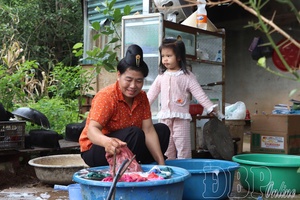
Quàng Thị Thoại, a grocery store owner in Rạng Đông village, Pú Nhung commune, said: “Since June, our family has stocked up on rice, instant noodles, bottled drinking water, canned food, cooking oil, seasonings, and other daily necessities. We also closely monitor weather forecasts so we can replenish supplies in time, ensuring sufficient goods are available even when transportation is disrupted by heavy rains and flooding.”
In addition to food supplies, maintaining a stable fuel supply is another priority during the rainy season to support daily life, production activities, and disaster response and recovery efforts.
With a network of 36 fuel stations across the province, Petrolimex Điện Biên One Member Limited Liability Company has proactively developed contingency plans for fuel storage and distribution. The company currently maintains reserves of approximately 557 cubic meters of gasoline and 975 cubic meters of diesel fuel at its storage facilities and retail stations, ready for deployment wherever needed.
.jpg)
Lê Thị Tố Quyên, an officer from the company’s Business Department, said: “We continuously monitor weather conditions and review inventory levels at each station so we can replenish supplies whenever necessary. We have also established a flexible distribution plan across the entire network to ensure adequate fuel supplies for daily consumption, production, and disaster prevention, response, and recovery operations.”
The proactive efforts of businesses are guided by the commodity supply plan developed by the provincial industry and trade sector before the rainy season began.
Under the plan, local authorities and businesses are required to develop stockpiling strategies and market stabilization measures for areas vulnerable to transport disruptions. They must also prepare sufficient manpower, transportation, and emergency materials to maintain supplies during natural disasters. In line with these requirements, commercial enterprises have expanded inventories of essential goods while stockpiling additional fuel and construction materials, including roofing sheets, screws, and steel wire, for post-disaster recovery.
According to statistics from the Department of Industry and Trade, the province currently maintains emergency reserves valued at more than VND 66.68 billion, including 65,000 cartons of instant noodles, 350 tonnes of rice, 4,500 cartons of bottled drinking water, 800 cubic meters of gasoline, 700 cubic meters of diesel fuel, and many other essential commodities. These reserves are considered sufficient to meet residents’ needs should natural disasters disrupt transportation.
However, emergency stockpiles can only be effective if market stability is maintained. Therefore, alongside stockpiling efforts, market surveillance authorities have intensified coordination with relevant agencies to inspect business activities and promptly detect and penalize profiteering, hoarding, and unjustified price increases during natural disasters.
.png)
Nguyễn Minh Cường, Director of the provincial Market Surveillance Sub-Department, said: “Market surveillance forces have worked closely with local authorities and relevant agencies to monitor supply and demand while inspecting businesses’ compliance with price-listing regulations and the requirement to sell goods at listed prices. Our priority is to promptly identify and strictly handle violations, thereby maintaining market stability and ensuring a sufficient supply of essential goods for residents throughout the rainy season.”
Guided by Vietnam’s principles of “four on-the-spot” preparedness: on-site command, on-site personnel, on-site equipment and materials, and on-site logistics, and “three readiness”: proactive prevention, timely response, and rapid recovery, local authorities, government agencies, and organizations have been actively implementing practical plans to secure essential supplies for communities during the rainy season.
However, as natural disasters and extreme weather events continue to increase in both frequency and intensity, ensuring the timely availability of essential goods and maintaining flexible emergency response mechanisms are not merely short-term priorities but long-term responsibilities. Meeting these challenges requires coordinated and determined action from the entire political system, strong support from the business community, and proactive self-reliance among citizens. Together, these efforts will strengthen the province’s resilience and capacity to prevent, respond to, and adapt to natural disasters in the years ahead.
Quang Long
.jpg)
.jpg)

.jpg)
.jpg)
.jpg)

.jpg)
.jpg)


.jpg)

You have 500/500 characters left
Please enter 5 or more characters!!!