



While most cooperatives formerly supplied basic input services for production, many have proactively transformed their operational methods, developing OCOP products and linking distribution along value chains. This shift not only enhances the competitiveness of local agricultural produce, but also lays the foundation for sustainable agricultural development.
Facing increasingly strict market requirements regarding quality, food safety, and traceability, many cooperatives have adapted quickly by altering production mindsets. Instead of operating fragmented individual setups, new-model cooperatives organize production according to standardized processes and closed value chains, helping farmers produce with confidence, businesses secure stable raw material supplies, and consumers access verified, high-quality products.
.jpg)
Capitalizing on the local specialty honey pineapple variety, the Pu Lau Honey Pineapple Cooperative in Pu Lau village, Mường Nhà commune, developed a raw material zone covering approximately 30 hectares with 22 participating members.
Pu Lau Honey Pineapple products currently hold a three-star OCOP certification, with an average yield of around 30 tons per hectare per harvest season. The cooperative proactively establishes value chains from input stages, ensuring uniform produce quality. Regarding off-take, ripe pineapples are sold through local and neighboring provincial traders, while green pineapples are supplied to processing factories in lowland provinces.
Cooperative Director Thào A Giàng stated that to guarantee stable consumption, the cooperative has proactively signed partnerships with major processing enterprises such as Việt Xanh Agricultural Processing Company in Thanh Hóa and Đồng Giao Export Food Joint Stock Company. On average, approximately 50% of each green pineapple harvest is procured by enterprises for processing. Signing off-take contracts reduces reliance on roving traders, curbs the boom-and-bust cycle of crop surpluses, and secures price and market stability for cooperative members.
The Pu Lau Honey Pineapple Cooperative model demonstrates that when close-knit production and consumption linkages are established, agricultural value increases, and producers gain the confidence to invest long-term, progressively developing raw material zones toward commercial scale.
.jpg)
Numerous cooperatives across Điện Biên province are steadily affirming the efficiency of production models linked to value chains. Many units proactively apply scientific and technical advances, accelerate digital transformation, utilize QR codes for origin tracing, and place products on e-commerce platforms to expand market reach.
To date, several effective new-model cooperatives have emerged across the province, tied to key produce such as rice, vegetables, canna vermicelli, and pineapples, sharing the common objective of establishing closed-loop value chains to enhance product worth. Prominent examples include Hồng Phước Cooperative, Mùa Ban Cooperative, Thanh Yên General Services Cooperative, and Noong Luống General Agricultural Cooperative.
Operating for over 10 years, Mùa Ban Cooperative in Sam Mứn commune stands as a concrete testament to this development path. Starting from expanding its deer herd, the cooperative progressively invested in machinery and processing lines to create high added-value products. Currently, the cooperative holds three 3-star OCOP products: Mùa Ban Deer Antler Wine, Mùa Ban Deer Antler Powder, and Mùa Ban Deer Bone Glue.
The cooperative focuses on intensive deep processing, brand building, and market expansion, while supporting members with breeding stock, farming techniques, and stable raw material zones. This close linkage has helped products gain consumer trust, delivering economic returns far higher than traditional farming methods.
To support the growth of modern cooperatives, the Provincial Cooperative Alliance plays an increasingly prominent accompanying role. Using local budget funds, the alliance has organized training courses on cooperative governance, value-chain production, agricultural marketing skills, and brand development for local units.
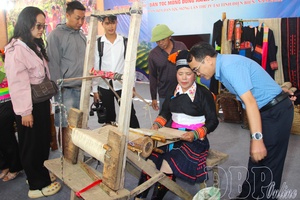
Trade promotion has been accelerated through provincial and regional trade fairs and exhibitions, providing cooperatives with opportunities to showcase distinctive items such as Điện Biên specialty rice, brown rice noodles and vermicelli, dong vermicelli, honey, khẩu xén sticky rice cakes, tea, coffee, and brocade handicrafts. This not only promotes local branding, but also expands cooperative ties, connects off-take partners, and broadens markets within and beyond the province.
.jpg)
However, the number of cooperatives operating truly effectively under value-chain models remains modest relative to the province’s total. Most cooperatives are small in scale, with limited management capacity, shortage of capital, and unsynchronized processing infrastructure. Establishing concentrated raw material zones faces hurdles due to fragmented farming plots, while enterprise partnerships remain limited. These bottlenecks prevent many cooperatives from developing complete value chains.
Even at the Pu Lau Honey Pineapple Cooperative, Director Thào A Giàng and members continually seek ways to maintain stable supplies to honor signed contracts with processing enterprises. To achieve this, the cooperative needs to expand raw material areas and develop accessible transport networks so machinery can reach cultivation zones for harvesting and hauling produce. The cooperative also hopes to invest in smart irrigation systems with soil moisture sensors that automate water and fertilizer distribution, progressively supporting off-season production, elevating yields, increasing incomes, and facilitating concentrated production zones.
Moving forward, the provincial Cooperative Alliance will continue collaborating with functional agencies to build and replicate sustainable value-chain cooperative models, encouraging new cooperatives tied to local key produce like tea, medicinal herbs, fruit trees, coffee, and OCOP products. Concurrently, it will continue promoting cooperative-enterprise partnerships, increasing scientific and technological applications, driving digital transformation, and expanding trade promotions to facilitate deeper cooperative integration into sustainable supply chains.
Building value chains represents not only a solution to enhance agricultural value, but an inevitable path for Điện Biên’s agriculture to develop sustainably. When farmers, cooperatives, enterprises, and state management agencies collaborate in a tight linkage, local agricultural produce will enjoy greater opportunities to establish brand standing and enhance market competitiveness.
Bình Nguyên
.jpg)
.jpg)

.jpg)
.jpg)
.jpg)
.jpg)
.jpg)
.jpg)
You have 500/500 characters left
Please enter 5 or more characters!!!