



From enhancing management and stepping up inspections to raising awareness among producers, traders, and consumers, every link in the safe food chain continues to be fortified, contributing to a solid shield that protects community health.
.jpg)
Food safety directly impacts public health and lives while remaining closely tied to the quality of human resources and socioeconomic development. Characterized by a large geographic area, uneven population distribution, and diverse food production and business activities, Điện Biên identifies ensuring food safety as a regular mission that requires close collaboration across sectors and active public participation.
Following the principle of proactive prevention, authorities across the province have strengthened state management while stepping up communications and guiding food production, processing, and trading establishments to comply with regulations. Inspection efforts are prioritized, focusing on high-risk sectors, product groups, and facilities to promptly detect, rectify, and handle violations, preventing food safety risks from threatening community health.
.jpg)
Currently, the province hosts over 2,130 food production, trading, and catering establishments. Among these, the provincial Food Safety and Hygiene Sub-Department manages 135 establishments, while the commune level manages 1,996 establishments.
Recognizing communication as a key, regular task, agencies across provincial levels, communes, and wards have intensified informational campaigns in diverse formats tailored to specific target groups. These efforts help elevate awareness and responsibility among producers, businesses, and consumers, gradually fostering voluntary compliance with food safety regulations to protect community health collectively.
During the first six months of the year, the entire province organized 27 conferences to review and implement the 2026 Food Safety Action Month with 1,350 participants, held 396 sessions with 11,352 listeners, broadcast 4,316 transmissions over commune and ward loudspeakers, hung 133 banners and slogans, and published 10 news reports and articles on food safety.
.jpg)
Lò Thị Nhung, Director of Phìn Hồ Agricultural Cooperative, stated that in producing dried buffalo meat, the cooperative always prioritizes food safety, from selecting clearly traced inputs to thoroughly cleaning processing equipment after each use, earning the trust of consumers through strict compliance. Lương Đình Trọng, owner of Trọng Dinh grocery store in Thanh An commune, shared that they prioritize sourcing goods from reputable distributors with complete invoices, documentation, and transparent origins, while resolutely refusing counterfeit, imitation, or substandard goods.
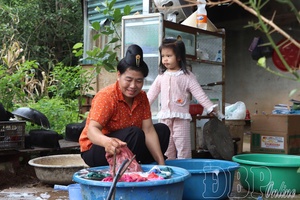
Consumers have notably raised their awareness, becoming more proactive in selecting and using safe food by paying close attention to origin, product quality, and hygienic conditions during purchasing and preparation. This shift in perception and consumer behavior has contributed significantly to safeguarding family and community health. Cà Văn Phương, residing in Co Mỵ village, Thanh Nưa commune, shared that he actively stays informed via mass media, prioritizes shopping at established stores, and selects items with complete labels displaying ingredients and clear origins.
Alongside communication, inspection activities have been carried out rigorously. In the first six months of the year, 106 food safety inspection teams were formed at the provincial, commune, and ward levels, comprising 2 teams at the provincial level and 104 teams at the commune and ward levels.
These inspection teams examined 1,899 establishments, finding 1,891 compliant establishments, representing 99.6%, and 8 non-compliant establishments, representing 0.4%. Authorities issued administrative fines against 8 establishments totaling nearly VND 12 million, alongside supplementary penalties that destroyed non-compliant items across 5 food product categories from 2 establishments. The main violations included selling expired goods, trading items with untraceable origins, and failing to meet protective attire standards for direct food handlers.
.jpg)
Authorities also supervised 1,109 community event meals serving 258,847 participants, ensuring full safety without any occurrences of food poisoning or foodborne illnesses. In Mường Chà commune, which currently has 98 food processing and trading establishments, inspections conducted across 45 facilities in the first six months of the year achieved a 100% compliance rate.
Nguyễn Duy Hiếu, Head of the Socio-Cultural Office of Mường Chà commune, stated that the commune will continue to step up food safety supervision, particularly during the Mid-Autumn Festival and the start of the new school year, to promptly address deficiencies and enforce compliance. At the same time, authorities will amplify communication to raise awareness among producers, traders, and consumers to maintain local food safety.
When administrative accountability rises, producer awareness strengthens, and consumers actively choose safe products, each link in the food chain becomes a solid protective layer. Through the determined efforts of all sectors and society, Điện Biên is progressively building a safe food environment, safeguarding public health and laying a foundation for sustainable development.
Sầm Phúc
.jpg)

.jpg)
.jpg)

.jpg)
.jpg)
.jpg)
.jpg)

.jpg)
You have 500/500 characters left
Please enter 5 or more characters!!!