Supporting driver’s license testing for illiterate candidates

ĐBP - Not being able to read or write in Vietnamese does not negate an individual’s practical need to operate a vehicle.

Recognizing this, the organization of training and testing for A1 category driver’s licenses specifically for illiterate citizens has become a vital initiative, meeting a legitimate demand for many residents across the province. This specialized approach ensures that those who have been left behind by traditional education systems can still participate safely and legally in traffic.

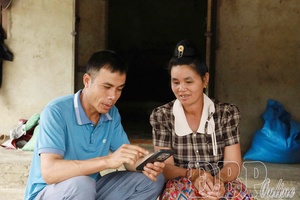
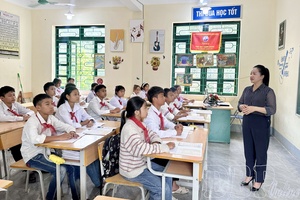
The most recent training and testing session for ethnic minority candidates who cannot read or write Vietnamese concluded in mid-March 2026. Among the 30 graduates was Lầu Thị Ghênh, born in 1985 and residing in Chua Ta B village. For her, the experience was transformative; previously, her lack of a license made her dependent on others for travel. After diligent practice and receiving dedicated guidance, she successfully navigated the “exam field” and can now travel independently for work and daily life, greatly enhancing her family’s mobility.

For candidates who cannot read or write Vietnamese, the theoretical exam is supported by two examiners and a translator to ensure accuracy.

In many highland and ethnic minority areas, the desire to obtain a driver’s license is high, yet language and literacy barriers often block access to standard programs. By organizing these specialized classes, the authorities are not only protecting the rights of citizens but also fostering a culture of legal compliance. According to Circular No.12/2025/TT-BCA, while candidates must meet general age and health requirements, ethnic minorities who are illiterate must also obtain a specific certification from their local Commune People’s Committee to ensure the program reaches the correct target audience.

The transition of testing duties from the Department of Transport (now the Department of Construction) to the Provincial Police was executed swiftly to meet public demand. Although the curriculum remains strictly aligned with the framework set by the Directorate for Roads of Vietnam, training facilities have adapted their teaching methods to suit the students’ needs. Instead of relying on written textbooks, the instruction focuses heavily on visual aids, real-world examples, and intuitive demonstrations. This shift allows candidates to grasp complex traffic laws through imagery and practical scenarios rather than text-heavy theory.

The testing environment for these candidates is carefully adjusted to maintain fairness and objectivity. The theoretical portion is conducted as a 30-minute oral interview combined with a paper-based multiple-choice test. Each candidate randomly draws an exam paper from the official question set. Đinh Duy Tân, an officer from the Road Vehicle Testing and Licensing Team under the Traffic Police Department, explained that the process requires two examiners working in tandem. One examiner reads the questions aloud and observes the candidate, while the second records the candidate’s chosen answers on the response sheet.

The practical driving test is conducted according to standard regulations, ensuring that all licensed individuals possess the necessary skills to operate vehicles safely.

For candidates who are not fluent in the national language (Vietnamese), a translator is provided to ensure accurate communication of the questions and answers. Meanwhile, the practical driving test, the “shape” or maneuverability exam, remains identical to the standard version required for all citizens. This ensures that every licensed driver possesses the necessary physical skills to operate a motorcycle safely on public roads.

Cao Thị Hải Yến, the leader of the Road Vehicle Testing and Licensing Team, emphasized that the Traffic Police have coordinated closely with the local education sector to verify the literacy levels of all applicants. Since taking over this responsibility, the unit has organized 4 training classes for 115 ethnic minority students who cannot read or write Vietnamese. This model is more than just a procedural adjustment; it is a humanitarian policy that reflects the deep care of the State toward those who have not had the opportunity for full schooling.

By providing these citizens with a legal path to driving, the province is not only facilitating easier labor and production but also significantly raising awareness of traffic safety laws in remote regions. When every resident, regardless of their educational background, is given the tools to understand and respect the law, the entire community moves toward a safer and more inclusive future.

Thu Hằng
Comment

You have 500/500 characters left

Please enter 5 or more characters!!!

Recent news

  • 'Awakening tourism potential of Tủa Thàng

    Awakening tourism potential of Tủa Thàng

    TRAVEL -
    ĐBP - In April, the Đà River flows with emerald-green waters, gliding leisurely like a soft silk ribbon. Its banks are lined with endless limestone mountain ranges, creating a landscape that is simultaneously majestic and poetic. Within this space, Tủa Thàng is gradually transforming as it step-by-step awakens its tourism potential.
  • 'Điện Biên to boost new-style rural area building for 20260-2030 period

    Điện Biên to boost new-style rural area building for 20260-2030 period

    ECONOMY -
    ĐBP - Following the implementation of the new-style rural development (NRD) program in the previous phase, Điện Biên province’s rural landscape has seen significant flourishes. However, the transition to a two-tier local government model has created major fluctuations, leaving many indicators and criteria no longer aligned with current realities.
  • 'Quietly guiding way to peaceful frontier

    Quietly guiding way to peaceful frontier

    NEWS - POLITICS -
    ĐBP - Behind the statistics of nearly 1,000 reports, operational plans, and directive documents advised and issued annually, serving hundreds of major, complex criminal cases, lies a rigorous process of analysis and strategic orientation. The advisory force of the Điện Biên provincial Police helps leadership make precise, timely decisions, ensuring security and order are maintained starting at the grassroots level.
  • 'Preserving heritage to fuel tourism

    Preserving heritage to fuel tourism

    CULTURE - SPORTS -
    ĐBP - Điện Biên stands as a cultural crossroads, preserving the unique treasures of 19 ethnic groups. In recent years, the province has placed a high priority on safeguarding and promoting traditional values, viewing them as a vital engine for sustainable tourism development.
  • 'Leveraging cultural tourism potential

    Leveraging cultural tourism potential

    TRAVEL -
    ĐBP - Điện Biên has identified tourism as a spearhead economic sector, built upon the effective exploitation of historical, cultural, and resort-based advantages.
  • 'Unlocking Điện Biên’s heritage gold mine

    Unlocking Điện Biên’s heritage gold mine

    TRAVEL -
    ĐBP - From the heroic traces of the Special National Relic Site of the Điện Biên Phủ Battlefield, Điện Biên is gradually unlocking historical values to develop sustainable tourism. The system of component sites serves as both as important landmarks of revolutionary history and as compelling destinations for visitors. The preservation, restoration, and effective use of these sites are opening up opportunities to promote Điện Biên tourism and drive socio-economic growth.
  • 'Maturity after training

    Maturity after training

    NEWS - POLITICS -
    ĐBP - After just one month of rigorous training, the new recruits at the Northwestern Mobile Police Regiment have successfully adapted to a highly disciplined environment, cultivating a professional demeanor and resilient spirit.
  • 'Commending 36 civil servants seconded to communes

    Commending 36 civil servants seconded to communes

    NEWS - POLITICS -
    ĐBP - On the afternoon of April 17, 2026, the Điện Biên provincial People’s Committee organized a conference to review and evaluate the results of seconding civil servants and public employees to support communal-level People’s Committees in implementing the two-tier local government model. Chairman of the provincial Party Committee Lê Văn Lương and leaders from various provincial departments and sectors attended the event.
  • 'Highland women paving way for tourism

    Highland women paving way for tourism

    TRAVEL -
    ĐBP - Through resilience, a deep love for their ethnic heritage, and a pioneering spirit, minority women in the highlands of Điện Biên are carving out new paths in tourism, rewriting the narrative of change within their own homes and villages.
  • 'Toward the ancestral land: Where Điện Biên unites in remembrance

    Toward the ancestral land: Where Điện Biên unites in remembrance

    CULTURE - SPORTS -
    ĐBP - In the consciousness of the Vietnamese people, the Hùng Kings Commemoration Day is not merely a holiday. It is a sacred convergence of the tradition of “remembering one’s roots,” a thread that connects past and present, uniting the nation and guiding people back to their origins. Each year, during the third lunar month, from the far reaches of the northwestern frontier, the people of Điện Biên pause in reverence and gratitude, turning their hearts toward Hùng Temple  - the cradle of the Vietnamese nation.