



It was not to look for anything particularly extraordinary, but simply to feel more clearly another spring returning to my homeland, Điện Biên. The sky was high and clear, while the spring sun spread a gentle yellow hue across the Mường Thanh basin. Along the flower route near the Mường Thanh bridge, people strolled leisurely. The Nậm Rốm river flowed slowly, with both banks lined with rows of chrysanthemums and dahlias showing off their vibrant colors. Children played joyfully, and adults greeted each other with smiles, wishing for a peaceful new year. The atmosphere was festive but not noisy, allowing one to feel their pace of life slowing down.
.jpg)
From a distance, the Điện Biên Phủ Victory Monument stood out against the blue sky. I was familiar with that image, but every spring, seeing the majestic monument in the sunlight amidst the pure white ban flowers felt different. Over the past year, Điện Biên Phủ ward had renovated many streets, public spaces had been expanded, and cultural and tourism activities were organized more systematically. Particularly, the appearance of the horse mascot attracted the attention of many visitors. The changes were not too loud, but they were enough for us residents to realize that the urban landscape was becoming more spacious and beautiful every day. I joined my family for New Year greetings, where the morning tea steamed and the newly peeled chưng cakes remained hot. The early year conversations were simple, focusing on the good rice harvest or families shifting toward service-based agriculture. These small details created a deep sense of peace, proving that spring in the city did not just lie in the flowers by the river, but in the sufficiency and warmth within every home.
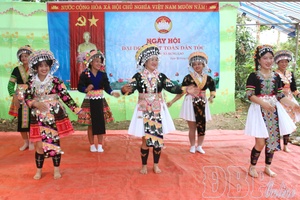
On the second day of Tết, I traveled to Na Son just in time for the spring festival. For years, this early-year gathering had become a tradition, but this year, the atmosphere was even more bustling as the locality organized additional activities. From early morning, the village cultural house yard was crowded, and the urgent rhythm of drumbeats echoed through the air. In one corner, youths competed in còn throwing, watching the shuttlecock fly into the blue sky amidst cheers. On the other side, a stick-pushing match took place with great intensity. When a winner was decided, the competitors laughed loudly and shook hands amidst the cheering crowd.
Nearby, there were competitions for ethnic costumes, Hmong pipe (khèn) performances, and the traditional pounding of giầy cakes. The sound of the khèn rose melodiously, making the village space feel fuller and more vibrant. Colorful outfits made the whole yard bright, and the organizers had arranged photo spots with a traditional Tết feel. Youths, women, and children took turns posing and laughing together. This year, the spring festival also welcomed many tourists from Lào Cai, Sơn La, and Hà Nội. Lò Lan Anh, who had lived in Na Son for many years, shared that seeing visitors from afar so excited made her proud of how her homeland had preserved its unique and attractive character. Commune leaders explained that maintaining the festival was not just for joy, but to preserve cultural identity and create community bonds in an increasingly modern world.
.jpg)
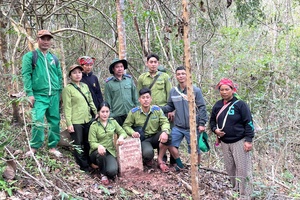
After the festive days concluded, the work of the new year commenced. Responding to the “Tree Planting Festival” in honor of Uncle Hồ, Mường Nhà commune organized a launch ceremony focused on planting pineapples and developing a sustainable green economy. The ceremony was solemn and brief, after which everyone moved to Bản Ban to begin the planting. The labor atmosphere was energetic, with some digging holes, others placing plants, and some covering the soil. The sound of hoes hitting the earth mixed with the sounds of laughter and conversation. Even as damp soil stuck to their sleeves, everyone remained excited.
In recent years, the province had pushed for the restructuring of crop patterns and encouraged production models that linked economic development with forest protection. Many households had boldly changed their ways and linked production to increase their income. The early spring launch, therefore, did not just have ceremonial meaning; it served as the beginning of a specific and practical year of labor. As the Điện Biên spring reached its peak, I thought about the past few days, the peaceful city, the bustling festival in Na Son, and the spirited tree planting in Mường Nhà. Having been born and raised on this land, I understood that spring was found in the early tea, the intimate xòe circles, and the holes of earth just covered with expectations. Each year, we welcomed not just a new season, but a renewed faith in the transformation of our homeland.
Đạt Thương
.jpg)
.jpg)
.jpg)
.jpg)
.png)
.jpg)
.jpg)
.jpg)
.jpg)
.jpg)
.jpg)
You have 500/500 characters left
Please enter 5 or more characters!!!