



In this context, the role of local officials who maintain the connection between the Party, the government, and the people has become increasingly vital. These individuals ensure that the flow of information remains seamless and that the bond between the administration and the community stays strong.
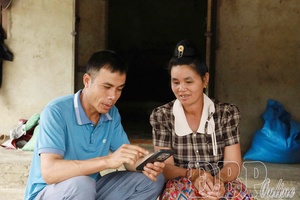
At Hua Sa A village in Quài Tở commune, the connection to the administration remains robust despite the distance to the new commune center growing by over 10km following the merger. Local officials took the initiative to go door-to-door to disseminate information and address concerns about administrative procedures. This dedication led to strong public consensus, which in turn boosted economic restructuring. The coffee area in Hua Sa A village grew from 145 hectares in 2022 to over 185 hectares by 2025, while macadamia cultivation expanded from 12 hectares to nearly 40 hectares. Consequently, the village poverty rate has dropped to just over 17%.
.jpg)
Similarly, Cà Văn Thức, who serves as both the Party Secretary and Head of Ló village in Thanh Nưa commune, emphasizes democratic centralism to ensure that residents are involved in every decision. Out of 144 households in Ló village, only one poor household remains today as social security policies are implemented without interruption.
Young officials are also bringing a new surge of energy to the grassroots, often showing decisiveness and bravery during critical moments. Mùa A Thi, the 26-year-old head of Háng Pu Xi village in Xa Dung commune, successfully organized an evacuation that saved 90 people from a sudden flash flood and landslide. This heroic act earned him the “Beautiful Youth” award and the First-Class Labor Order. He continues to work closely with local authorities to help the community stabilize their lives after the disaster.
Another example is Cháng A Dung, who was elected as the Party secretary of Phìn Hồ village in what is now Si Pa Phìn commune at just 22 years old. He has pioneered economic development by investing in livestock, raising 300 black-boned chickens and 20 pigs to generate an annual income of over VND 80 million. His success has encouraged other villagers like Cháng A Chư to follow suit and improve their own livelihoods through improved farming and animal husbandry.
.jpg)
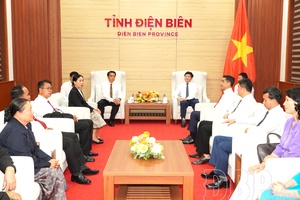
Điện Biên province currently oversees 1,446 villages, hamlets, and residential groups across 45 communes and wards. Following the implementation of the two-level local government model, authorities have proactively reviewed grassroots personnel to inspire a greater sense of responsibility.
Giàng A Dế, Secretary of the Quài Tở commune Party Committee, believes that as the administrative apparatus becomes leaner, it is essential that no gaps appear at the grassroots. Officials must act as direct bridges to resolve practical issues arising within the community. When a village head or Party secretary is exemplary and proactive, even the most difficult problems can be resolved.
Bùi Thu Hằng, Secretary of the Si Pa Phìn commune Party Committee, noted that over 1,000 tasks have been decentralized to the commune level, making strong grassroots support indispensable. Every official in a village or hamlet today is not just a messenger of policy but also a coordinator and a vital extension of the Party and government. From seasoned veterans to dynamic young leaders, these individuals are bringing the government closer to the people and creating a solid foundation for development in the Điện Biên homeland.
Thu Hằng
.jpg)
.jpg)
.jpg)
.jpg)
.png)
.jpg)
.jpg)
.jpg)
.jpg)
.jpg)
.jpg)
You have 500/500 characters left
Please enter 5 or more characters!!!