



In Điện Biên, a land where the cultural colors of 19 ethnic groups converge, each traditional trade represents more than just a livelihood; it is a vessel for preserving and promoting ethnic identity. However, the journey to maintain these traditions is currently encountering trials that demand more innovative, flexible, and persistent approaches.
.jpg)
Throughout the province, there are 51 traditional crafts and villages, including 47 handicraft trades operating in fields such as brocade weaving, rattan and bamboo weaving, musical instrument making, and fine art production. Despite this diversity, many of these trades are still struggling to find their place in the market. They often operate on a small scale with outdated technology, leading to low competitiveness and unstable output within the modern economic flow.
The majority of craft villages in Điện Biên operate at a household level with limited equipment, resulting in products that often lack diverse designs or consistent quality. While the traditional manual processes remain intact, there is a distinct lack of support in terms of modern technology and professional design. The consumption market is primarily limited to local and domestic buyers, making it difficult to attract tourists for immersive experiences. This has led to a hesitation to invest in larger production scales, compounded by a lack of specific policies to encourage and support master artisans and skilled workers.
.jpg)
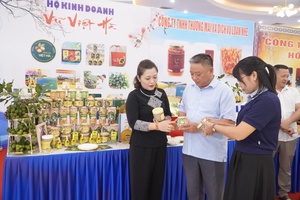
A prime example is the Khẩu xén and Chí chọp cake village in Mường Lay, which involves 71 households and 166 laborers. While it provides a stable income of approximately VND 5.5-6 million per person per month, sustainable development remains a difficult puzzle. Lò Thị Chúc Chi, Director of the Hoa Ban Trắng Cooperative, shares that even though their products have achieved 3-star OCOP recognition, practitioners must constantly “cut their coat according to their cloth.” Profits remain slim because raw materials depend on seasonal availability and price fluctuations, while labor and transportation costs continue to rise.
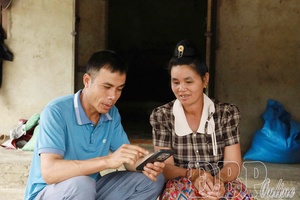
This struggle is mirrored in the brocade weaving households of Pa Xa Lào village, where the primary fear is the lack of a reliable market. Products are sold mainly to acquaintances or the occasional tourist in small quantities. Such low income fails to motivate the younger generation to commit to the trade long-term. Many families now teach their children the craft not to seek wealth, but simply to ensure that someone remains who knows how to preserve their ethnic soul. Similarly, the meticulous embroidered shoes made by the Hoa people in Thèn Pả village face intense pressure; despite having 120 laborers, consumption is limited mostly to the immediate community, as handcrafted prices struggle to compete with industrial goods.
Recognizing these hurdles, the province issued eight decisions and two plans between 2021 and 2025 to concretize policies for the conservation and development of traditional crafts. This legal framework serves as a corridor to support growth. To date, 14 out of 51 entities have been officially recognized, including 12 traditional crafts, one craft village, and one traditional craft village. Recognition is not just a title; it opens doors to state financial support, though this remains limited and heavily dependent on central budget allocations.
.png)
Because of these constraints, some 2025 goals for craft conservation have not yet been met. The plan to recognize 12 new crafts was achieved, but the targets for new craft villages and traditional craft villages only reached 50%. This indicates that development cannot rely solely on policy; there must be a shift in the internal strength of each community. To keep a trade alive, it must first be made “livable,” meaning it must generate enough economic value to be attractive to residents.
In the whirlwind of the market, where values can be replaced rapidly, these traditional villages remain like quiet streams nourishing the cultural identity of the region. If we can unblock, connect, and renew these sources, they will not only exist but flourish as a driver for sustainable development.
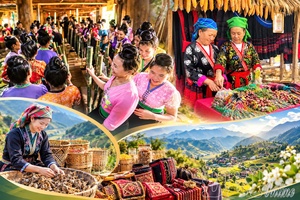
Moving forward, many localities hope to link craft villages with tourism. Brocade, handicrafts, and traditional cuisine can become “specialties” that attract visitors not just as products, but as part of an experiential destination. Furthermore, applying digital transformation, such as placing products on e-commerce platforms and utilizing social media, can help villages reach younger customers. By refining support mechanisms, planning production spaces, and building collective brands, Điện Biên can ensure that its ethnic heritage continues to thrive in the modern era.
Thu Phương

.jpg)

.jpg)
.jpg)
.jpg)
.jpg)
.png)
.jpg)
.jpg)
.jpg)
.jpg)
.jpg)
You have 500/500 characters left
Please enter 5 or more characters!!!