



Mường Mùn commune has 31 villages with more than 2,840 households, over 97% of whom are ethnic minorities, and a high rate of poor and near-poor households. For the 2025-2030 term, the commune Party Committee has identified agricultural restructuring as a key breakthrough, with coffee selected as the main crop. In recent years, leveraging funding from the national target program to build sustainable models, shift production mindsets, and strengthen farmers’ sense of ownership, the commune has prioritized supporting coffee cultivation.
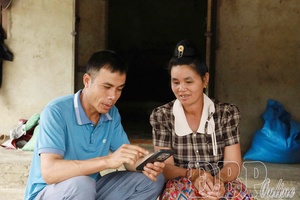
Before launching the program, local officials and respected community members were sent to visit successful coffee models in places such as Quài Tở and Mường Ảng. After these trips, they became the core advocates for the initiative. Lò Văn Sung, a resident of Xuân Tươi village, shared: “My family used to grow maize and cassava with unstable income. Only after seeing coffee farms in Quài Tở did I truly believe it could work. This year, we registered to plant nearly 2 hectares of coffee. Watching the plants grow day by day gives me confidence.”
.jpg)
One of Mường Mùn’s most innovative approaches is shifting away from fragmented seedling distribution to establishing centralized nurseries. The commune now operates seven nurseries across seven villages, managed collectively. Residents contribute labor: preparing soil, filling bags, and tending seedlings over six months. This model ensures consistent seedling quality and cuts intermediary costs. More importantly, hands-on participation helps farmers grasp technical processes from the outset. In a short time, 29 villages with 1,431 households have registered to plant 1,168.91 hectares of coffee in 2026, requiring more than 4 million seedlings - clear evidence of strong public consensus.
Quàng Văn Chơi, Head of Xuân Tươi village, noted: “If people were simply given seedlings, they might plant them carelessly. Now that they are directly involved in the nursery work, they value the plants more and understand the techniques. Xuân Tươi has 126 households; in 2026, 60 households registered to plant coffee on 34 hectares. On average, each hectare requires about three labor days per household over six months, with larger farms contributing more.”
Quàng Thị Như Quỳnh, Head of the commune’s Economic Department, said: “The commune follows a full technical process, from seed selection, treatment, and germination to substrate preparation, transplanting into bags, and care. Centralized nurseries help control pests and ensure high survival rates. This approach suits ethnic minority areas. The “State and people working together” mechanism is clearly implemented, reducing dependency.”
To ensure proper planting and care techniques, Mường Mùn commune has partnered with Tỏa Tình Coffee Cooperative to provide technical training for farmers. In the coming period, the commune will continue allocating national target program funds to support fertilizers and technical guidance during the first three years, maximizing the project’s effectiveness. This creates both a technical and financial buffer, helping reduce risks for farmers.
Nguyễn Mạnh Hùng, Chairman of the Mường Mùn commune People’s Committee, emphasized: “We understand that halfway measures will fail. That’s why the entire political system must be involved. Officials are assigned to each village, closely supporting every household and addressing problems on the spot. The commune has established 31 cooperative groups at village level, comprising Party secretaries, village heads, front work committee leaders, respected figures, and economically minded residents, to strengthen linkages. Clear responsibilities ensure smooth communication and early problem-solving.”
Mường Mùn aims to develop a concentrated coffee-growing area, moving toward market linkages and long term stable livelihoods. The commune currently has over 509 hectares of coffee. Once the 1,168.91 hectares planted in 2026 reach the production stage, household incomes are expected to improve significantly. More importantly, the model is reshaping production mindsets - encouraging a shift from low value short term crops to higher value perennial crops. Farmers are no longer passive beneficiaries but active participants from the very beginning.
With funding from the national target program and the centralized nursery model, Mường Mùn commune has built a proactive, transparent, and accountable approach. When people trust the process and take part in it, resources are used effectively, and the impact is far more sustainable.
Anh Nguyễn

.jpg)

.jpg)
.jpg)
.jpg)
.jpg)
.png)
.jpg)
.jpg)
.jpg)
.jpg)
.jpg)
You have 500/500 characters left
Please enter 5 or more characters!!!