



In November 2024, the neighborhood cultural house of Residential Group No.6 was officially inaugurated, becoming a highlight of community life in the area. Built on an area of over 1,000m2 with a total investment of VND 2.5 billion, the project stood out for its strong community involvement. More than VND 200 million was voluntarily contributed by local organizations and individuals to furnish the facility, landscape the grounds, and create a friendly and accessible space for residents. For people of the Residential Group No.6, the cultural house is not just a meeting venue, it is a cherished, familiar space integrated into their daily lives.

If the Residential Group No.6 is a model of consensus and initiative, then the newly completed cultural house in the Residential Group No.4, inaugurated in mid-June, reaffirms the pivotal role of community spirit in shaping cultural spaces. Constructed on the site of the former, deteriorated facility, the 370m2 building includes a 180-seat hall, stage, corridor, storage room, and auxiliary sections. The total investment of nearly VND 3 billion was partially sourced from the people themselves.
According to Lương Đức Tuấn, Chairman of Mường Ảng township People’s Committee: “Even when the project was still on paper, it had already received enthusiastic support from the local community. In addition to state investment, the people of Residential Group No.4 voluntarily contributed over VND 100 million for furnishings, sound systems, cultural-sports equipment, and landscaping. These contributions are not only of material value but also a vivid reflection of the unity in building this shared community home.”

The inauguration ceremony for the Residential Group No.4 cultural house took place amid joyous celebrations among hundreds of local households. It marked a major step in Mường Ảng’s journey to develop grassroots cultural infrastructure. More than just a facility for meetings, the center serves as a gathering space that preserves traditional values and nurtures solidarity and mutual affection in the neighborhood.
Trần Thị Hoa, Party Cell Secretary of Residential Group No.4, proudly shared: “With this spacious and well-equipped cultural house, we are committed to ensuring it is used effectively and sustainably. Alongside regular activities, the Party Cell will continue working with mass organizations to encourage residents to maintain the space and contribute additional equipment as needed, making this truly a cultural pillar of the community.”
In Mường Ảng, these neighborhood cultural houses are not merely infrastructure projects, they are living symbols of collaboration between the government and the people in cultivating a new way of life. As of June 2025, 9 out of 10 residential groups and hamlets in the township have been equipped with cultural houses, with the Residential Group No.4 cultural house being the latest milestone in this ongoing development.

Chairman Lương Đức Tuấn emphasized: “A civilized urban area cannot be built with technical infrastructure alone. For us, culture must lead the way, accompany, and elevate development. Neighborhood cultural houses are where community life begins, where civility is nurtured, and where unity takes root.”
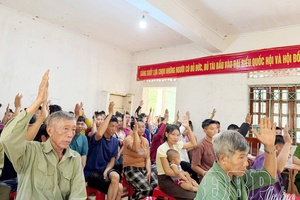
It is no coincidence that the Party committee, authorities, and people of Mường Ảng have invested such heartfelt effort into building this cultural system. They understand that these are not just meeting halls, they are spaces that preserve identity, spread cultural values, and deepen neighborly ties. At cultural houses that have been in use for years, the impact is clear: their open courtyards become playgrounds for children and gathering spots for elders, and their halls ring with celebration on festive occasions, bringing the community together in shared joy.
Ngô Thị Hải Yến, Party Secretary of the Mường Ảng township Party Committee, noted: “Recognizing culture as the spiritual foundation of society, our Party Committee always ties economic growth to improved cultural life. These cultural houses not only enhance spiritual wellbeing but also serve as venues for civic engagement, helping to build trust in local leadership through community involvement.”

From the first bricks to the completed rooftops, each neighborhood cultural house in Mường Ảng stands as a vivid symbol of community spirit. Beneath the red flag, the glow of lights, and the familiar sound of local loudspeakers, hope is kindled, aspirations awakened, and individuals drawn together in a strong, unified whole.
As the township enters a significant new chapter, with district-level governance completed and communes assuming administrative roles under the new two-tier model from July 1,grassroots cultural infrastructure like these cultural houses becomes even more meaningful. They are not only physical preparations but also foundational steps toward cultural consolidation and long-term sustainable development. Each brick embodies hope and trust, safeguarding the cultural soul of the people as they move forward toward a future that is more modern, more civilized, and more deeply rooted in identity.
“As long as the people are the foundation, every change can take root and flourish. In Mường Ảng today, each cultural house is not just a symbol of unity but a launching pad for the Party, the government, and the people to cross into a new era, together with shared aspirations and enduring faith in the power of community culture,” Ngô Thị Hải Yến emphasized.
Quang Long
You have 500/500 characters left
Please enter 5 or more characters!!!