



In Tủa Thàng commune, Meritorious Artisan Phàn Quang Châu stands among the few individuals knowledgeable in the spoken language, written script, and traditional rituals of the Dao ethnic group, particularly the Cấp sắc ritual. Awarded the title of Meritorious Artisan in 2019, he dedicated years of enthusiasm to collecting ancient books, opening classes to teach the Nôm Dao script, and guiding young generations in practicing traditional rituals.
Artisan Phàn Quang Châu noted that Dao script represents a difficult writing system to learn and write, typically taking learners 1 to 2 years to achieve basic reading and writing abilities. Concerned over the risk of ethnic script gradually fading, he patiently collected, transcribed, systemized documents, and taught village descendants. Beyond teaching written script, he guides understanding of traditional rituals, contributing to preserving cultural values attached to the spiritual life of the Dao people.
Phàn Quang Châu shared that written script stands as the pride of Dao people, adding that without learners and keepers, it would eventually face oblivion, which drives his constant efforts to teach village descendants so that as long as successors remain, the written script and cultural values of the Dao ethnic group will endure.
Following years of interruption, on December 31, 2025, the New Rice Festival of the Khơ Mú people in Tọ Cuông village, Búng Lao commune, was restored. As panpipes and drums resounded to signal the festival opening, Artisan Quàng Văn Cá quietly assumed the most crucial duty of safeguarding the authenticity of each ceremony, carefully preparing offerings and reviewing details because every ritual holds cultural values preserved across generations by ancestors, connecting people with ancestors, heaven, earth, and Khơ Mú ethnic origins.
.jpg)
Attached to traditional customs for many years, Artisan Quàng Văn Cá memorized every prayer article and understood the significance of each ceremony within the New Rice Festival. He consistently kept the mindset that rituals possess true vitality only when received and practiced by subsequent generations, leading him to teach youths how to prepare offerings, execute ceremony orders, and recite prayers in the Khơ Mú language alongside performing rituals directly. To date, nearly 50 students received his instruction, with many capable of practicing traditional rituals proficiently to become successor forces preserving Khơ Mú ethnic cultural identity.
Quàng Văn Cá shared that every household previously conducted new rice ceremonies, but as life transformed over time, numerous customs faced oblivion, making villagers delighted upon restoration, adding that he hopes an increasing number of young people will learn and continue ancestor rituals.
As an outstanding student directly taught by Artisan Quàng Văn Cá, Lò Thị Toan from Tọ Cuông village shared that every learning session helped her grasp ritual orders while deepening her understanding of custom meanings in Khơ Mú life, with lessons from her teacher inspiring her to continue learning, practicing, and contributing to preserving her ethnic group’s traditional cultural values.
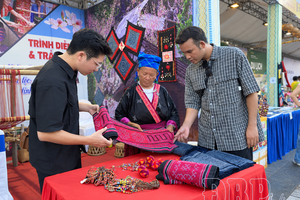
With nearly 50 years attached to rattan and bamboo weaving, Quàng Văn Hặc from Nà Tấu village, Nà Tấu commune, stands among those devoting full enthusiasm to preserving the traditional handicraft of the Thái ethnic group. Beyond working diligently beside rattan strips and bamboo strands, he devotedly teaches weaving techniques to descendants and villagers so the traditional craft continues across generations.
Recalling ancestor crafts, his eyes glowed with pride as he noted that weaving previously served as a livelihood for the entire village, where youths entered forests for rattan while elderly people and women wove at home, enabling numerous families to secure food, clothing, and step-by-step overcome hardships.
According to Hặc, in recent years, as eco-friendly product usage trends grew popular, traditional crafts gained development opportunities, with cooperative groups and production facilities forming to connect with enterprises inside and outside the province to introduce products to markets, helping families maintain crafts while securing stable income streams. Products range in price from 10,000 VND to around 400,000 VND, while items requiring technical precision - such as rattan dining trays - sell for VND 1.2 to 1.5 million.
Beyond providing livelihoods, rattan and bamboo weaving holds distinct Thái cultural values. Recognizing these values, in June 2025, the rattan and bamboo weaving technique of the Thái people in Điện Biên province was inscribed by the Ministry of Culture, Sports and Tourism onto the National Intangible Cultural Heritage List. This recognition affirms traditional craft values while inspiring enthusiastic individuals like Hặc to continue preserving, teaching, and spreading ethnic cultural essence to future generations.
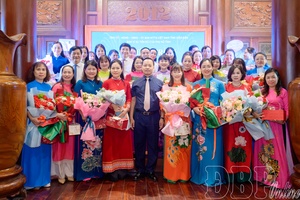
Điện Biên currently counts 24 intangible cultural heritages inscribed onto the National Intangible Cultural Heritage List, 2 heritages inscribed by UNESCO, and 41 individuals awarded or posthumously awarded the title of Meritorious Artisan in intangible cultural heritage. Each recognized title and heritage crystallizes years of preservation and handover by devoted individuals, as heritage possesses true vitality only when practiced within community life, cherished and handed over by predecessors, and respectfully continued by today’s generation.
Quang Long
.jpg)
.jpg)
.jpg)
.jpg)
.jpg)
.jpg)
.jpg)


.jpg)
.jpg)
.jpg)
You have 500/500 characters left
Please enter 5 or more characters!!!