



Serving as the host locality, Điện Biên is focusing on finalizing all logistical conditions; proactively reviewing program items, and proposing adjustments to several activities to ensure the festival is organized practically, economically, effectively, and in alignment with local realities.
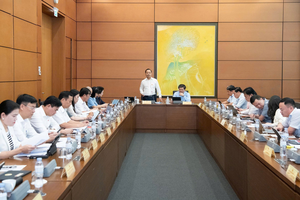
Clearly defining its role as host locality, the province organized a working delegation to confer with the Ministry of Culture, Sports and Tourism to exchange views and reach consensus on program contents, schedules, task assignments, and coordination responsibilities. The province promulgated a plan on joint organization and established the Festival Organizing Panel in Điện Biên province. Prior to this, the provincial People’s Committee designated personnel to join the Steering Committee and Organizing Committee, provided comments on the draft plan of the Ministry of Culture, Sports and Tourism, and directed relevant agencies and units to prepare local hosting conditions proactively.
According to the plan, the festival opening ceremony, chaired by the Ministry of Culture, Sports and Tourism, will take place at 8:00 PM on October 9 at 7/5 Square, Điện Biên Phủ ward. Cultural activities will run from October 9 to 11 along Mường Thanh Walking Street. At present, the province is selecting artisans, performers, and figures knowledgeable in Hmông cultural traditions across communes and wards to establish the provincial delegation participating in the festival.
.jpg)
In sports and traditional folk games, six competitive disciplines - comprising 7-a-side women’s football, tug-of-war, stick pushing, tù lu (spinning top), crossbow shooting, and pa pao throwing - will be organized from October 9 to 11 in the area of De Castries bunker, the provincial Stadium, and Mường Thanh Walking Street. To date, the Vietnam Sports Administration has issued tournament regulations and organization plans. Điện Biên has surveyed and arranged competition venues while repairing, upgrading, and supplementing athletic equipment.
Trần Hải Hà, Director of the Department of Culture, Sports and Tourism, stated that the department issued a plan for athlete selection and training. The Điện Biên delegation is projected to field 62 athletes competing across all 6 disciplines and 35 categories, striving to secure 24 medals of various classes to place among the leading delegations overall. Within events hosted directly by the province, an incense-offering ceremony paying homage to President Hồ Chí Minh and heroic martyrs is scheduled for the afternoon of October 9 at the President Hồ Chí Minh Commemorative House and the Martyrs’ Temple at the Điện Biên Phủ Battlefield. On the same day, opening events for activities within the festival framework will commence at Mường Thanh Walking Street.
To ensure the festival proceeds practically, economically, effectively, and suited to practical conditions, Điện Biên province urged the Ministry of Culture, Sports and Tourism to review and agree upon adjustments and additions to several contents. Among these, the province proposed omitting the street carnival. Following reviews, the festival unfolds over three consecutive days with a continuous schedule of cultural, artistic, sporting, exhibition, and experiential activities. Meanwhile, a street carnival requires mobilizing large contingents, extensive rehearsal time, vehicles, specialized equipment, traffic management, security assurance, and coordination among multiple delegations. Staging it could scatter organizational forces and increase pressure on timelines, logistics, and overall management. Điện Biên therefore recommended concentrating resources on direct showcases, performances, and initiatives promoting Hmông cultural heritage, such as the art of the Hmông panpipe (khèn), mass arts festivals, ethnic costume showcases, traditional crafts, cultural experiential spaces, and community exchanges.
Another item proposed for adjustment is the destination for visiting and experiencing a Hmông ethnic cultural tourism village, shifting from Lồng village (Quài Tở commune) to Tù Lu - Tìa Ló community tourism village (Pu Nhi commune) - a destination offering more suitable conditions for staging experiential activities tied to the daily life, residential space, architecture, natural scenery, and traditional cultural values of the Hmông people. This adjustment also facilitates greater convenience regarding travel itineraries, transportation, and delegation coordination. The province additionally proposed shifting the closing ceremony venue from 7/5 Square to Mường Thanh Walking Street. According to the province, this street serves as the focal area concentrating cultural showcases, exhibitions, experiential spaces, and public interactions throughout the festival. Holding the closing ceremony here optimizes prepared physical infrastructure and technical systems, minimizes inter-site movement, and facilitates logistics, traffic control, security, and event coordination. The open setting linked to the historical legacy of Mường Thanh bridge also enables residents and visitors to access, observe, and participate readily, thereby amplifying the festival’s resonance.
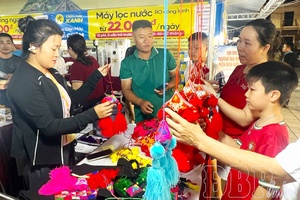
Proposing the addition of exhibition booths designated for communes and wards of Điện Biên province within the “Cultural and Culinary Experiential Space” to introduce cultural items, local specialties, OCOP commodities, and signature regional offerings is viewed as an effective measure to leverage the host locality’s role. This provides conditions for localities to market their unique cultural assets, commodities, and distinct potentials directly, strengthening linkages between culture, tourism, and indigenous produce.
While awaiting official determinations on adjustments to contents and venues, Điện Biên continues proactively completing every preparatory phase, from finalizing schedules, preparing human resources, and ensuring physical facilities to guaranteeing logistics, security, and public safety. This demonstrates the province’s resolve to coordinate a meticulous, dignified festival that aligns with practical conditions and effectively honors the fine cultural heritage of the Hmông ethnic community in the region.
Đức Kiên
.jpg)
.jpg)
.jpg)
.jpg)
.jpg)
.jpg)
.jpg)
.jpg)
.jpg)
.jpg)
You have 500/500 characters left
Please enter 5 or more characters!!!