



Vằng Xôn village in Chà Tở commune is home to more than 120 households and nearly 600 people. For generations, the traditional Hair-Washing Festival of the White Thai people has been part of the community’s cultural memory. Held at the beginning of the Lunar New Year, the Áp hô chiêng ritual - a traditional White Thai ceremony, symbolizes washing away the misfortunes of the old year and praying for peace and good health in the new one. In 2026, the festival was held on February 16, the 29th day of the last lunar month, drawing a large number of local residents. Amid the sounds of drums and gongs, traditional xòe dances were performed, connecting the cultural memories of the White Thai people with life today.
Lèng Văn Hùng, Secretary of the Vằng Xôn village Party Cell, said: “Every year, we continue to hold the festival. For local residents, the traditional Hair-Washing Festival is an opportunity to come together, enjoy themselves and remember the customs of their ancestors. Those who know how to perform xòe dances teach those who do not, while older generations guide younger people in preparing the rituals. Stories about customs and traditions are revisited in each household. In this way, the cultural values of the White Thai people here are preserved and passed down from generation to generation.”
In Hón Sáng village, Mường Ảng commune, whenever festivals, holidays or community events take place, the village cultural house comes alive with the sounds of khèn instruments and drums, while circles of xòe dancers follow one another. Children chatter and play in the courtyard, older people gather around the fire, and young people immerse themselves in familiar folk songs. In this space, generations meet and celebrate together while remembering the customs and traditions of their ethnic group.
.jpg)
Cầm Nhân Hà, Head of Hón Sáng village, said: “During festivals and holidays, people are happy to meet, dance, sing and talk together, which strengthens solidarity in the village. More children and young people are also taking part, helping them learn about and preserve the cultural traditions of their ethnic group.”
In Búng Lao commune, community culture is being revitalized through traditional festivals, cultural events celebrating ethnic groups and cultural exchanges. Traditional values are also preserved through village clubs and performing arts groups.
One example is the Club for Promoting and Preserving Thai Traditional Culture at Búng Lao Semi-Boarding Primary School. Established in late 2025, the club has attracted nearly 50 third-, fourth- and fifth-grade students, creating a space where they can become familiar with and experience the cultural traditions of their ethnic group.
Đào Ngọc Lan, Head of the Club for Promoting and Preserving Thai Traditional Culture, said: “The students are very excited to practice these activities themselves. Every time they practice xòe, bamboo dancing or folk storytelling, they are enthusiastic. Many students have proactively learned more about their ethnic customs through books, newspapers and the Internet.”
Club activities are generally organized as hands-on experiences. Students learn xòe dancing and bamboo dancing, identify traditional clothing, become familiar with the Thai script, and explore storytelling, cuisine and traditional festivals. The club also provides space for students to express their creativity. They can suggest their own dance movements, coordinate rhythms and work together to prepare short performances for their classmates and teachers. Through each session, familiar aspects of Thai cultural life become part of the students’ memories in a natural and accessible way.
Home to 19 ethnic groups, Điện Biên province has in recent years placed strong emphasis on preserving and promoting traditional festivals in connection with tourism development. Many traditional festivals have been revived and preserved, including the Gầu Tào Festival, a traditional Hmong festival for praying for good health and good fortune, in Nà Bủng commune; the Tra hạt Festival, a Khơ Mú ceremony marking the start of a new farming season, in Búng Lao commune; the Thành Bản Phủ Festival, which commemorates the historical citadel and its legacy, in Thanh An commune; and the Xên bản and Xên mường festivals, traditional Thai ceremonies praying for peace and prosperity, in the lowland communes of Điện Biên..
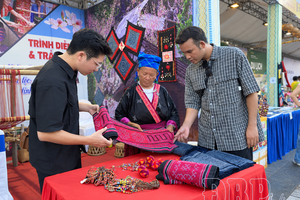
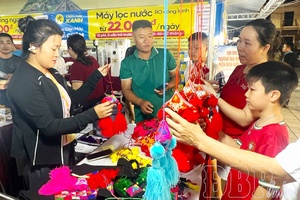
Alongside the restoration of traditional rituals, outdated customs and practices have gradually been reviewed and adjusted toward more civilized and economical forms. Many localities incorporate traditional costumes, folk songs, folk dances, ethnic musical instruments and traditional cuisine into cultural, sports and tourism festivals, as well as community solidarity events in residential areas.
These activities give local people more opportunities to meet, practice and pass on their culture. Cultural values that were once deeply embedded in community life continue to find a place in the rhythm of modern life.
The Điện Biên provincial Party Committee’s Resolution on tourism development for 2026-2030, with a vision to 2035, sets a target of having at least seven officially recognized community-based tourism sites by 2030, including one meeting ASEAN Community-Based Tourism standards.
Therefore, preserving and promoting traditional cultural values is increasingly important in developing tourism products.
Nguyễn Thị Thanh Chuyên, Deputy Director of the Department of Culture, Sports and Tourism, said: “In recent years, the department has focused on guiding localities in preserving and restoring cultural values that remain relevant to contemporary life. We encourage residents to maintain festivals, traditional crafts, folk songs, folk dances and cuisine, and to incorporate distinctive cultural features into tourism activities. In this way, culture is preserved within the community while also creating more experiences for visitors to discover and enjoy.”
Quang Long
.jpg)
.jpg)
.jpg)
.jpg)
.jpg)
.jpg)
.jpg)
.jpg)
.jpg)
.jpg)
You have 500/500 characters left
Please enter 5 or more characters!!!