



In recent years, the cultural infrastructure system from the provincial to the grassroots level has been prioritized for comprehensive upgrades. A series of major facilities such as the Điện Biên Phủ Victory Museum, the 7/5 Square, the Võ Thị Sáu Park, the multi-purpose sports arena, the provincial stadium, the provincial Museum Exhibition House have shaped a more professional environment for creativity, research, and cultural practice.
.jpg)
At the same time, commune and ward level cultural houses and community halls have been renovated and equipped with additional facilities, ensuring space for regular grassroots cultural activities. This expansion of cultural infrastructure, often described as “soft infrastructure”, directly contributes to improving the capacity of cultural officers, performers, and artisans. As creative spaces grow, opportunities to access knowledge, technology, and cultural activities become more sustainable.
Beyond infrastructure investment, the province has focused on policies for cultural and arts personnel. Performing arts workers currently receive preferential allowances; cultural information officers receive material based benefits and hazardous environment allowances; grassroots propagandists and mobile film, screening teams in upland areas receive mobility allowances; and community performers and propagandists are compensated for training and performances in line with regulations.
.jpg)
The province also places importance on awarding the titles “People’s Artisan” and “Meritorious Artisan” in the field of intangible cultural heritage. To date, the State President has conferred or posthumously awarded the Meritorious Artisan title to 41 artisans across the province. Among them, 23 artisans with low incomes and difficult living conditions receive monthly support payments (seven at VND 850,000 and 16 at VND 700,000). These subsidies provide meaningful assistance, particularly for cultural workers in remote areas with limited socio-economic opportunities.
Cultural and artistic activities, together with the grassroots performing arts movement, have also seen positive developments, spreading widely across Điện Biên. The province now has 1,240 community performing arts teams in villages, hamlets, and neighborhoods, all maintaining regular activity. This is a key force in preserving and promoting ethnic cultural identity, while also serving as a grassroots environment to identify and nurture cultural talent. Notably, Resolution No. 05/2023/NQ-HDND dated July 14, 2023, which provides VND 2 million per team per year in support, has given the grassroots movement a noticeable boost. With this funding, many teams now have better conditions to sustain their activities.
.jpg)
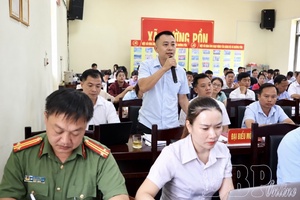
Pờ Sơn Mé, Head of the Tả Kố Khừ village performing arts team in Sín Thầu commune, shared: “Thanks to this support, more women in the village can join the team. With the VND 2 million, we have funds for makeup, drinking water during practice sessions, and performances during village and commune festivals without having to pay out of pocket. It’s also an important source of encouragement that fuels our passion to contribute to local cultural activities.”
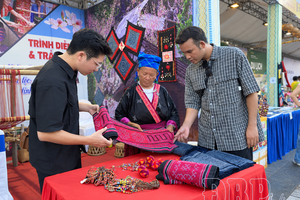
However, Điện Biên continues to grapple with a shortage of high-quality cultural personnel. At the grassroots level, cultural officers remain few in number and lack specialized expertise, a situation made more pronounced after recent administrative reorganizations. At district level culture-social offices, the number of civil servants is small while they must handle multiple fields, resulting in heavy workloads and limited expertise. More critically, emerging fields such as cultural industries, creative design, cultural marketing, arts management, and digital technology applications lack sufficient qualified personnel. These fast growing areas require advanced skills, yet Điện Biên has few individuals capable of taking on such roles. Meanwhile, many artisans and artists - guardians of cultural heritage - still lack a professional environment to develop and commercialize their creative products.
.jpg)
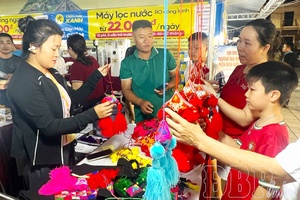
As a mountainous province with a high poverty rate and a budget heavily reliant on central Government transfers, Điện Biên struggles to allocate sufficient resources for culture. Limited local revenue and a small economic scale make it difficult to meet the recommended minimum 2% budget share for cultural spending. Digital technology application also lags behind: the province lacks a digitized heritage database and has no e-commerce platform for cultural products. Efforts to mobilize private sector funding for culture remain below expectations due to challenging socio-economic conditions and a small number of enterprises, most of which are modest in size.
At the same time, specialized incentive policies for cultural talents have yet to be implemented. There are no talent scholarships, creative support mechanisms, or criteria for identifying cultural talents, making it difficult to attract and retain skilled individuals. Many young artists choose to build their careers in major cities where creative environments are more dynamic. Điêu Thị Thực, Head of the provincial Ethnic Arts Troupe, candidly spoke about the challenges in attracting high quality talent: “Điện Biên is a poor province, talented people rarely come here. Performers with good looks and strong professional skills often stay in big cities because there are more opportunities. Here, dancers earn very little, only civil service salary levels. External performance opportunities are scarce, and the pay is modest. Our artists truly have to love the profession to stay committed.”
.jpg)
Overall, Điện Biên’s challenges in developing cultural human resources stem from the socio-economic realities of a mountainous border province, where infrastructure, income levels, and career opportunities remain limited. However, positive signs from the grassroots performing arts movement, ongoing investments in cultural infrastructure, and the engagement of relevant sectors show the province’s determination to untangle human resource bottlenecks, especially in cultivating high quality cultural personnel.
In the coming period, the province will focus on building a cultural workforce capable of adopting new technologies, safeguarding heritage, developing cultural industries, and promoting ethnic cultural values in the era of integration. This is not only an immediate necessity but also a long term driver for transforming culture into a source of endogenous strength that contributes to sustainable development in this westernmost land.
Diệp Chi
.jpg)
.jpg)
.jpg)
.jpg)
.jpg)
.jpg)
.jpg)
.jpg)
.jpg)
.jpg)
You have 500/500 characters left
Please enter 5 or more characters!!!