



From the province’s signature Ban Flower Festival to the historical Hoàng Công Chất Temple Festival and the spirited Bun Huột Nặm water-splashing festivities in Na Sang and Mường Luân, the region has successfully curated a multi-colored “festival space.” This collective atmosphere has firmly positioned Điện Biên as a unique cultural landmark within the Northwestern highlands.
.jpg)
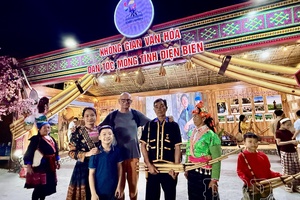
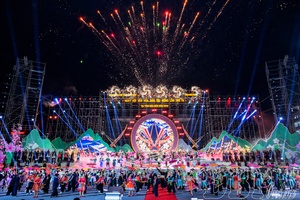
The Ban Flower Festival 2026 was executed with impressive scale and professionalism, reinforcing its status as the province’s most distinctive tourism product. By weaving together art programs, street parades, and ethnic cultural displays, the festival acts as a “total event complex” that balances heritage preservation with modern tourism needs. Beyond honoring the symbolic flower of the Northwest, the event serves as a platform for intangible cultural heritage - such as Xòe dances, Khen music, and the folk songs of the Thái, Mông, and Khơ Mú - to live and breathe in a contemporary setting.
This year’s festivities saw a significant international presence, including delegations from Northern Laos, Pu’er City (Yunnan, China), and representatives from the embassies of Japan, Thailand, and France. This global interest highlights the festival’s role in fostering cross-border cultural and economic cooperation. The impact was clearly reflected in the data: during the core week of the 2026 Ban Flower Festival (March 6-12), Điện Biên welcomed over 76,000 visitors, a staggering 152% increase compared to the previous year. This surge in tourism generated total revenue exceeding VND 121 billion, representing a 132% growth.
.jpg)
Nguyễn Thị Thúy Hằng, a traveler from Ho Chi Minh City, shared that this was her first time visiting during the festival. She was deeply impressed by the meticulously staged folk art performances and noted that the friendliness and openness of the local people made her feel an immediate connection to the land, sparking a desire to return for future seasons.
As the peak of the flower festival transitions, the cultural momentum continues with the Hoàng Công Chất Temple Festival. This event blends historical reverence with spiritual depth, featuring traditional dragon dances, festive drumming, and rituals commemorating the general who defended this border territory. The celebration also offers a communal space for folk games, calligraphy, and dozens of booths showcasing local cultural and tourism products.
.jpg)
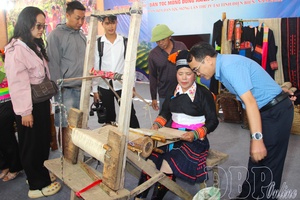
In Thanh Yên commune, the Khăm bản ceremony and Bun Huột Nặm (Water Splashing Festival) of the Lào people provide an entirely different sensory experience. Centered on prayers for luck and a bountiful harvest, these rituals involve water splashing and wrist-tying ceremonies that are highly engaging for outsiders. Nguyễn Thị Hạnh, a resident of Điện Biên Phủ ward, expressed her delight at how easily visitors can integrate into the joyful atmosphere, noting that despite the fun, the rituals remain deeply rooted in their original meanings of peace and prosperity.
A cornerstone of Điện Biên’s strategy is the seamless integration of culture and history. By timing the Ban Flower Festival to coincide with the March anniversary of the opening of the 1954 Điện Biên Phủ Campaign, the province creates a multi-layered journey. Travelers can celebrate local culture one moment and explore the Hill A1, General de Castries bunker, or the Điện Biên Phủ Victory Museum the next. This holistic approach aligns with modern “experience-centric” tourism trends.
.jpg)
From a business perspective, Nguyễn Đức Thành, a tour operations manager, believes the festival season has become a clear highlight for domestic and international markets. However, he suggests that to maintain this competitive edge, the province must continue to refine its tourism ecosystem, including infrastructure, accommodation services, and human resource quality. Building regional tour links will also be essential to extending visitor stays and increasing spending.
Ultimately, by treating these festivals as a “cultural ecosystem,” Điện Biên is turning its heritage into a sustainable internal resource for long-term socio-economic development.
Diệp Chi
.jpg)
.jpg)
.jpg)
.jpg)
.jpg)
.jpg)
.jpg)
.jpg)
You have 500/500 characters left
Please enter 5 or more characters!!!