



The inauguration of the Community Tourism Cultural Village marks a new developmental step for the locality, creating a highlight in socio-economic development and opening an effective direction for exploiting tourism potential linked with the promotion of traditional cultural identity. Lồng village is home to 116 households with 552 residents, all of whom are from the Mông ethnic group. Situated amidst high mountains, this area retains its pristine beauty with a fresh, cool climate year-round.
.jpg)
The nature of Lồng village stands out seasonally with the white of apricot and plum blossoms mingled with the green of pears and Hawthorn trees, creating a heart-stirring characteristic highland landscape. The slow pace of life of the people further enhances the unique attraction of this highland territory.
Beside the advantages of natural landscapes, Lồng village preserves many unique traditional cultural values of the Mông ethnic community. These cultural traits are present in residential architecture, costumes, language, customs, festivals, and cuisine, along with traditional folk songs and dances. This cultural richness serves as the foundation for the locality to develop community-based tourism. The area possesses many attractive natural destinations such as waterfalls, the Hàm Rồng cliff, Cọp cave, and floating rock fields, which are favorable for developing discovery and experiential tourism. Visiting Lồng village, tourists have the opportunity to immerse themselves in nature and the daily life of local people within an airy, green setting.
.jpg)
To promote tourism, local authorities have focused on strengthening dissemination and mobilizing people to participate in the community tourism model. The government coordinates training and provides guidance on tourism skills for the local people, who are also given opportunities to learn from community tourism models inside and outside the province. Tourism promotion is carried out diversely through loudspeakers, social networks, and introductory videos. The locality also promotes connections with travel agencies to build suitable tours and routes that attract tourists to experience the local culture.
.png)
Mùa A Sình, Head of the Front Working Committee of Lồng village, noted that the biggest difficulty when developing tourism is changing the awareness and living habits of the people. Since 2023, when the model was implemented, the focus has been on mobilizing villagers to clean up, renovate houses, and move livestock pens at least 150 meters away from living areas to create a clean, airy space for guests. Despite initial obstacles, consensus was gradually strengthened through village meetings. People have step-by-step shifted from traditional agriculture to tourism while still maintaining agricultural production combined with service development to increase income. A Community Tourism Management Board was established, issuing operating regulations, assigning clear tasks, and building a fair, transparent profit-sharing mechanism.
.jpg)
Currently, Lồng village has four pioneering households building homestay models, capable of serving groups of about 20 overnight guests. These households proactively invest in facilities such as bathrooms, toilets, living spaces, and local culinary services. At Chờ Tính homestay, guests can experience traditional wooden house spaces and enjoy local cuisine. Vàng Chờ Tính, the owner of Chờ Tính homestay, stated that the accommodation price is currently VND 100,000 per night per guest, while meals cost about VND 1,000,000 per table depending on demand. Lồng village has developed a 2-day, 1-night tour with activities like exploring natural landscapes, wading in fields to catch snails, and cultural exchanges to provide authentic experiences of local life.
.jpg)
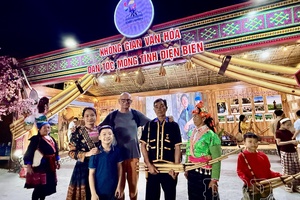
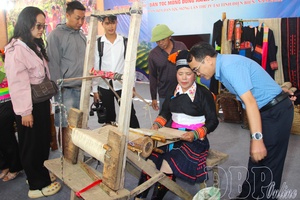
Along with tourism development, cultural preservation is specially emphasized. Language, writing, architecture, Khen dancing, pounding sticky rice cakes, and clan festivals continue to be preserved. Traditional crafts such as brocade weaving, blacksmithing, basketry, and Khen making have been restored. Local agricultural and OCOP products like Hawthorn, snails, cardamom, and bitter bamboo shoots have become unique tourism products. The village performance troupe regularly practices folk songs and dances to serve tourists and participate in local events.
.jpg)
Giàng A Dế, Party Secretary and Chairman of the Quài Tở commune People’s Council, shared that Lồng village has recently welcomed over 100 groups with more than 1,000 visitors. Although the numbers are not yet large, it is a positive signal showing the locality’s correct direction. They aim to build a sustainable Quài Tở tourism brand, creating long-term livelihoods and improving the lives of the people. As identity becomes the foundation for development, the residents of Lồng village are actively participating in preserving and promoting traditional values, aiming to become a highlight in the highland community tourism of Điện Biên.
Thùy Trang
.jpg)
.jpg)
.jpg)
.jpg)
.jpg)


.jpg)

.jpg)
.jpg)
You have 500/500 characters left
Please enter 5 or more characters!!!