



Part 3: Breathing soul into resolutions
People not only grasp their rights and responsibilities and actively spread the spirit of the resolutions, but also proactively provide feedback to make policies more practical. From the voice of people, each resolution becomes more complete, permeates deeply into life, and forges the strength of consensus in the highlands of Điện Biên.
Resolutions permeate people’s hearts
To bring resolutions to life, village Party cell secretaries and chiefs become true “fire-starters.” They patiently “translate” each content into their mother tongue, sometimes having to go house to house to explain, point out the benefits, and guide people. Using simple, easy-to-understand language, resolutions become familiar, easy to remember, and easy to implement. As a result, people no longer stand outside of guidelines and policies; from a place of hesitation and passivity, they proactively discuss, offer ideas, and participate in economic development, poverty reduction, and building new rural areas.
A typical example is the Resolution on Socio-Economic Development in Ethnic Minority and Mountainous Areas for the 2021 - 2025 period, with an orientation to 2030. When the resolution was issued, many households in Đề Dê Hu II hamlet, Sính Phình commune, still found it difficult to access. Recognizing this difficulty, Thào A Lử, Secretary of the Đề Dê Hu II village Party Cell and a People’s Council delegate for Sính Phình commune, organized meetings, spoke in the Hmong language, and analyzed the specific benefits of the policy. Thanks to this approach, the resolution spread, and people clearly understood the support content and participated in livelihood models.
.jpg)
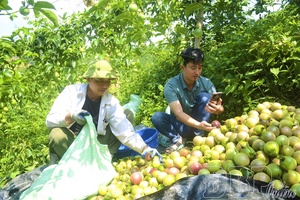
Vừ Thị Bầu, from Đề Dê Hu II village, shared: “In the past, we heard about policies but didn’t understand them clearly, so we were hesitant. Since Party Secretary Thào A Lử explained it in the Hmong language, we understood our rights and responsibilities and boldly participated. My family received support with seeds, fertilizer, and techniques, planting over 2,000m² of corn. We have more income, and life is much better than before. If an official hadn’t spoken in our language, I probably wouldn’t have dared to do it. Thinking back now, I see the resolution was truly correct.”
After five years of implementing the Resolution on Socio-Economic Development in Ethnic Minority and Mountainous Areas (2021-2025, orientation to 2030), most targets have been met or exceeded. Specifically, the province has rolled out nearly 900 livelihood development projects. Over 2,100 poor households have received support to build permanent housing, 2,432 households were supported in changing careers, and 22,465 households gained access to dispersed domestic water. The poverty rate among ethnic minorities has fallen by 5.59% per year, with over 2,000 poor households voluntarily exiting poverty and over 66,000 households rising above the poverty line, a testament to the shift in awareness and action when resolutions are “translated.”
The spirit of “people understand, people do, people benefit” is strongly promoted in building new rural areas. Thào A Da of Huổi Khon 1 village, Nậm Kè commune, shared: “In the past, we only worked our fields and paid little attention to new rural programs. But since being informed and guided specifically about the policies, everyone clearly understands the benefits and voluntarily participates. My family donated over 500m² of land and contributed labor to build roads and the village kindergarten. Seeing the village looking more orderly today, with roads and canals repaired, everyone sees the resolution is effective and people are benefiting.”
According to Nguyễn Thanh Bình, Deputy Chief of the provincial New Rural Coordination Office, the resolution implementing the National Target Program for New Rural Development has been very effective. Before the two-level government model was implemented, the entire province had 26/115 communes meeting the standard, including 5 advanced and 2 model communes. From 2021 to now, people have contributed over VND 9.2 billion, donated 224,000m² of land, and provided nearly 70,000 labor days, building and repairing nearly 941km of roads. In this journey, the delegates who are village Party cell secretaries and chiefs have become the “bridge” between policies and people, explaining in their mother tongues, helping villagers understand, trust, and proactively implement, contributing to building orderly and beautiful villages.
Thanks to the contingent of delegates, village Party cell secretaries and chiefs, ”interpreting” resolutions into their native languages, policies are not only clearly understood by people but also vividly put into practice. This encourages people to participate in economic development, poverty reduction, and new rural programs, improving lives and strengthening trust in the government.
From villages echoing back to the assembly
It is not just a one-way bridge; these special “interpreters” are also “the ones who carry people’s voices over the mountains” to the assembly. This helps authorities and elected bodies at all levels to grasp the reality of life more closely and to promptly adjust and supplement policies to suit the specific characteristics of each region and ethnic group. This authentic feedback from the grassroots has become a vital information channel, helping resolutions to be not only correct and relevant but also “absorbed” into life, where every citizen is both a beneficiary and an agent of development.
Many major policies, from population resettlement and crop restructuring to community tourism development, have been adjusted based on people’s feedback. For example, during the implementation of the poverty reduction program, thanks to feedback from grassroots delegates, many policies were shifted from “handouts” to “conditional support,” enhancing responsibility and sustainability. Most recently, when Điện Biên collected public feedback on the draft Political Report for the 15th provincial Party Congress (2025 - 2030), grassroots delegates became an effective bridge between the Party and people. Through them, many heartfelt and practical opinions, such as vocational training for rural labor and specifying poverty reduction policies, were conveyed into the document, helping to make the resolution closer to people and aligned with their hearts.
In addition to providing feedback to adjust general policies, people also report specific inadequacies in their daily lives, helping People’s Council delegates grasp the situation and make timely recommendations. A typical case is the 1.2km rural road in Ma Lù Thàng village (former Huổi Lèng commune), with a total investment of VND 1.5 billion, which was deteriorating and peeling despite having just been completed. Thanks to voter feedback, the provincial People’s Council organized a supervision team, confirmed the report was correct, and demanded remediation. The construction unit had to spend over VND 350 million of its own money to repair and pour a new layer of concrete, ensuring quality and convenient travel.
The story in Yên Cang 2 village, Thanh An commune, is also a prime example of the effectiveness of grassroots elected delegates, where people’s voice is heard and acted upon. Previously, 63 Thái ethnic households in Yên Cang 2 village had not received their land titles (red books) for many years after resettling. After Thanh An commune People’s Council delegate Tòng Thị Điến received people’s opinions and reported them to the provincial People’s Council, the Standing Committee of the provincial People’s Council stepped in to supervise and requested the locality to complete the procedures for issuing the land use right certificates. Less than two months later, the red books were handed directly to people.
These results show that when people’s voices are heard and responded to promptly, resolutions not only “enter people’s hearts” but also become a driving force for change from the grassroots. According to statistics from the provincial People’s Council, in the last two terms, there were nearly 5,000 voter opinions each term, mainly related to investment in infrastructure for domestic water, transport, livelihood support, policies, and land. As a result, many inadequacies, from degraded roads and lengthy administrative procedures to production support that did not meet actual needs, were promptly adjusted.
The effectiveness of a resolution is not only measured by numbers or completed projects, but also by whether people’s voice becomes part of the policymaking and implementation process. When that voice is heard and answered with concrete action, people are no longer passive beneficiaries but become agents of development. It is from this trust that new programs and policies continue to receive people’s consensus, creating a sustainable development cycle where the assembly hall and the village cultivate together, so that resolutions not only “cross the river” but also take root and blossom in the midst of life.
(to be continued)
Văn Tâm
.jpg)

.jpg)
.jpg)
.jpg)
.jpg)
.jpg)
.jpg)
.jpg)
.jpg)
.jpg)
You have 500/500 characters left
Please enter 5 or more characters!!!