



Part 3: The village head returns to the village
Yet remarkably, at an age when he could dedicate all his time to family life, he continues tending swidden fields, cultivating crops, developing the household economy, meeting fellow villagers, and offering counsel on common communal affairs. To him, retirement signifies only stepping down from an official post; his devotion toward the soil where he was born, raised, and rooted for nearly his entire life has never known an endpoint.
Leaving office, never leaving the village
Following retirement, village elder Cứ Chừ Tú’s lifestyle remained as unassuming as ever. Tending hillside plots, cultivating orchards, protecting forests, developing agricultural production - these tasks were deeply familiar, yet viewed through the lens of one who had occupied diverse administrative offices, he understood that every parcel of land and every forest stand was tied to the community’s enduring future. If residents previously sought him out as a village head or commune cadre, they now approach him as a seasoned mentor. When villagers need counsel, he contributes his perspective; when the village undertakes collective projects, he takes part; and when innovative methods are introduced, he patiently explains them so everyone can understand and implement them together.
.jpg)
Vừ Xí Di, a resident of Tìa Ló village, remarked that even after retiring, Tú remains intimately tied to the village and the people. Whenever matters arise, villagers consult him, and whenever he discovers an effective method, he shares it openly. Whoever finds it suited to their household conditions follows his example, enabling his practical experience to be applied directly in production and daily life.
Past the age of 70, village elder Cứ Chừ Tú still engages directly in physical labor. He tends more than 3ha of coffee and manages 4ha of aquaculture water surface. These endeavors yield practical insights into cultivation, animal husbandry, and income generation on native soil. To him, developing household production ensures family stability while serving as a concrete means to verify the guidance he offers to neighbors. He reflects that certain insights cannot be acquired from textbooks or administrative meetings alone. Therefore, when local farmers seek advice, he shares firsthand experiences, highlighting what proved successful alongside pitfalls to avoid.
Returning to daily routines, village elder Cứ Chừ Tú preserves his standing as a reputable figure within the community. His enduring contributions across decades have been commended by the Party, the State, and various sectors through numerous certificates of merit. In 2017, he represented Điện Biên province at the conference “Meeting Village Elders, Village Heads, Reputable Figures, and Exemplary Grassroots Party Members” in Hà Nội. A year later, he represented village elders and reputable figures of former Điện Biên Đông district at the meeting honoring prominent village elders and clan heads across the Northwest region in Phú Thọ province, while being introduced as an advanced exemplar featured in an exhibition at the Hồ Chí Minh Museum.
Ngô Văn Thanh, Secretary of the Pu Nhi commune Party Committee, noted that cadres with extensive grassroots experience possess invaluable practical wisdom. In the case of village elder Cứ Chừ Tú, what commands deep respect is that following retirement, he continues working productively, developing the household economy, and sharing knowledge with fellow villagers. This represents a tangible contribution, assisting residents in selecting development paths suited to their families and local conditions.
When the village becomes a tourist destination
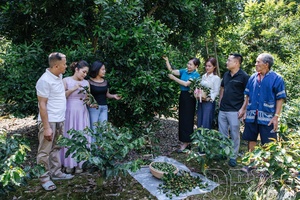
A natural shift has emerged in village elder Cứ Chừ Tú’s life over recent years. Moving beyond cultivation and fish farming, he opened a homestay to welcome travelers. His family lodging space offers opportunities to interact with visitors arriving in Tìa Ló, answering inquiries regarding daily life, customs, cuisine, and local scenery. “When guests arrive, we must keep the house spotless, guarantee food safety, and extend attentive hospitality. Most importantly, visitors must experience the authentic life of the Hmông people. If community tourism merely mimics other destinations, there is no reason for people to come. Whatever forms our cultural identity must be preserved,” Tú shared.
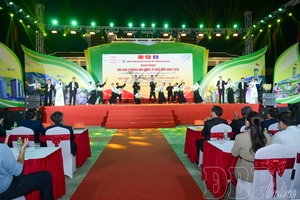
That mindset has progressively resonated across Tìa Ló. The village currently comprises 161 households with 781 residents, 100% of whom belong to the Hmông ethnic group, retaining signature cultural traits including traditional attire, folk customs, folk songs, dances, native cuisine, and folk games. Among these, tù lu - a beloved traditional spinning-top game of the Hmông - became the central highlight inspiring the name Tù Lu - Tìa Ló, the village’s community-based tourism model. On September 2, 2026, the Tù Lu - Tìa Ló community tourism village officially debuted. The locality invested more than VND 7 billion in infrastructure serving tourism, while local residents contributed thousands of working days to renovate dwellings, pave village paths, conduct environmental sanitation, and landscape the area. To date, 15 households have registered to provide tourism services, with 5 households initially operating homestays and dining facilities.
.jpg)
Among the households running homestays is the family of village elder Cứ Chừ Tú. Rather than positioning himself as an administrator or policy architect, he participates as an ordinary resident, operating his facility and drawing practical lessons firsthand. This grounds his advice to fellow villagers in direct reality. When asked about setting up a homestay, he explains spatial arrangements; when queried about guest reception, he recounts real encounters. Recognizing that what works for one household may not suit another, he advises villagers to weigh practical circumstances carefully before investing.
The transformation in Tìa Ló has thus unfolded through multiple community roles. Some households renovate dwellings to lodge visitors; others prepare traditional gastronomy; several join folk art performances and traditional games; while others help preserve roads and environmental landscapes. Each carries out an assigned task, converging on the shared goal of transforming intrinsic village heritage into resources for economic development.
Tú frequently reminds fellow villagers that operating tourism requires safeguarding existing cultural assets. Natural landscapes cannot be restored overnight; customs, language, attire, gastronomy, and community practices cannot become marketable assets unless residents themselves embrace them as integral parts of daily life. In his eyes, travelers journey to the village to discover an authentic Tìa Ló, rather than an artificial destination remodeled after standardized formulas.
Vừ A Tà, a homestay operator in Tìa Ló village, shared that because Tú led the way, he generously shared every insight with the community. Being latecomers who were initially uncertain where to begin, other villagers benefited immensely from his detailed coaching. From arranging living spaces and welcoming guests to preserving unique village traits, he continuously urged everyone to proceed meticulously, ensuring visitors feel compelled to return.
The enduring contributions of village elder Cứ Chừ Tú, alongside generations of cadres, Party members, and local people, have transformed the village and homeland. In Tìa Ló, living conditions continue to improve, with average annual income reaching approximately VND 50 million per person, surpassing the commune average, and more than 51% of households categorized as well-off or affluent. For years, Tìa Ló has stood as an exemplary model in patriotic emulation movements across Pu Nhi commune.
The contemporary advancements in Tìa Ló and Pu Nhi are not the achievement of a single individual, but the collective fruit cultivated across generations. Along that trajectory, village elder Cứ Chừ Tú left a unique personal imprint: leading by personal example, living alongside the people, and sharing what he experienced. From a village head in his twenties to a revered village elder today, he has never truly stepped away from village undertakings. For an individual who dedicated almost his entire life to his homeland, the most meaningful reward does not reside in titles or certificates of merit, but in seeing neighbors thrive, younger generations secure futures on their native soil, and the village modernize while keeping its cultural soul intact. The former village head of earlier years continues returning to his village - not through an official title, but through quiet deeds passed forward across generations.
Quang Long - Quốc Huy
.jpg)
.jpg)
.jpg)

.jpg)
.jpg)
.jpg)
.jpg)
.jpg)
You have 500/500 characters left
Please enter 5 or more characters!!!