



Part 2: The person who “sowed” seasons of transformation
During those years, a working visit to Đà Lạt in 1995 inspired his idea to plant pine trees around Noong U Lake, where he resided. At that time, he thought simply of making his homeland greener and more beautiful. Yet after more than three decades, as Điện Biên identifies tourism development toward green, smart, and sustainable directions for the 2025 - 2030 tenure and subsequent years, those pine rows from years ago have become an integral part of the local landscape, prompting profound reflections on vision and how a cadre sows values for the future.
A leader must understand the affairs of the people
While his early years of service helped Village Elder Cứ Chừ Tú grasp village life, the years holding key commune-level leadership positions placed heavier responsibilities upon his shoulders. That was an era when his homeland was steadily transforming, introducing novel demands across production, daily life, infrastructure development, Party building, and local governance. In highland localities, every transformation takes time. Production habits formed over generations, natural conditions posed severe hardships, and expansive administrative territories meant that introducing new practices to every village was an endeavor that could not be rushed.
Elder Tú recalled that throughout his years of commune leadership, what concerned him most was ensuring that policies, upon reaching the villages, were translated into concrete actions by the people and yielded real efficacy. He shared that as a grassroots-level cadre, one must know what the people think and need. When matters arise, one must travel directly down to the village and visit each household. If residents do not comprehend, one explains; if they harbor doubts, one discusses together. Only when the people reach consensus can work proceed smoothly.
That mindset was forged during his tenure as a village head. Those who worked alongside him still recall his grounded, cautious, yet decisive working style. Confronted with an issue, he never rushed into making decisions, instead thoroughly investigating reality, listening to cadres, and meeting residents directly to grasp the entire situation. To him, that was the most enduring way to build prestige - not through grand rhetoric, but by being present when the people needed him, taking responsibility for assigned duties, and persevering in pursuits for the public good.
.jpg)
Reflecting on that journey today, the transformations of the homeland where Village Elder Cứ Chừ Tú was born can be visualized through figures. Pu Nhi commune currently maintains over 533ha of macadamia, nearly 215ha of coffee, and a total grain food crop output exceeding 4,500 tons. Naturally, this represents the collective accomplishment of multiple generations of cadres, Party members, and citizens accumulated across years. Yet within that ongoing current, the foresight of predecessor cadres holds special meaning. For Elder Tú, developing his homeland was never merely about completing another project or meeting an administrative quota. His priority was that the people could sustain their livelihoods upon their land, and that villages could transform while safeguarding intrinsic values.
Đinh Quang Bạo, Chairman of the People’s Committee of Pu Nhi commune, shared that each stage presents distinct development imperatives, but the paramount factor remains leveraging local comparative advantages while enabling the people to become primary actors. Pu Nhi possesses forests, scenic landscapes, land suited to diverse crops, and the cultural identity of the Hmông ethnic community. Economic development must accompany resource protection, landscape preservation, and sustainable livelihood generation for the people. Within that development trajectory, the leadership role of veteran cadres like Elder Tú remains deeply appreciated.
A green idea beside Noong U Lake
In 1995, when the former Điện Biên Đông district had just been established, Elder Tú participated in a district delegation to Đà Lạt to study local development models. There, he encountered lush green pine groves set amidst the plateau landscape. That scenery brought thoughts of Noong U Lake back in his native village. Elder Tú recalled that seeing the pines in Đà Lạt made him think that his homeland also possessed lakes and mountains; if pine trees could be planted around the lake, the scenery would surely become more beautiful. At the time, developing tourism had not crossed his mind.
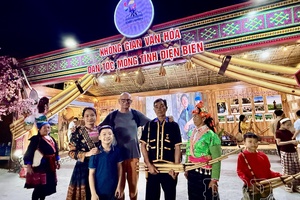
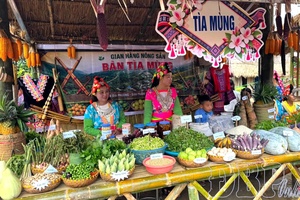
The idea arose naturally, unattached to any formal tourism scheme. One hectare of pine trees was promptly planted around the perimeter of Noong U Lake. The small saplings were placed into the ground, growing slowly through the passing seasons. Time rolled on. Elder Tú continued his official duties, and the pine trees quietly grew taller with each season. That idea from nearly 30 years ago is now being utilized within Điện Biên’s current development direction toward green, smart, and sustainable tourism. In Tìa Ló, his birthplace, that trajectory has materialized through the Tù Lu - Tìa Ló community-based tourism model. Guided and oriented by Party committees and local authorities, villagers began participating in tourism services, welcoming guests, and introducing their culture, local produce, and village life. Elements once familiar in ordinary daily routines are now recognized as productive resources that generate additional livelihoods, contributing to safeguarding the native cultural identity.
Placed within that developmental current, the pine rows beside Noong U Lake evoke a special resonance. Nearly 30 years ago, without calculating the economic value of scenic landscapes, Elder Tú thought simply that because his homeland had a lake and mountains, planting more trees would beautify the surroundings. Today, landscapes, forests, and Hmông culture are viewed through a broader lens, becoming vital resources for community tourism and local economic expansion.
Hạng Thị Sua, a resident of Tìa Ló village, enthusiastically shared that villagers now realize that long-held assets such as landscapes, culture, and native products can generate tangible value. Engaging in tourism requires keeping the village clean and beautiful, preserving customs, and safeguarding the unique traits of their ethnic group. If village changes result in losing those attributes, arriving visitors will no longer experience what makes Tìa Ló unique.
Significantly, the Tù Lu - Tìa Ló community tourism village today is not the personal achievement of any single individual. It is the culmination of guidelines and orientations from Party committees and authorities, structured investments, coordinated execution, and community consensus and participation. Yet within that narrative, it serves as a milestone to look back on how a grassroots-level cadre like Village Elder Cứ Chừ Tú once viewed his homeland: that certain undertakings are carried out not for personal acclaim, but to leave something enduring for future generations.
Viewed from the present, what is memorable is not that Elder Tú ran ahead of official policy. The value lies in the fact that, under conditions nearly 30 years ago, he recognized that natural landscapes form an integral asset of one’s homeland, remaining willing to plant something in the earth whose full fruition could not be foreseen at the time.
Through decades of public service, Elder Tú witnessed many seasons of change across his homeland. The pine trees beside Noong U Lake traversed those same years. They grew slowly and serenely, unconcerned with administrative titles or official tenures, quietly keeping their greenery through time. Perhaps that is the most graceful legacy left by those rows of trees: an action may begin very small, but if sown with responsibility toward one’s homeland and entrusted to time and the community, it can blossom decades later into a shared treasure for the entire collective.
Quang Long - Quốc Huy
.jpg)
.jpg)
.jpg)
.jpg)
.jpg)

.jpg)
.jpg)
.jpg)
You have 500/500 characters left
Please enter 5 or more characters!!!