



This is a special political mission of the Party and State, a command from the heart, and a responsibility before history and those who embodied the Fatherland. Across the land of Điện Biên, where thousands of martyrs still rest, the “500-day-and-night Campaign” to step up the search, repatriation, and identification of martyr remains (the 500-day-and-night Campaign) is mobilizing the combined strength of the entire political system and society, steadily returning heroes to their names, homelands, and families, carrying forward the nation’s tradition of “When drinking water, remember its source” and “Repaying gratitude.”
Part 1: From the Điện Biên Phủ Campaign to the 500-day-and-night Campaign
The Điện Biên Phủ Victory entered national history as a symbol of willpower, fortitude, and the strength of great national unity under the Party’s leadership. Yet behind that triumphant song was the sacrifice of thousands of officers and soldiers, many whose remains have yet to be found or identified. Throughout history, the Party and State have consistently devoted special attention to searching, repatriating, and identifying martyr remains with the highest political resolve, upholding the principle of leaving no fallen child of the nation forgotten.
.jpg)
Behind the song of triumph
On May 7, 1954, the “Determined to Fight, Determined to Win” flag fluttered atop General De Castries’ bunker, concluding 56 days and nights of “tunneling through mountains, sleeping in underground bunkers, enduring pouring rain, and squeezing rice balls,” inscribing the Điện Biên Phủ Campaign into national history as an immortal epic. That victory not only forced the French colonialists to sign the Geneva Accords, ending the war of aggression in Indochina, but also gave powerful encouragement to national liberation movements worldwide.
Behind that victory lay immense sacrifices by our army and people. Across hills A1, D1, Him Lam, Độc Lập, Mường Thanh, every inch of soil was soaked with the blood of youths who dedicated their prime to the Fatherland. Some fell at eighteen or twenty. Others rested on the battlefield without records of their names or homelands. Comrades buried them in temporary graves amidst falling bombs, holding faith that when peace returned, they would be brought home to their families.
.jpg)
Currently, the province has 11 cemeteries, including 8 martyrs cemeteries from various periods, such as the A1 National Martyrs’ Cemetery, Độc Lập Martyrs’ Cemetery, and Him Lam Martyrs’ Cemetery - the resting places of thousands of heroic martyrs who sacrificed their lives in the Điện Biên Phủ Campaign, wars defending the Fatherland, and noble internationalist missions. Across these cemeteries are 7,398 graves. Among them, 5,284 graves lack identifying information; 658 graves have partial information; 940 graves have complete information; and 516 are empty symbolic graves awaiting repatriation.
Behind these numbers are unfinished stories. Mothers carried longing for their children until the end of their lives without knowing their resting places. Wives spent their youth waiting, holding hope of finding their husbands’ graves even as their hair turned white. Children born after their fathers fell knew them only through old photographs and death notices. From one bus ride to another, from cemetery to cemetery, they quietly sought information, cross-checked rolls of honor, and offered incense before rows of headstones, yearning to find where their loved ones lay.
The family of Trần Quang Chén in Mường Thanh ward has carried the sorrow of searching for his older brother’s resting place for decades. His brother, martyr Trần Văn Châm, died in 1967 on the Tây Ninh battlefield. Nearly six decades later, his resting place remains unlocated. Despite traveling back and forth, inquiring, and verifying data, Trần Quang Chén refuses to give up. “As long as we have not found him, our family remains heartbroken,” he shared.
.png)
To ensure the fallen are not forgotten, the Party, State, and Điện Biên province identify searching, repatriating, and identifying martyr remains as a special, regular political task, expressing the nation’s profound tradition of gratitude. Every discovered grave and identified remain represents not only tribute to the fallen, but responsibility toward their relatives and continuity of national moral values across generations.
However, as war recedes, time alters terrain, erases vestiges, thins living witnesses, and scatters archives, making search journeys increasingly arduous. Painfully, even among graves collected into cemeteries, many headstones bear only the words “Martyr’s grave with unidentified information.” Behind those words lies a journey to trace the names, homelands, and stories of those who merged into the nation’s soil.
An order from the heart
This is not only the yearning of Trần Quang Chén’s family and thousands of others waiting day and night, but a responsibility before history and sacrifices made for the Fatherland. From that sacred promise, the 500-day-and-night Campaign was launched, carrying forward the journey of gratitude and demonstrating the resolve of the Party and State to return fallen soldiers to their names, homelands, and families.
.jpg)
Launched by the National Steering Committee on April 2, 2026, the 500-day-and-night Campaign runs from March 15, 2026 to July 27, 2027, to accelerate searching, gathering, and identifying martyr remains with missing information. For Điện Biên, the site of the historic victory, this mission bears profound significance. Under the campaign, Điện Biên set out to collect DNA samples from 4,594 martyrs’ graves across 7 cemeteries, progressively establishing a scientific basis to restore names to those who fell.
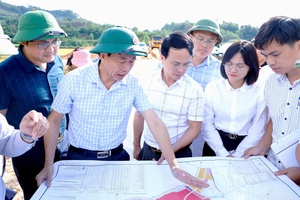
Translating policy into specific graves entails a massive workload. Senior Colonel Dương Quốc Long, Deputy Political Commissar of the provincial Military Command, emphasized that the command considers this a special political mission requiring concentrated forces, deployed urgently yet rigorously under protocol. The goal is not merely exhuming and sampling the targeted number of graves, but creating reliable data to identify each martyr.
Addressing each grave by its true name requires more than a bone sample. It involves connecting multiple data streams: field surveys, excavations, sampling, dossier reviews, witness interviews, relatives’ DNA collection, and data matching. Each step demands precision and care; every lead, no matter how small, can serve as a vital link. Behind the forces directly exhuming and collecting samples is the coordinated support of departments, localities, and the community.
.jpg)
Nguyễn Tiến Đạt, Director of the Department of Home Affairs, affirmed that searching, gathering, and identifying martyr remains is not the task of specialized agencies alone, but the shared responsibility of the entire political system and society. “This is not merely fulfilling a plan or target, but a historical duty and tribute to the fallen. Every set of remains found and every identity established represents another child returning to family and homeland,” he shared.
War has passed, but on the heroic soil of Điện Biên, where each hill and forest holds wartime memories, this journey requires persistence, science, and community unity. Every verified lead and properly named grave eases a family’s enduring wait and brings a fallen soldier home. Proactively, it is how today’s generation keeps its promise to history and to those who dedicated their youth to the Fatherland.
Văn Tâm - Văn Quyết
.jpg)

.jpg)
.jpg)
.jpg)
.jpg)
.jpg)
.jpg)
.jpg)

.jpg)
.jpg)
You have 500/500 characters left
Please enter 5 or more characters!!!