



Part 3: Realizing the strategic healthcare vision
The spirit of the Resolution has rippled deeply across hamlets and villages, transforming the mindset of waiting for illness before seeking cure into proactive habits of health protection, creating a firm lever to elevate the quality of life for the people.
Communication leading the way and opening paths
Identifying policy communication as a vital link in translating the Resolution into practical living, Điện Biên rolled out outreach activities customized to each locality and demographic group. The provincial Party Committee, the Provincial People’s Council, and the provincial People’s Committee focused leadership on directing the healthcare sector to coordinate with departments and tiers to concretize Central guidelines into programs and action plans aligned with operational realities.
The spirit of Resolution No.72-NQ/TW and the message of Universal Health Day on April 7 were concretized through communication, consultation, and grassroots-level medical examination campaigns. Field trips by medical cadres to distant hamlets combined healthcare delivery with mass communication, mobilizing residents to reshape perspectives toward disease prevention and proactive self-care.
In Co Đứa village, Na Sang commune, a mobile health consultation and communication session organized by the commune Health Station drew large numbers of residents. Utilizing accessible ethnic minority languages alongside visual demonstrations, medical workers instructed villagers on hygienic dietary habits, seasonal illness prevention, and the necessity of proactive periodic health checkups.
.jpg)
Listening attentively while receiving a direct blood pressure check and medical screening, Lò Thị Lin from Co Đứa village shared that villagers previously sought the clinic only when severely ill and unable to work the hillsides, with some even inviting shamans for soul-calling rituals. Following outreach and instructions by doctors and nurses arriving directly in the village, she realized how crucial preventative care is.
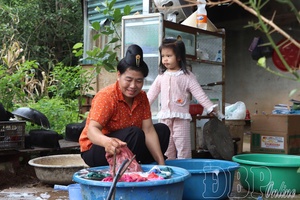
In Pu Nhi commune, the commune Health Station collaborated with village health workers to conduct door-to-door outreach tailored to each household. Through direct exchanges, numerous families proactively constructed bathrooms, relocated livestock barns away from dwellings, and visited the health station upon noticing abnormal physical symptoms.
Nguyễn Đình Minh, Vice Chairman of the People’s Committee of Pu Nhi commune, noted that delivering healthcare knowledge directly to households holds great significance in shifting public perceptions. Since the commune Health Station was placed under the direct management of the commune People’s Committee, local Party committees and authorities have identified healthcare as a practical component of grassroots-level social welfare tasks. Consequently, outreach moves beyond informational dissemination to drive behavioral transformation: actively preventing illnesses, maintaining hygiene, discarding outmoded customs, and forming the habit of visiting healthcare facilities whenever health issues arise.
Translating vision into reality
To concretize the strategic vision of protecting, caring for, and improving public health, Điện Biên issued a synchronized regulatory system from the provincial to the sectoral level, including Plan No.07-KH/TU of the provincial Party Committee, Plan No.11-KH/ĐU of the Party Committee of the Provincial People’s Committee, Plan No.915/KH-UBND of the provincial People’s Committee, and Plan No.1127/KH-SYT of the Department of Health. Timely institutionalization established the foundation for goals within Resolution No.72-NQ/TW to translate into specific duties spanning disease prevention, health management, clinical examination and treatment, digital transformation, and child protection.
Closely adhering to provincial guidance, the Điện Biên healthcare sector aligned public health work with consolidating citizen trust in the medical system. Disease surveillance and control received proactive prioritization; treatment quality was upgraded; and digital transformation was accelerated to facilitate citizen access to services.
Initial outcomes are reflected in tangible indicators. Over the first six months of 2026, the full immunization rate for children under one year old reached 48%, up 4.2% over the same period. Across the province, roughly 63,000 inpatient admissions were recorded; hospital bed occupancy reached 93%, with an average length of stay of 5.9 days per patient. All examination and treatment establishments across the locality deployed patient reception using chip-embedded citizen identity cards. The entire province created 447,383 Electronic Health Record profiles, covering 67% of the population.
In child care and protection, the 2026 Action Month for Children mobilized over VND 1 billion for the provincial Child Protection Fund, supplementing resources to assist disadvantaged children.
According to Phạm Giang Nam, Director of the Department of Health, carrying out Resolution No.72-NQ/TW involves synchronized solutions focused on reinforcing grassroots-level and preventative healthcare, driving innovation, accelerating digital transformation, and elevating treatment standards. When highland and border residents access safe, equitable, and convenient medical services, confidence in the healthcare system and grassroots-level government is solidified. This constitutes an essential element for healthcare guidelines to penetrate daily life further.
Implementation of Resolution No.72-NQ/TW in Điện Biên proves that a strategic guideline demonstrates true efficacy only when translated into practical deeds suited to citizen routines. From a resident proactively visiting a clinic for a health checkup and a medical worker deployed to a remote village to digital platforms streamlining service access, the spirit of the Resolution is being converted into tangible progress.
In a mountainous border province where healthcare remains intertwined with geographic constraints, livelihoods, and communal awareness, every transformation in disease prevention, diagnosis, and medical care carries practical value. When people place trust, take personal initiative, and participate in safeguarding their own health, Party guidelines are extended through grassroots-level action. That is how the strategic vision for public health is realized through grounded efforts close to the people, aligned with the people, and for the people.
Minh Thảo
.jpg)
.jpg)
.jpg)
.jpg)
.jpg)

.jpg)
.jpg)
.jpg)
You have 500/500 characters left
Please enter 5 or more characters!!!