



However, as the newly consolidated entities become operational across Điện Biên, practical challenges have begun to surface: expansive territorial jurisdictions and larger populations while material infrastructure lags behind; lifestyle and cultural disparities imposing new governance demands; and hamlets and villages continuing to be administered by provisional leaders. These issues exert no small impact on delivering the guidelines and policies of the Party, the State, and local administrations to the grassroots-level population.
Part 1: Tested before “surging waves” post-merger
Executing the policy to restructure and streamline the administrative machinery, Điện Biên province has merged and consolidated 1,446 hamlets, villages, and residential groups down to 888 units. Combining two, three, or even several small administrative divisions into a single development space is far from a simple mechanical sum. The moment merger decisions took legal effect, practical burdens immediately weighed upon the shoulders of grassroots-level Party organizations, cell secretaries, village heads, and heads of Front work boards - the very individuals who quietly take on heavy communal burdens, standing in the teeth of the wind to navigate the grassroots-level apparatus.
.jpg)
Enlarged villages, concentrated pressures
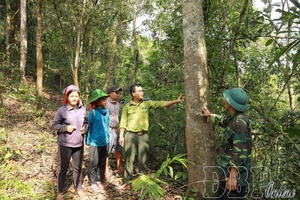
Given the characteristics of a mountainous frontier province, communities in Điện Biên prior to consolidation were already vast, with inter-village distances frequently spanning dozens of kilometers. Mountain roads are winding and fragmented by steep topography; during the rainy season, travel becomes even more precarious. Now that many hamlets and villages have been reorganized and merged, operational expanses have enlarged and geographical distances between residential clusters have stretched farther. Compounding this, highland populations dwell in scattered formations, triggering substantial pressure on public management, operational governance, and communal organization.
Suối Lư village, Na Son commune, was established through the merger of three hamlets: Suối Lư 1, Suối Lư 2, and Suối Lư 3, comprising nearly 250 households. While the three hamlets were adjacent in the past, territorial contiguity in mountainous terrain does not equate to convenient connectivity. Demanding transport links and fragmented topography turn movement into an ordeal during heavy rains, often demanding half a day just to travel between sectors. When hamlets were smaller, local cadres operated within a familiar space; villagers knew the cadre, and the cadre knew every single household and circumstance.
.jpg)
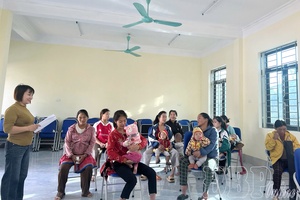
Post-merger, the administrative perimeter has expanded. From monitoring demographic conditions, disseminating policy guidelines, and mobilizing residents to convening hamlet meetings, executing collective duties, or receiving public feedback, cadres must expend far greater labor. Tòng Văn Kinh, Head of Suối Lư village, noted that since three hamlets became one, the operational area has widened, workloads have grown, and cadres spend more time traveling to track developments. Convening a village meeting demands extra effort in notification and mobilization because not every household enjoys convenient transit or simultaneous access to information.
Similarly, Na Sang village, Núa Ngam commune, was established by merging Na Sang 1 and Na Sang 2, encompassing 214 households. Following the merger, a wider perimeter and a larger number of households mean that the work portfolio of village cadres has expanded proportionately. Whereas cadres previously could easily make house-to-house visits to conduct outreach, mobilize people, and monitor local conditions, doing so now demands far more time and physical effort. The core duties remain identical, but executing them across a larger operational expanse multiplies pressure on grassroots-level cadres.
Vì Văn Uân, Head of Na Sang village, stated that following the merger, work has grown not only in quantity but in the imperative to stay closely grounded among the people. Previously, cadres monitored situations within a single village; now they must oversee two distinct residential clusters, closely tracking the livelihoods of 214 households and grasping emerging issues in a timely manner. Cadres must ensure residents across both residential clusters receive adequate information, clear explanations, and opportunities to participate whenever a policy is rolled out, a movement mobilized, or collective work organized.
In highland communes, this scenario is becoming commonplace after the mergers. In Na Son commune, for instance, mergers reduced the total to 21 hamlets and villages, a drop of nearly 50% compared to before. Larger demographic units trigger heavier burdens for cell secretaries, village heads, and grassroots-level personnel. According to Nguyễn Thanh Lâm, Vice Chairman of the Na Son commune People’s Committee, village cadres must oversee more households while dedicating more hours to field visits, policy dissemination, mobilization, and understanding public sentiments, particularly in peripheral areas burdened by difficult transport.
.jpg)
Executing the village merger policy, the province recorded 1,042 units undergoing restructuring and mergers, while 404 units remained intact. Streamlining administrative points means many hamlets and villages now operate on larger scales, covering broader areas and denser populations, which drives up grassroots-level workloads. In highland regions marked by fragmented terrain and scattered populations, cadres must spend even more time on the ground, keeping tabs on local situations, and mobilizing residents. Streamlining organizations proves genuinely effective only when grassroots-level contingents possess the prerequisites to fulfill their duties; while jurisdictions may broaden, the distance between cadres and the people must never widen.
Time needed for young cadres to hit their stride
Following the mergers, the contingent of Party cell secretaries, village heads, and heads of Front work boards has grown younger, displaying agile responsiveness to technology and new operational practices, yet they require time to accumulate experience, comprehend local customs, and establish prestige. Statistics indicate that village cell secretaries aged 18 to 50 account for nearly 80%, village heads over 85%, and Front work board heads nearly 80%.
Lò Văn Inh was appointed head of Na Khoang village, Mường Nhà commune, following the merger. Just over 30 years old, he must oversee a new community comprising nearly 240 households. The challenge for a young village head encompasses more than tracking household counts, managing jurisdictions, or organizing village meetings. More critically, it lies in comprehending ethnic differences and cultivating trust among the people. Lò Văn Inh shared that being young requires him to strive much harder so villagers understand and trust him. Where things remain unclear, he consults seniors and reputable elders; on matters concerning public interests, he discloses information openly and provides thorough explanations, though full integration still requires patience.
.jpg)
Beyond age and general background, young village heads must accumulate experience to grasp the culture, customs, and practices of diverse ethnic communities. Pa Bói village, Thanh Yên commune, was formed by merging three former villages, bringing together 328 households and eight coexisting ethnic groups, making it an intricate jurisdiction for a young cadre to master quickly. Trần Trọng Nghĩa, born in 1996 and of Kinh ethnicity, was appointed village head post-merger. Endowed with stamina and dynamism, he nevertheless needs additional time and field practice to understand each community, adopt suitable approaches, and build trust in a multi-ethnic setting.
Nghĩa noted that during the initial phase, he had to consult elderly residents and reputable figures frequently to understand the specific customs of each demographic group, as seemingly simple matters can fail to generate consensus if mobilization methods are unsuited. For a young village head, these lessons cannot be gained instantly, but must be accrued day by day through field immersion, listening, and maintaining close ties with the people.
Consequently, for young cell secretaries and village heads, hitting their stride within the community is not merely about familiarizing themselves with fresh terrain or tallying more households. It is a process of learning to understand people within a community that has shifted in scale, demographic composition, and interpersonal dynamics. In Thanh An commune, for example, restructuring and mergers left 22 hamlets and villages. The current contingent of cell secretaries and village heads consists largely of young cadres. According to Lò Thị Dương, Head of the Party Building Board of Thanh An commune, young cadres possess advantages in dynamism and responsiveness to modern methods, with many knowing the terrain and staying close to residents. Nevertheless, across an expanded jurisdiction with a diverse population, these strengths must be enriched through time and real-world seasoning.
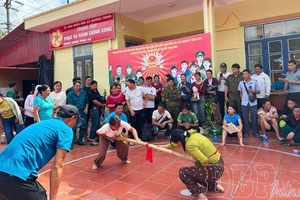
Enabling young cadres to find their rhythm in new operational environments demands time, practical experience, and appropriate working conditions. As villages expand and populations grow, administrative leaders shoulder extra work, and material infrastructure must keep pace. While cadres strive to unite communities, cultural houses in many localities remain cramped, failing to accommodate the newly consolidated scale. The operational space has expanded and personnel are adapting, yet a pressing question remains: Have cultural houses, the hubs of community assembly, kept pace with the scale of hamlets and villages after the mergers?
Quang Huy
.jpg)

.jpg)
.jpg)
.jpg)

.jpg)


.jpg)
.jpg)
You have 500/500 characters left
Please enter 5 or more characters!!!