



It holds practical significance in completing the infrastructure network, promoting socio-economic development, and improving the lives of local residents. However, the implementation process has faced numerous hurdles regarding compensation, support, resettlement, and land clearance.
.jpg)
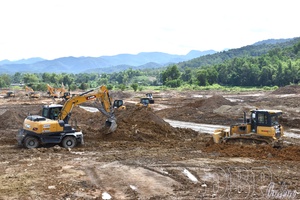
With a length of nearly 6km and a total investment of VND 90 billion, the project involves land recovery affecting 200 households and individuals. From the outset, compensation and land clearance were identified as the key links directly determining the project’s progress. Nevertheless, reality has shown that these are also the areas where the most difficulties and obstacles arise.
Trần Minh Giáp, Vice Chairman of the Mường Ảng commune People’s Committee, noted that prior to the administrative unit rearrangement, the former Mường Ảng district People’s Committee had approved 6 compensation and support plans for 81 households and individuals, covering a recovered area of over 23,193m2 with total funding of over VND 7.6 billion. Despite these initial results, the implementation still suffered from many limitations, particularly in verifying land origins, legal records, and gaining consensus from a segment of the population.
.jpg)
After July 1, 2025, when the two-level local government officially began operations, the Mường Ảng commune People’s Committee took over all tasks related to project land clearance. A review revealed that some land origin verification records from the previous stage were not strictly handled. There were cases lacking meeting minutes, inconsistent information, and even disputes or overlapping land use right certificates. Some households working far away or busy with seasonal agricultural production made it difficult to organize meetings, disseminate information, and re-verify records.
Furthermore, at several locations, the land recovery boundaries were unclear, especially in areas overlapping with the Ẳng Cang Reservoir Project, leading to public confusion and a lack of agreement on compensation plans. Coordination between units at certain times was not truly synchronous; technical dossiers, cadastral excerpts, and asset compensation unit prices required multiple adjustments, prolonging the appraisal and approval time for the plans.
.jpg)
Giáp emphasized that when the commune took over the task, the workload was immense while many issues from the previous stage remained unresolved. He stressed that without a strict and thorough review, it would be very difficult to ensure the schedule and create consensus among the people. These obstacles, along with a series of tasks to be addressed immediately after the two-level government began operating, caused the land clearance progress to lag behind requirements at times. However, rather than avoiding the issues, the Mường Ảng commune People’s Committee clearly defined its responsibility, considering this a central political task to be resolved step by step.
With a proactive and drastic spirit, the Mường Ảng commune People’s Committee implemented synchronous solutions to untie the “bottlenecks” in land clearance. First, the commune worked closely with the Management Board for Project and Land Fund Development of Area 1 and the provincial Management Board of Transport Projects (the project owner) to re-verify the land origins for all 200 affected households. This verification was conducted publicly and democratically with the participation of mass organizations and residential representatives. Additionally, the commune placed special emphasis on mass mobilization, viewing it as the key solution to creating consensus. The commune established dissemination and mobilization teams, assigning officials and party members to specific areas and households to explain guidelines, policies, and the rights and responsibilities of citizens when the State recovers land.
.jpg)
Under the motto of “persistence pays off,” through constant dialogue and listening, many households who were previously hesitant began to understand and agree with the project’s goals. They voluntarily received compensation and handed over the sites, creating favorable conditions for the construction unit. A typical example is the family of Lò Văn Xích in Cói Bánh village. His family of six, representing three generations, lives on a single plot of land. When the project was implemented, about 100m2 of their land was recovered. Initially, his family was concerned about the impact on their daily life and the housing of the young children. However, after several discussions with commune officials regarding policies, support levels, and construction plans, the family understood and agreed to hand over the land.
Similarly, the family of Cầm Nhân Muôn in Hón Sáng village went through a process of mobilization and persuasion. Commune officials visited the household multiple times along with village representatives and specialized units to check the field, cross-reference records, and explain every relevant detail. He shared that since road construction is a public benefit, he felt secure and ready to hand over the site once the matter was explained thoroughly.
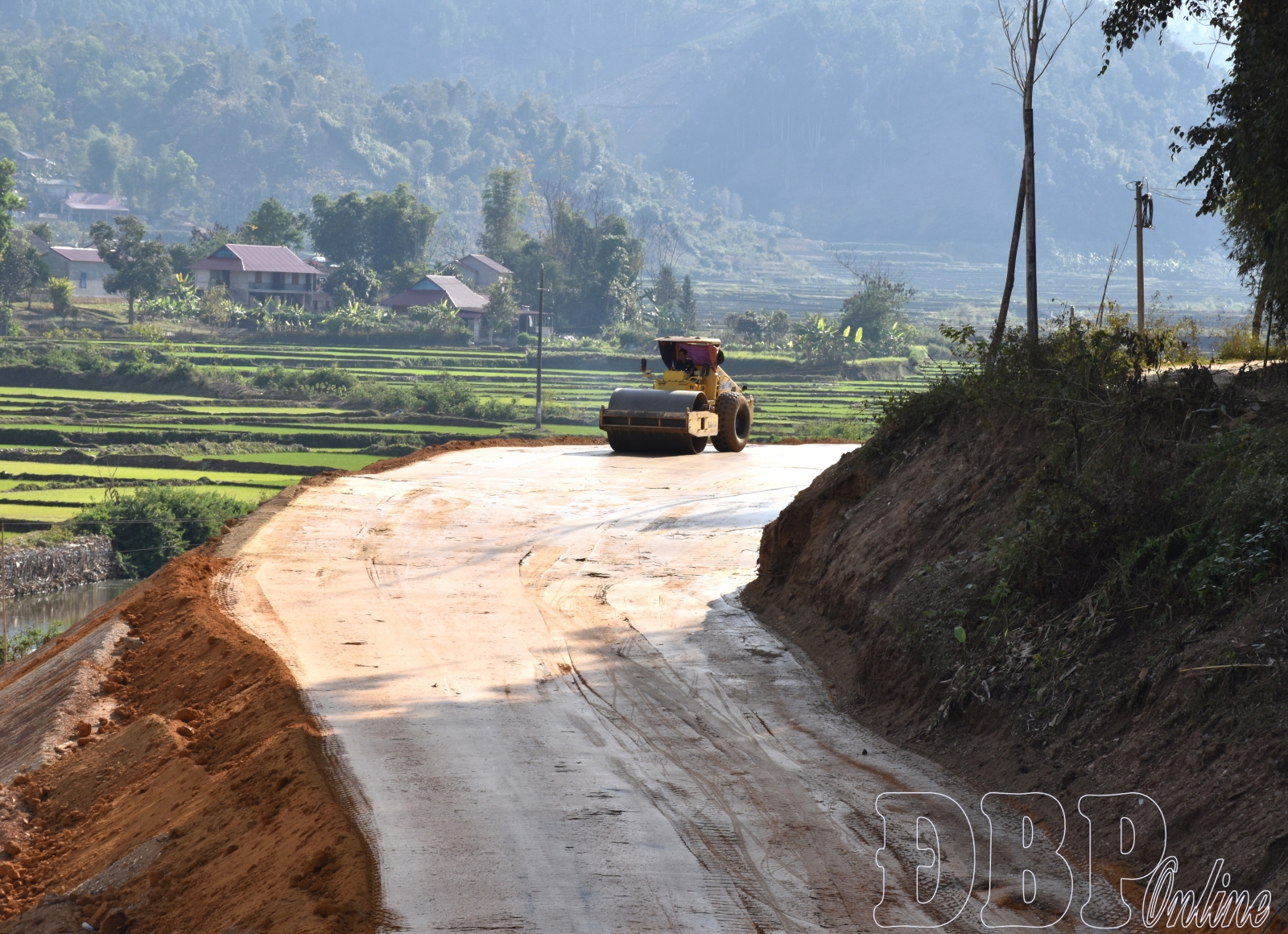
Thanks to this proactive, flexible, and drastic approach, 100% of the affected households have had their land origins verified. To date, 12 compensation and support plans have been approved for a total area of over 40,101m² with total funding of over VND 22.8 billion. Specifically, in the period from July 1, 2025, to the end of 2025, the Mường Ảng commune People’s Committee approved 6 plans for 71 households with total funding of more than VND 16.2 billion. This demonstrates a positive shift and the high determination of the commune’s party committee and authorities.
According to Giáp, the approved project timeline runs until 2026. With little time remaining and a heavy workload, construction units are currently rushing to implement planned steps while coordinating closely with local authorities to promptly handle any arising issues. This ensures the project stays on track and complies with legal regulations. With the synchronous involvement of the Mường Ảng commune political system and the consensus of the people, the project is expected to reach the finish line on time, contributing to the completion of the transport infrastructure and opening a new growth driver for the commune in the coming years.
Quang Long

.jpg)
.jpg)
.jpg)
.jpg)
.jpg)
.jpg)
.jpg)
.jpg)
.jpg)
You have 500/500 characters left
Please enter 5 or more characters!!!