



Facing that reality, the province has determined that building regional linkages and closely connecting stages from production and processing to consumption is an inevitable direction to expand the market, create sustainable output, and enhance the value and competitiveness of local agricultural products.
In recent years, agricultural production in the provincial area has been mainly small-scale and scattered. Concentrated raw material areas are still limited, and large-scale commodity production chains associated with stable consumption markets have not been clearly formed. Many agricultural products are still consumed through traditional methods, depending mainly on traders, making prices unstable and precarious. At many times, farmers fall into the situation of “good harvest, low price,” or even face difficulties in selling. The cause is mass production and lack of planning leading to rapid output increases while preservation, processing, transportation, and market connection remain limited. The geographical location far from major economic centers and high transportation costs further reduce the competitiveness of Điện Biên agricultural products.
To overcome the above limitations, the province has concretized many guidelines, resolutions, and action programs to restructure the agricultural sector towards increasing added value and sustainable development. In which, focus is placed on planning, forming concentrated production areas for key crops and livestock; at the same time strengthening the “5 houses” linkage (Farmers - State - Scientists - Entrepreneurs - Banks); connecting with major provinces and cities to expand the consumption market for agricultural products.
.jpg)
The province clearly defined the State’s tectonic role in paving the way, perfecting mechanisms and policies, and playing the role of “conductor” coordinating the link between farmers, cooperatives, enterprises, and the market. The focus is on planning and issuing land policies to create conditions for the formation of concentrated raw material areas, facilitating enterprises to invest in production and processing. In the 2021 - 2025 period, with the synchronous involvement of all levels and sectors, many production - consumption linkage models were step-by-step formed. Some raw material areas have been built associated with processing and consuming enterprises; many agricultural products began to have underwriting contracts, participating in stable distribution chains.
Up to now, many concentrated production areas have been formed in the provincial area such as: Rice; coffee, fruit trees, macadamia, rubber, tea, and cassava... The whole province has nearly 5,000ha of high-quality rice; 8,134ha of coffee; 12,361ha of macadamia; over 5,000ha of rubber; 4,160ha of fruit trees, and 632ha of tea. Notably, the province has built concentrated fruit growing areas with a scale of over 3,100ha, including types: Mango, jackfruit, pineapple, pomelo, pear in the areas of Điện Biên Phủ ward, Mường Thanh, and communes: Tuần Giáo, Mường Ảng, Na Sang... to create raw material sources serving consumption within the province and supplying processing enterprises such as Nafoods Northwest, Đồng Giao Export Food Joint Stock Company, and TH True Milk. Through linkages, farmers step-by-step access production processes according to standards, meeting the increasingly high requirements of the market. Enterprises are also more proactive about raw material sources, controlling product quality, thereby enhancing added value and competitiveness for Điện Biên agricultural products.
As raw material areas are step-by-step formed and expanded in scale, the province focuses on attracting enterprises to invest in the processing sector, considering this a key stage to enhance added value and competitiveness for local agricultural products. From that orientation, many processing projects have been and are being deployed, aiming to close the agricultural value chain.
The whole province currently has over 5,000ha of rubber, of which nearly 4,500ha is being exploited, with rubber latex output reaching 5,900 tons/year. Previously, rubber latex was mainly harvested raw and then transported to Sơn La and lowland provinces for processing, causing costs to rise and the value received per unit area to decrease. From this reality, the province created favorable conditions for the Điện Biên Rubber Joint Stock Company to build a processing factory right in the locality.
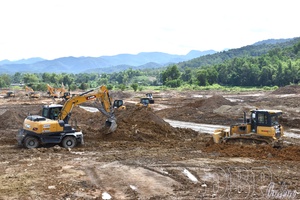
In late December 2025, the Rubber Latex Processing Factory in Thanh Nưa commune with a total investment of VND 60 billion and a design capacity of 5,000 tons/year was officially completed and put into operation. The factory is invested with synchronous technical infrastructure, producing rubber latex types SVR10 and SVR20 meeting national quality standards. The factory going into operation ensures the consumption and processing of the entire raw latex output after exploitation of the Điện Biên Rubber Joint Stock Company, Mường Nhé Rubber Joint Stock Company, and smallholder households in the provincial area. According to the calculations of the Điện Biên Rubber Joint Stock Company, the added value from the processing stage is estimated at more than VND 4.7 million per ton. When operating stably, the factory is expected to increase the value of commodity products by about VND 30 billion per year, contributing about VND 15 billion/year to the State budget, while creating regular jobs for 70 - 80 local laborers with income from VND 7.5 million/person/month or more.
Along with rubber, the province has approved the investment policy and selected investors for the BHL Điện Biên Tapioca Starch Processing Factory Project, scale 28.7ha, capacity 200 tons of starch/day and 50 tons of cassava residue/day and night. Besides, key coffee areas such as Quài Tở, Tuần Giáo are also actively promoting and attracting enterprises to invest in coffee processing factories, step-by-step perfecting the value chain for this key product.
Besides investing in production and processing, the province pays attention to synchronously deploying trade promotion and supply-demand connection to expand the consumption market for agricultural products. Annually, departments and sectors preside over and coordinate to organize connections for enterprises, cooperatives, and agricultural business households to participate in fairs, exhibitions, and consumption linkage programs with major provinces and cities, while promoting the exploitation of e-commerce floors. Thereby, step-by-step opening more market “doors”, bringing Điện Biên agricultural products to access consumers inside and outside the province more widely.
In the coming time, Điện Biên province will continue to promote the restructuring of the agricultural sector towards forming concentrated raw material areas associated with product processing and consumption. When guidelines and policies are deployed synchronously, close to reality, and sticking to market needs, the link between locality - enterprise - farmer will become increasingly tight, increasing value, and step-by-step building a modern, sustainable commodity agriculture.
Phạm Trung
.jpg)
.jpg)
.jpg)
.jpg)
.jpg)
.jpg)
.jpg)
.jpg)
.jpg)
You have 500/500 characters left
Please enter 5 or more characters!!!