Changing the face of rural areas

ĐBP - When making a living at home does not meet their needs, young men and women from highland districts of Điện Biên Province leave their hometowns for industrial zones and big cities in search of jobs, carrying hopes for a brighter future. In recent years, job counseling and introduction efforts have been actively implemented by communes in Tuần Giáo District, contributing to increasing incomes and improving the face of highland rural areas.

In a spacious, two-story house built solidly with a modern design, Mr. Lường Văn Diên and his wife Mrs. Lò Thị Thân from Kép Hamlet, Chiềng Sinh Commune (Tuần Giáo District) cannot hide their joy. He shared that after nearly ten years of hard work, the couple saved enough money to build the house that they dreamed of for years. His family used to be very poor, one of the poorest in the village. With four members relying solely on 500sq.m of rice fields and his seasonal construction work with low, unstable income, he struggled hard. Without capital or land for farming, they had no idea how to improve the family’s livelihood.

After years of working away, Mr. Lường Văn Diên’s family live in a newly built house.

“In 2009, my wife and I decided to work for a construction company in Hải Phòng City. I did as a builder, and my wife worked as a construction assistant. Working at the same place reduced our daily travel and food costs. Despite many hardships, our life is now stable. After covering our children’s monthly expenses, we save over VNĐ 100 million per year. Our two-story house, with over 150sq.m per floor, cost more than VNĐ 700 million for materials, with labor provided by us and labor exchanges with villagers. In our village, construction workers are all locals; if one house is built this year, the owners will return the favor to others next year. If we had stayed at home doing seasonal work, we would never have built this house,” he added.

Chiềng Sinh is recognized by Tuần Giáo District for its effective job counseling and introduction efforts in recent years. Working at small enterprises or major industrial zones in the country is a new direction for many young people from highland communes.

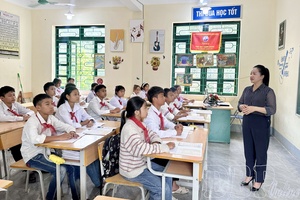
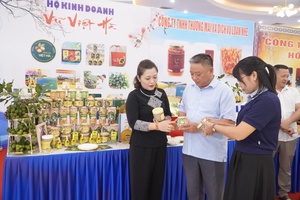
 Vietnam Coal and Mineral College recruits workers in 10 communes of Tuần Giáo District.

Mr. Lò Văn Pánh, Chairman of the Chiềng Sinh Commune People’s Committee, said that nowadays, after finishing high school, many youths who do not pursue higher education seek jobs through family or neighbors in companies. Therefore, introducing locals to reputable businesses is a priority for the commune’s leadership. On average, 1,800 people aged 18-35 from Chiềng Sinh work in industrial zones like Bắc Giang, Bắc Ninh, Hải Phòng, earning VNĐ 8-13 million/month. With their earnings, many families have built houses, and bought vehicles and modern household appliances. The face of the highland commune has changed considerably.

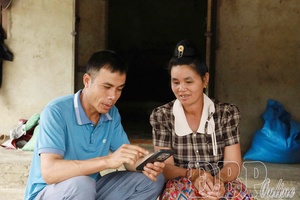
Mrs. Lò Thị Thảo’s family from Vánh 3 Hamlet, Chiềng Đông Commune (Tuần Giáo District) is happy as their daughter’s factory work helps build their house and open a grocery store.

Similarly, in Chiềng Đông Commune, young people actively seek suitable jobs to help their families. Mr. Quàng Văn Thương, Vice Chairman of the Chiềng Đông Commune People's Committee held that today’s youths are quick to seize job opportunities. Whenever they hear of good recruitment offers, they immediately apply, often with friends or family members. After every Lunar New Year (Tết) holiday, few working-aged people stay home. Annually, about 550-600 locals work for domestic companies, sending money home and bringing back new ideas for local economic development, such as opening grocery stores or motorbike repair shops.

To meet labor demands and ensure workers’ rights, the Tuần Giáo District’s Sub-department of Labor, Invalids, and Social Affairs connects with major domestic enterprises to provide stable, well-paying jobs. On February 11, 2024, Vietnam Coal and Mineral College, in collaboration with companies from the Vietnam National Coal and Mineral Industries Group, recruited and sent workers from 10 communes in Tuần Giáo for vocational training.

Chiềng Sinh Commune’s rural landscape (Tuần Giáo District) now features modern multi-story houses.

Having jobs and stable incomes, migrant workers have improved their family lives and transformed their hometowns. In recent years, modern multi-story houses have been built, enhancing local living standards. However, urban temptations pose risks to honest, naive workers, with some returning burdened by debt after falling into social evils. Thus, learning from successful peers, staying alert, avoiding social vices, and living frugally and healthily are essential for every migrant worker.

Quang Hùng
Comment

You have 500/500 characters left

Please enter 5 or more characters!!!

Recent news

  • 'Asserting position of Vietnamese goods

    Asserting position of Vietnamese goods

    ECONOMY -
    ĐBP - After 17 years of implementation, the “Vietnamese People Prioritize Using Vietnamese Goods” campaign has become a vital driving force promoting local economic development.
  • 'Điện Biên: Where heritage, hospitality, and opportunity converge

    Điện Biên: Where heritage, hospitality, and opportunity converge

    TRAVEL -
    ĐBP - In the context of deeper integration and development, building and promoting the image of Điện Biên as a friendly province rich in cultural identity and development potential has become an important mission to attract tourists and investors while creating momentum for sustainable growth.
  • 'Bright spot of education in border area

    Bright spot of education in border area

    SOCIAL AFFAIRS -
    ĐBP - Boosting the studying and following of Hồ Chí Minh’s ideology, ethics, and style, over the past years, Thanh Yên No.1 Kindergarten has always effectively implemented campaigns and emulation movements, doing well in the care, nourishment, and education of children.
  • 'Empowering community-based tourism

    Empowering community-based tourism

    TRAVEL -
    ĐBP - Điện Biên possesses great potential to develop community-based tourism, with the expectation of creating new livelihoods for local people. However, for a long time, most models have operated independently, lacking connectivity and failing to fully exploit existing advantages. To overcome this reality, the province has deployed multiple synchronized solutions to “empower” this type of tourism to develop sustainably and professionally.
  • 'Inheriting and promoting signature culture-tourism “brand”

    Inheriting and promoting signature culture-tourism “brand”

    CULTURE - SPORTS -
    ĐBP - Following the official operation of the two-level local government model, alongside stabilizing their organizational apparatus, many communes and wards across the province have rapidly focused on maintaining and promoting traditional cultural values and signature tourism products. The proactivity of these localities has made an important contribution to preserving cultural identity as well as continuing to assert the culture-tourism “brand”, creating a driving force to promote sustainable development in the new phase.
  • 'New rhythm of life by Mã River

    New rhythm of life by Mã River

    SOCIAL AFFAIRS -
    ĐBP - On a June morning, gentle golden sunlight blankets the mountain slopes along the Mã River. The river still flows quietly amidst the mountains and forests, reflecting villages that are innovating day by day. Nearly a year after the historic flood, the scars of natural disaster in Mường Luân are gradually fading, making way for the green of fields, orchards, and spacious houses.
  • 'Roads awaken potential

    Roads awaken potential

    ECONOMY -
    ĐBP - Identifying transportation as a lever to promote socio-economic development, over the past years, Mường Ảng commune has concentrated resources on investing in transport infrastructure to effectively leverage existing potentials and advantages.
  • 'Concerns over habit of using weedkillers in Pú Nhung

    Concerns over habit of using weedkillers in Pú Nhung

    SOCIAL AFFAIRS -
    ĐBP - Recently, the use of weedkillers in agricultural production has become a habit for many residents in Pú Nhung commune due to its quickness, saving effort, and labor costs. However, behind this immediate convenience are significant consequences for the environment, human health, and the quality of cultivated soil.
  • 'Forming habit of saving electricity

    Forming habit of saving electricity

    ECONOMY -
    ĐBP - Unplugging electrical appliances after use, regularly inspecting and replacing substandard devices to limit power loss... have become a habit for many households. Small changes in daily activities are contributing to shaping a thrifty lifestyle and more efficient electricity consumption.