



The goal is to narrow development gaps and improve living standards, which the province considers a key task. With resources allocated appropriately and flexible implementation, many poor villages have seen clear improvements, strengthening people’s confidence and motivating them to build more stable lives.
According to Decision No.433/QD-UBDT issued by the Committee for Ethnic Minority Affairs approving the list of extremely disadvantaged villages in ethnic minority and mountainous areas for 2021-2025, Điện Biên province has 57 such villages. These areas typically face harsh natural conditions, inadequate and inconsistent infrastructure, weather-dependent production, and high poverty rates. Most of these villages are located in highland districts such as Tủa Chùa, Nậm Pồ, and Điện Biên (former). Identifying extremely disadvantaged villages provides a crucial foundation for the province to implement appropriate support policies, from infrastructure investment and livelihood assistance to vocational training and improvements in healthcare and education services.
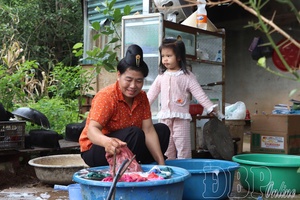
Huổi Min village in Mường Lay ward is among the province’s most disadvantaged communities. In the past, its lack of infrastructure and unstable livelihoods meant local residents saw almost no improvement for years. However, thanks to investment from the Party and the State, Huổi Min has gradually transformed. The village now has upgraded roads; residents receive support in farmland allocation, farming techniques, crop varieties, and livestock breeds. These efforts have helped raise incomes and promote sustainable poverty reduction.
.jpg)
The village currently has 21 households, with only 8 classified as poor or near-poor. According to Nguyễn Đạt Long, Chairman of the Mường Lay ward People’s Committee, Huổi Min’s progress demonstrates the effectiveness of poverty reduction programs when they are implemented in the right direction and tailored to local needs. The ward has supported households with crop and livestock varieties, offered technical training, and invested in essential infrastructure, including village roads, clean water, and electricity, to facilitate economic development. The goal is to help Huổi Min become a stable, developing community with no poor households and eventually exit the list of extremely disadvantaged villages.
Also on the list of disadvantaged areas, Kể Cải village in Tủa Chùa commune had in previous years seen little development. Its inadequate infrastructure, narrow access roads, and frequent landslides during the rainy season made travel and trade difficult. Local agricultural production was mainly subsistence-based, keeping living standards low. Many residents had to seek seasonal work elsewhere, and poverty rates remained high for many years.
With support from State funded programs, Kể Cải has gradually changed. Village roads have been concreted, irrigation canals repaired, and new community facilities built, creating more favorable conditions for daily life and production. Residents have received crop and livestock support, and many households have shifted to semi-grazing livestock farming or cultivating higher value crops, helping them achieve more stable incomes.
Notably, leveraging its natural advantages, Tủa Chùa commune has invested in developing community based tourism, including cloud hunting and sunset viewing spots in Kể Cải village. According to Phạm Quốc Đạt, Chairman of the Tủa Chùa commune People’s Committee, since late 2022 the commune has developed a more than 4 hectare tourist area featuring a flagpole viewing deck, huts, swings, windmills, and auxiliary facilities for visitors. Thanks to coordinated efforts from local authorities and the determination of residents, living conditions in Kể Cải have improved steadily, with poverty rates decreasing year by year.
The province has identified investment in extremely disadvantaged villages as a priority. This is considered a key solution to narrowing regional development gaps, improving living standards, and fostering sustainable progress in ethnic minority areas. A wide range of direct support policies has been implemented. Province wide, housing assistance has been provided for 2,158 disadvantaged households, enabling them to live safely and stably while developing their livelihoods. More than 200 livelihood and sustainable poverty reduction models and projects have been launched, many of which have begun generating stable incomes and long term opportunities.
Access to preferential credit has also expanded. Since 2021, more than 395,000 households have received loans for production, business, and household improvement. As a result, many families have escaped poverty, and more than 23,000 workers have secured new jobs. Alongside livelihood development, the province emphasizes social welfare policies. A total of 3,946 ethnic boarding school students and nearly 28,000 students from poor and near-poor households have benefited from tuition exemptions, reductions, and study expense support, ensuring equal access to education and preventing any child from being left behind.
Notably, the economic - social infrastructure system in disadvantaged villages has been significantly strengthened, with 1,129 completed projects, including roads, schools, health stations, water systems, and electricity grids, providing a solid foundation for improving quality of life. In addition to economic and infrastructure development, the province also focuses on preserving and promoting cultural traditions. Many traditional cultural practices have been restored, such as the Dao fire dance (the Red Dao subgroup), the Khơ Mú rain praying ritual, and the Kháng rice leaf offering ceremony, contributing to cultural preservation and enhancing the appeal of community based tourism.
Điện Biên aims to eliminate all extremely disadvantaged villages by 2030. The province is currently reviewing village classifications under Government Decree No.272/2025/ND-CP on identifying ethnic minority and mountainous regions for 2026-2030, with an estimated 905 villages to be designated as extremely disadvantaged. Based on this, priority investment will be directed toward these villages not only through immediate assistance but through long term strategies. As infrastructure improves, livelihoods expand, and residents gain new opportunities, disadvantaged villages will gradually overcome hardship and become vital contributors to Điện Biên’s overall development.
Quốc Huy

.jpg)
.jpg)

.jpg)
.jpg)
.jpg)
.jpg)

.jpg)
.jpg)
.jpg)
You have 500/500 characters left
Please enter 5 or more characters!!!