



Classes are organized right at the grassroots level, focusing on occupations suitable for local production conditions, helping trainees easily access knowledge, apply it to production, and step-by-step raise their income and develop the household economy.
Aligning training programs with actual local demands
As one of the units directly performing the task of vocational training for rural laborers, the Vocational Education - Continuing Education Center 1 was assigned an enrollment and training target of 1,330 workers in 2026 by the Provincial People’s Committee. To ensure that the training strictly matches practical needs, the Center proactively coordinates with the authorities of communes and wards to survey residents’ vocational learning needs before opening classes.
.jpg)
Trần Ninh Nam, Deputy Director of the Center, stated that vocational training currently completely stems from the actual demands of the people. The Center collaborates with the People’s Committees of communes to visit villages and hamlets to survey and grasp vocational learning needs in order to build appropriate class-opening plans. From the beginning of March 2026 to present, the Center has successfully organized 13 training classes across 11 communes and wards.
Based on the actual needs survey results, the occupational groups selected for training are mainly linked to the production conditions and strengths of each locality, including livestock and poultry husbandry, safe vegetable cultivation, mushroom farming, fish rearing, coffee planting, as well as several occupations in the construction sector. Classes are organized right at the grassroots level with flexible commencement times depending on practical conditions, creating favorable conditions for residents to participate in vocational training.
Hands-on training driving successes at grassroots level
In Huổi Phúc village, Thanh Yên commune, a primary vocational class on poultry farming techniques and disease prevention and treatment has been open since the beginning of March, attracting 35 trainees. Over a three-month period, trainees are equipped with knowledge on free-range poultry farming techniques, alongside the identification, prevention, and treatment of common diseases in livestock herds. Trainees basically apply the learned knowledge to reality completely, resulting in well-growing poultry herds and a 100% survival rate, which initially demonstrates the efficiency of the vocational training model that tightly binds theory with practice.
.jpg)
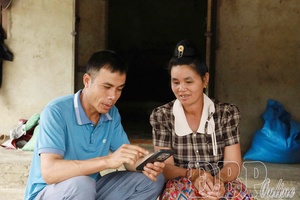
Lò Thị Hoa, a trainee of the class, shared that the majority of households in the village raise poultry to serve family needs and increase income. Previously, animal husbandry relied mainly on experience, so economic efficiency was not high and diseases easily broke out. Being able to practice directly helps residents improve their knowledge and skills, confidently apply them to actual production, and step-by-step expand their family’s farming scale.
In Yên village, Thanh An commune, a class on pig farming techniques and disease prevention and treatment also attracts a large number of residents. Trainees are equipped with practical knowledge on barn construction, care, vaccination, and handling common diseases in pig herds. Lò Minh Quyết, another trainee, shared that being specifically guided by officials on safe husbandry processes, as well as disease identification and handling in livestock, has helped his family change their approach. The knowledge absorbed from the class is applied immediately to the family’s actual farming, ensuring that the livestock grows well and minimizing the risk of diseases.
Flexible scheduling and practical teaching methodologies
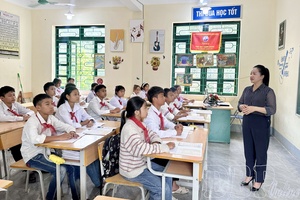
To suit the production conditions of the people, learning hours are arranged flexibly according to seasonal periods. Directly guiding residents at grassroots vocational classes, Lò Văn Bình, a teacher at the Center, stated that classes are usually organized in the early morning, at noon, or in the evening, creating conditions for trainees to both participate in learning and maintain their field work. The program content is built toward reducing theory and increasing practice, consisting of 30% theory and 70% practice.
.jpg)
Trainees are divided into small groups of five people per group to directly practice disease prevention and treatment techniques under the guidance of teachers. This “hands-on coaching” method helps learners easily absorb knowledge, quickly apply it to reality, and step-by-step improve family farming efficiency.
Thanks to the deployment of vocational training that closely follows reality, over 80% of trainees can create their own jobs locally. In the coming time, the Vocational Education - Continuing Education Center 1 will continue to coordinate with communes and wards to organize classes and manage training. The opening of classes will continue to closely follow the needs of residents, meeting the local socio-economic development requirements and labor market demands. In 2026, the Center strives to open 38 classes across many different areas, Deputy Director Trần Ninh Nam added.
Bringing classes directly to villages and hamlets and teaching flexibly through the “hands-on coaching” method, vocational training in Điện Biên is bringing visible efficiency. This practical knowledge has helped residents in local residential areas across the province enhance their production skills, develop sustainable livelihoods, and improve their income.
Nguyễn Hiền
.jpg)

.jpg)
.jpg)
.jpg)
.jpg)
.png)
.jpg)
.jpg)
.jpg)
.jpg)
.jpg)

You have 500/500 characters left
Please enter 5 or more characters!!!