



From there, the province gradually improves the quality of human resources, creates jobs, and increases income, which contributes to promoting sustainable socio-economic development in the area.
Currently, there is one vocational education institution under the provincial People’s Committee and five other institutions participating in vocational education activities within the province. These include the Thái Nguyên University branch in Điện Biên and four regional vocational-continuing education centers under the Department of Education and Training.
In 2025, vocational training institutions in the area actively enrolled and trained more than 8,500 people, reaching over 100% of the assigned plan. This effort made an important contribution to equipping residents with knowledge and skills while improving the quality of the labor source. Notably, vocational training is implemented in association with labor market trends to meet practical needs, thereby contributing to promoting economic growth and sustainable poverty reduction. The structure of training industries and professions has been gradually adjusted to suit the socio-economic structure of the locality.
.png)
Trần Đăng Ninh, the Vice Director of the Department of Education and Training, stated that when implementing vocational training according to labor market trends, regional vocational-continuing education centers have proactively selected industries and professions suitable for practical needs as well as the production and living conditions of the people. Training forms are implemented flexibly by combining centralized training, mobile training in communes, and training linked to production models, which helps students access actual work during the learning process.
To date, approximately 50% of laborers who are ethnic minorities in the relevant age group have received vocational training appropriate to their needs. Training occupations are mainly in the agricultural sector, covering areas such as livestock techniques and disease prevention for pigs, buffaloes, cattle, and poultry, as well as techniques for growing, caring for, harvesting, preserving, and processing coffee. Some non-agricultural occupations are also implemented for training, including construction techniques, mechanical welding, traditional hand-weaving, tailoring, and product modeling for introduction. As a result, 80% of workers have new jobs after training or continue their old jobs but with higher productivity and income.
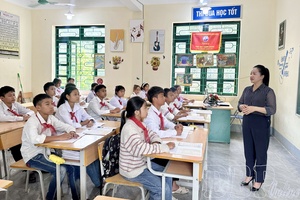
At Điện Biên College, vocational training is always determined to be linked with labor market needs. Currently, the school is organizing training for 16 industries and professions at the college level, 25 at the intermediate level, and dozens of elementary-level professions with training under 3 months. Many of these industries and professions belong to the priority group serving the socio-economic development of the province, such as tourism-services, information technology, agriculture-veterinary medicine, electricity-mechanics, and economics-finance.
.png)
The school has 12 industries and professions recognized as national-level key occupations, which include legal services, accounting, industrial electricity, automotive technology, construction techniques, animal husbandry-veterinary medicine, tourism guidance, and construction machinery operation. The basic training industries and professions suit the needs of learners and employers. Survey results show that in the 2021 - 2025 period, over 80% of students of the school had suitable jobs after graduation, meeting the requirements of agencies and enterprises inside and outside the province.
To continue effectively implementing the goal of vocational training and improving the quality of the labor source in the area, the province determines to promote vocational training according to market trends in the coming time. The focus will be on agricultural sectors like coffee, macadamia, and livestock, as well as services and tourism to promote local economic development. This requires vocational education institutions to continue improving training quality and strongly innovating programs in a flexible and integrated direction while diversifying industries and professions. Institutions are also expected to proactively innovate teaching methods and increase the application of technology in training.
Through these actions, the skills and expertise of workers are improved to meet labor market requirements and develop human resources, which contributes to promoting sustainable socio-economic development in the area.
Đức Linh
.jpg)


.jpg)
.jpg)
.jpg)
.png)
.jpg)
.jpg)
.jpg)
.jpg)
.jpg)
.jpg)
You have 500/500 characters left
Please enter 5 or more characters!!!