



In Điện Biên, this policy has created an important turning point for students in ethnic minority and mountainous areas, helping them stabilize their lives and focus on their studies. For many years, the continuing education system has played a vital role in illiteracy eradication, improving public knowledge, and training human resources across the country. However, most continuing education students are children of poor households or ethnic minorities who have faced disadvantages because previous support levels did not meet their actual living and learning needs. In Điện Biên, these limitations were even more apparent as local life remains difficult, particularly in highland and ethnic areas.
.jpg)
The issuance of Decree No.66/2025/NĐ-CP, which regulates policies for children in nurseries and students in ethnic minority, mountainous, and extremely difficult coastal or island areas, has promptly addressed these obstacles by providing support regimes that align with reality. According to the regulations, semi-boarding students attending continuing education centers who are permanent residents of specially difficult areas are eligible if they live at least 7km from school for the secondary level or 10km for the high school level, or if they face hazardous and obstructed travel routes. The policy also applies to those from ethnic minority or poor households. Under this decree, each student receives a monthly food allowance of VND 936,000, a housing allowance of VND 360,000 if they must arrange their own accommodation, and 15kg of rice per month for a duration not exceeding nine months per school year.
Cù Huy Hoàn, Deputy Director of the Department of Education and Training, stated that immediately after the decree took effect, the department directed its subordinate units to conduct a full census of eligible beneficiaries and coordinate with relevant sectors and local authorities to ensure proper implementation. The review and payment processes are conducted publicly and transparently to guarantee that the support reaches the correct recipients without error.
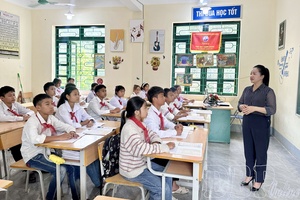
Serving students in the former Tuần Giáo, Tủa Chùa, and Mường Ảng areas, most of whom are from ethnic minority families in difficult economic conditions, the Vocational Training and Continuing Education Center 2 has found that these policies help stabilize operations, maintain attendance, and improve teaching quality. Lê Sỹ Tường, Director of the center, noted that while the school previously had to frequently encourage students to stay in school due to low support, the new policy has significantly improved their living standards and morale. This improvement has facilitated the school’s management and educational work, contributing to higher training quality.
.png)
In the 2025-2026 school year, the Vocational Training and Continuing Education Center 1 has nearly 1,000 students in its secondary and high school programs. Most of these students live dozens of kilometers away in remote and specially difficult areas, and their families are primarily classified as poor or near-poor households. Consequently, the new support measures have relieved the burden of costs for both students and their families, allowing them to remain committed to their education. Giàng A Sìa, an 11th-grade student at the center, shared that as a member of a near-poor household, the monthly cost of schooling was once a heavy burden for his parents. He had even considered dropping out to help his family, but the support from Decree 66 has provided him with the joy and motivation needed to continue attending school.
Statistics from the Department of Education and Training show that across the province, 1,255 continuing education students are currently receiving food and rice support, while 1,097 students receive housing assistance under Decree No.66. This decree has successfully resolved long-standing difficulties for students in the continuing education system and reflects the consistent stance of the Party and State in ensuring equity in educational access. As barriers to living and learning conditions are removed, these students gain the drive to excel, thereby enhancing the quality of human resources and effectively fulfilling local socio-economic development goals.
Quang Long
.jpg)


.jpg)
.jpg)
.jpg)
.png)
.jpg)
.jpg)
.jpg)
.jpg)
.jpg)
.jpg)
You have 500/500 characters left
Please enter 5 or more characters!!!