“Revival” after disaster

ĐBP - In the early days of 2026, the road leading into Mường Luân commune still bears the scars of past landslides, yet the hillsides on either side have begun to glow with the green of returning corn and rice. After a year defined by upheaval, this land, which once groaned under the weight of heavy rains and floods, is finally witnessing a spirited revival.

Nguyễn Trọng Huế, Chairman of the Mường Luân commune People’s Committee, reflects on 2025 as a landmark year. It was the inaugural period for the two-tier local government model, yet it coincided with the most volatile weather patterns seen in decades. Prolonged heavy rains caused the Mã River to swell to dangerous levels, triggering flash floods and landslides across numerous villages that directly threatened the lives and livelihoods of the residents. This situation placed immense pressure on the new administrative apparatus to remain operational while prioritizing the absolute safety of the people. The commune quickly consolidated its Civil Defense Steering Committee to proactively manage disaster response directly from the grassroots level.

The physical toll was staggering, with dozens of homes collapsing and hundreds of hectares of crops being buried or swept away. Key infrastructure, including transport routes and irrigation canals, suffered severe damage. The chairman recalls times when the entire commune staff had to stretch their limits to rescue citizens, restore vital infrastructure, and maintain daily administrative duties simultaneously. However, through the support of the province and the armed forces, along with the resilient solidarity of the local people, the recovery took flight. Dozens of new homes have been erected, and relief funds were distributed with a speed that matched the urgency of the situation.

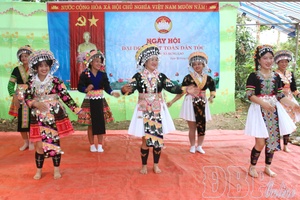
Lào ethnic people in Mường Luân 1 village, Mường Luân commune, embroider traditional costumes to welcome the new year.

Despite the harsh blows dealt by nature, the economy of Mường Luân commune in 2025 revealed several bright spots. The total grain cultivation area reached over 2,057ha with a production output of 6,763 tons, notably with corn production hitting 137.4% of its targeted goal. The livestock sector remained a vital economic anchor, with the total value estimated at VND 56 billion. The commune also demonstrated a forward-thinking mindset by restructuring its crops, planting 171ha of coffee, 28.45ha of macadamia, and 20.8ha of cardamom to ensure a more sustainable future.

Social welfare efforts were equally comprehensive. Beyond immediate disaster relief, the commune utilized the National Target Program on Sustainable Poverty Reduction to build 159 new houses and repair 8 others for poor households. These efforts contributed to a reduction in the poverty rate to 26.71%, effectively lifting 138 households out of poverty compared to the previous year. These tangible results have significantly bolstered the people’s trust in the leadership of the grassroots-level government.

Pá Vạt village was among the hardest-hit areas due to its proximity to the Mã River. When the floods arrived, the village was nearly submerged, leading to devastating economic losses. Following the disaster, the commune government worked alongside various forces to relocate residents and provide financial aid for home reconstruction. Lường Văn Hùng, the head of Pá Vạt village, notes that while many families have received state support, including one household that received VND 50 million to rebuild, the road to full recovery is still ongoing. Some residents have taken the initiative to rent machinery to reclaim their landslide-damaged fields, but the community still looks forward to the completion of the ĐT130 provincial road to better facilitate trade and travel.

Standing on the banks of the Mã River, one can hear the roar of machinery from ongoing road repairs and see a community that refused to be defined by disaster. 2025 was a test of strength for the new government model and the local people alike. Through flexible leadership and a shared will, the commune has successfully turned a corner, stabilizing lives and maintaining its momentum for economic development.

Diệp Chi
Comment

You have 500/500 characters left

Please enter 5 or more characters!!!

Recent news

  • 'Prime Minister Lê Minh Hưng works in Điện Biên

    Prime Minister Lê Minh Hưng works in Điện Biên

    NEWS - POLITICS -
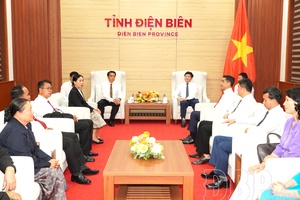
    ĐBP - As part of his working program in Điện Biên, on the morning of July 25, Prime Minister Lê Minh Hưng held a working session with the Standing Board of the Điện Biên provincial Party Committee regarding the execution of socio-economic development, national defense, security, and foreign affairs tasks in the first six months of the year, alongside upcoming tasks and solutions.
  • 'Kindling hope

    Kindling hope

    NEWS - POLITICS -
    ĐBP - Across the S-shaped strip of land, quietly standing in martyrs’ cemeteries are rows of white gravestones bearing the words “Martyr’s grave with unidentified information.”
  • 'Bridging businesses and job seekers

    Bridging businesses and job seekers

    SOCIAL AFFAIRS -
    ĐBP - With an abundant labor force and growing recruitment demand, connecting businesses with job seekers has become a key solution to employment generation in Điện Biên. Through the collaboration of enterprises and the provincial employment service system, many local workers have secured stable jobs, contributing to more effective labor market matching and the sustainable development of the local workforce.
  • 'Listening to people, resolving people’s affairs

    Listening to people, resolving people’s affairs

    SOCIAL AFFAIRS -
    ĐBP - Identifying dialogue, citizen reception, and the resolution of complaints and denouncements as crucial, regular duties, Điện Biên province has focused on elevating the responsibility of heads of organizations, stepping up dialogue, proactively grasping situations, and settling matters right from the grassroots level.
  • 'Accelerating implementation of social housing projects

    Accelerating implementation of social housing projects

    ECONOMY -
    ĐBP - Social housing development contributes to resolving housing demands for low-income earners, public servants, employees, and workers - while generating momentum to promote urban development, attract investment, and guarantee social welfare.
  • 'Restoring names, reuniting families

    Restoring names, reuniting families

    SOCIAL AFFAIRS -
    ĐBP - Although the war ended decades ago, countless families of fallen soldiers continue to wait quietly for the day their loved ones are found, identified by name, and brought home. From faded photographs and aging death notices to memories preserved across generations, that hope has never faded.
  • 'Preserving green of forests

    Preserving green of forests

    ECONOMY -
    ĐBP - Bordering areas with vast territories, rugged terrain, obstructed transportation, and impacts from agricultural production constantly pose latent risks of forest resource encroachment. Facing these demands, the forest protection forces of Điện Biên and Lai Châu provinces have intensified coordination in forest management, protection, and fire prevention and fighting (FPFF) - contributing to maintaining forested areas and limiting forestry law violations.
  • 'Family support on path to rehabilitation

    Family support on path to rehabilitation

    SOCIAL AFFAIRS -
    ĐBP - In prisoner education and rehabilitation work, the family always serves as a vital spiritual support, helping convicts recognize their mistakes and strive to amend themselves to reintegrate into society early.
  • 'Introducing new crops into production

    Introducing new crops into production

    ECONOMY -
    ĐBP - Expanding coffee and macadamia regions, pineapple fields developing toward commercial production, and experimental models of new crop varieties are painting fresh colors across Điện Biên’s agricultural landscape. The province focuses on developing strategic crops and bringing high-economic-value crop varieties into production - contributing to elevating land use efficiency and creating sustainable livelihoods for the public.
  • 'Driving green transition: Electric vehicles on rise in Điện Biên

    Driving green transition: Electric vehicles on rise in Điện Biên

    ECONOMY -
    ĐBP - Along with the growing transition toward green energy, the use of electric vehicles in Điện Biên is increasing steadily. From electric motorcycles and cars for daily travel to electric taxis for passenger transport, eco-friendly vehicles are becoming increasingly common on local roads, helping reduce emissions, lower operating costs, and gradually foster environmentally friendly transportation habits.
  • 'Expectations from specific policies for agricultural development

    Expectations from specific policies for agricultural development

    ECONOMY -
    ĐBP - Facing requirements for agricultural restructuring toward modernity, the Điện Biên provincial People’s Council passed a Resolution at its 4th session stipulating support policies for sector restructuring toward concentrated, green, smart, and sustainable commercial production.
  • 'Supporting youth union members in economic development

    Supporting youth union members in economic development

    SOCIAL AFFAIRS -
    ĐBP - Over recent years, Youth Union executive bodies across Điện Biên province have consistently accompanied youth union members by supporting preferential credit loans, transferring scientific and technical advances, providing career orientation and job placement services, and building economic models suited to each locality’s conditions. Through practical support policies, many youth union members have boldly started businesses and enriched themselves right on their home soil.
  • 'Removing barriers from backward customs

    Removing barriers from backward customs

    SOCIAL AFFAIRS -
    ĐBP - In several highland areas of Điện Biên province, backward customs persisting through generations continue to leave numerous consequences. Ranging from home births without healthcare worker assistance and sick children not being taken to medical facilities in time, to child marriage and consanguineous marriage, these backward customs directly affect health, population quality, and stand as barriers to the sustainable development of ethnic minority areas.