



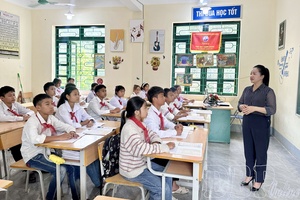
The course includes 20 participants from provincial departments, agencies, organizations, and educational institutions. The six-month program is divided into two phases. Phase one runs from April 13 to July 17 at Continuing Education and Vocational Training Center No. 1 in Điện Biên. Phase two, scheduled from July to September 2026, will take place in Yunnan province, China.
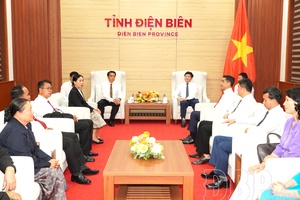
According to provincial leaders, sending officials and public employees to participate in Chinese language training demonstrates the province’s determination to prepare a workforce capable of meeting development demands in the new era. The program is considered a practical measure to improve the quality of public personnel, build a professional, proactive, and modern administrative system, and lay the foundation for expanded cooperation, exchange, and integration in the future. Participants are encouraged to make the most of their study time, actively practice communication, and gradually develop language reflexes and practical Chinese communication skills.
.jpg)
Participating in the course, Nguyễn Thu Trang from the Division of Heritage Management under the Department of Culture, Sports and Tourism shared: “In the tourism sector, Chinese is increasingly becoming an important skill as the number of Chinese visitors to Vietnam continues to rise. Recently, Điện Biên has welcomed many Chinese tourists seeking cultural and travel experiences. Knowing Chinese helps tourism workers like me overcome language barriers, communicate more proactively, provide better guidance, and handle situations more effectively, thereby improving the quality of tourist services.”
Although still in the early stages of the course, Trang and many other participants have gradually overcome their hesitation in communication and are now able to confidently introduce themselves and handle basic conversational situations.
The practical nature of the course and its open learning environment have been widely appreciated by participants. Chu Thị Linh from the Agricultural, Natural Resources and Environmental Technical Center under the Department of Agriculture and Environment noted: “During lessons, lecturers always encourage us to practice speaking and improve listening and speaking reflexes through real-life situations. Since the class includes participants from many different agencies and sectors, each session becomes a lively exchange of practical experiences. Thanks to the friendly and open atmosphere, learners are becoming more confident in using Chinese in daily communication.”
Dr. Nguyễn Tất Thắng, Director of the Incubation, Entrepreneurship and Human Resources Supply Center at Thai Nguyen University, stated that after studying Điện Biên’s practical needs, the university designed a program specifically suited to officials, civil servants, and public employees. One highlight of the course is its comprehensive teaching approach, which integrates listening, speaking, reading, and writing skills with practical communication exercises, allowing participants to immediately apply their knowledge to both work and everyday life. In addition to classroom interaction, learners maximize language exposure through online learning platforms.
Upon completion of the course, participants are expected to gain foundational knowledge of pronunciation, Chinese characters, and vocabulary, develop practical communication reflexes, and achieve proficiency equivalent to HSK Level 3.
Based on Điện Biên’s actual needs, Thai Nguyen University plans to continue cooperating with the province to implement additional training programs for officials and public employees in areas such as foreign languages (Chinese and English), information technology, digital skills, digital transformation, artificial intelligence (AI), STEAM education, and robotics. These initiatives aim to improve workforce quality and meet the requirements of development and international integration in the coming period.
As regional connectivity and cross-border exchange continue to expand, equipping officials and public employees with foreign language skills is becoming increasingly essential for Điện Biên, a province sharing borders with both Laos and China. Through foreign language training programs, particularly in Chinese, the province hopes to strengthen the quality of its workforce, improve external relations, promote trade and tourism, and enhance cooperation with international partners and neighboring localities.
Phương Dung
.jpg)

.jpg)
.jpg)
.jpg)
.jpg)
.png)
.jpg)
.jpg)
.jpg)
.jpg)
.jpg)

You have 500/500 characters left
Please enter 5 or more characters!!!