



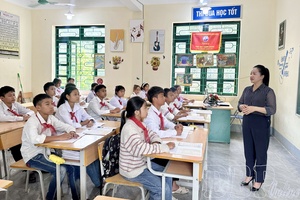
Career guidance for discharged servicemen across the province has become increasingly structured and closely aligned with real-world needs. Recently, the Điện Biên Employment Service Center under the Department of Home Affairs, in coordination with Regiment 741 under the provincial Military Command, organized career counseling and orientation sessions for 201 soldiers preparing for discharge. The sessions focused on practical issues such as vocational training support policies, domestic job opportunities, information on training programs offered by local vocational institutions, employment prospects both within and outside the province, and policies supporting overseas employment under contract. These efforts help soldiers scheduled for discharge in 2026 better understand available policies and proactively plan their futures.
Beyond providing information, the counseling also helps servicemen gain a clearer understanding of the labor market and employers’ requirements, enabling them to prepare accordingly. This is particularly important as most discharged soldiers are young, physically fit, and disciplined, yet often lack sufficient information and career planning skills.
.jpg)
Taking part in the program, soldier Cà Văn Thỏa (Che Phai 1 village, Chiềng Sinh commune) shared: “Through this program, I received comprehensive and accurate information about both domestic and international labor markets, vocational training programs, and recruitment requirements. These practical insights give us greater confidence in choosing the right path after discharge.”
Based on a thorough understanding of each soldier’s background, family circumstances, and aspirations, counseling content is tailored to suit individual needs. Alongside disseminating Party, State, and military policies for discharged servicemen, relevant units also focus on career orientation, labor market information, and essential job-seeking skills, helping soldiers become more proactive as they transition to civilian life.
Colonel Vũ Hoài Thanh, Commander of Regiment 741, noted that while discharged soldiers are a young workforce with strong discipline and good health, many still struggle with career choices. Through direct counseling sessions and coordinated activities, the unit has helped them access labor market information, identify high demand occupations, and understand post-discharge vocational training support policies. This provides a solid foundation for each individual to choose a career path suited to their abilities and circumstances.
Support does not end before discharge. Post-service assistance at the local level has also received attention. In 2026, Núa Ngam commune welcomed 16 soldiers completing their military service. At the reception ceremony, alongside recognizing their sense of responsibility and training achievements, the commune Military Command proactively connected with local businesses and organizations to facilitate vocational training, job placement, and access to loans for economic development.
This approach reflects grassroots level proactivity in supporting discharged soldiers. When local authorities, businesses, and workers are effectively connected, job opportunities become more tangible and accessible, helping discharged soldiers quickly reintegrate into civilian life.
Colonel Mùa A Phong, Commander of the Núa Ngam commune Military Command, emphasized: “Discharged soldiers need stable jobs and income to sustain their lives and continue upholding the qualities of Ho Chi Minh’s soldiers in labor and production, contributing to local development. Therefore, vocational training and job creation require the involvement of the entire political system and community, equipping them with essential knowledge to make the right career choices.”
In practice, timely and well-targeted career counseling, vocational training, and job placement support can help build a high quality workforce, improve productivity, and contribute positively to socio-economic development and social security.
Career guidance for discharged soldiers not only addresses immediate employment needs but also serves as a long term strategy to effectively harness a workforce trained in the military environment. It is therefore essential to further promote awareness of the benefits of vocational training while developing and enhancing practical support policies, such as preferential loans and tuition support at vocational and college levels, to help discharged soldiers overcome initial challenges and quickly stabilize their lives.
Lan Phương
.jpg)


.jpg)
.jpg)
.jpg)
.jpg)
.png)
.jpg)
.jpg)
.jpg)
.jpg)
.jpg)

You have 500/500 characters left
Please enter 5 or more characters!!!