



Điện Biên is a mountainous border province with a large territory, unevenly distributed population, and a high proportion of ethnic minority groups. Some backward customs and habits still exist, including child marriage. Over the past years, dissemination and mobilization work for child marriage prevention and control has been deployed in various rich formats, contributing to raising the awareness of citizens and students. During the 2021 - 2025 period, the rate of child marriage pairs in the province decreased from 37.4% to 31.9%, and the rate of consanguineous marriage dropped from 0.05% to 0%. However, the risk of recurrence remains substantial, especially in remote, isolated, and ethnic minority areas.
.jpg)
In response to this situation, the provincial People’s Committee has just issued a communication plan to minimize child marriage and consanguineous marriage in educational and training institutions across the province for the 2026 - 2030 period. The plan sets a target that by 2030, 100% of educational institutions will organize dissemination activities; 100% of managers, teachers, and students will be disseminated with legal knowledge on marriage and family; and over 95% of ethnic minority students will participate in thematic communication activities. Notably, all ethnic minority boarding and semi-boarding general schools will complete building and maintaining child marriage prevention communication models in the 2026 - 2027 period, which will then be replicated province-wide.
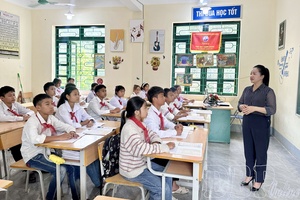
At Leng Su Sìn Secondary Ethnic Minority Semi-Boarding School in Sín Thầu commune, dissemination work on child marriage prevention and control is deployed annually. The school currently has 304 students, predominantly from the Mông and Hà Nhì ethnic groups. According to Principal Lê Bảo Khương, although it has significantly decreased compared to before, the situation of students dropping out of school to get married still occurs.
.jpg)
“In the 2025 - 2026 academic year, the school recorded one case of a 9th-grade student dropping out of school to get married,” shared Lê Bảo Khương. “It was only after the Tết holiday when the student did not return to school that the teachers caught wind of the information. When visiting the family to find out, the student had already moved to the husband’s house in another locality. The school disseminated and mobilized her to return to school, but the parents did not support it, making it very difficult to intervene.”
Therefore, to continue enhancing dissemination efficiency, the school changed its approach, avoiding purely theoretical dissemination. Extracurricular sessions are organized more vividly through dramatization, Q&A exchanges, and situational skits. The content of child marriage prevention and control is also integrated with life skills education within related lessons and subjects.
This past April, the school organized a collective thematic activity on “Reproductive health counseling, prevention of child marriage, consanguineous marriage, and the harmful effects of lá ngón (a poisonous plant)” for students. The program featured various relatable contents such as warnings about the risk of deformities caused by consanguineous marriage, the harms of early pregnancy, and legal regulations on the legal marriage age. Knowledge was conveyed through the skit “The Awakening Village” and the “Quick Quiz - Correct Answer” contest, creating a lively and easily absorbable atmosphere. Beyond centralized dissemination, the school’s teachers also regularly chat privately with students, especially semi-boarding ones, to understand their thoughts and promptly detect cases at risk of dropping out to get married.
.png)
At Búng Lao Secondary School (Búng Lao commune), child marriage prevention and control work is also implemented regularly and through multiple formats. The school hangs banners, slogans, and promotional posters in the semi-boarding area while integrating dissemination content into flag-raising ceremonies. Teachers directly exchange ideas and conduct Q&A sessions to capture students’ thoughts and mindsets. If a student is found to intend to quit school to get a wife or husband, teachers confide in them, chat with them, and go directly to their homes to mobilize both the family and the student.
Principal of the school Phạm Thúc Nam shared: “For highland areas and ethnic minority groups, the biggest difficulty in child marriage prevention is that many students have extreme psychological reactions, threatening to eat lá ngón to commit suicide if their romantic relationships are blocked. This makes it very difficult for families and the school to intervene deeply. Furthermore, this situation typically occurs after the Lunar New Year holiday or long breaks, making it hard to capture in a timely manner.”
.jpg)
According to the plan of the provincial People’s Committee, in the coming time, the Education and Training sector will continue to push forward communication activities in schools through forums, contests, and extracurricular activities, while integrating child marriage prevention and control content into Civic Education, Biology, and life skills education activities. Concurrently, the sector will enhance the application of information technology, building videos, infographics, and short clips to disseminate on digital platforms, fan pages, and web portals.
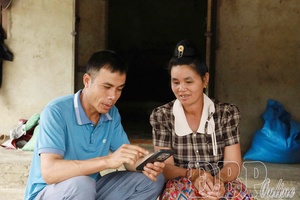
Besides, the province also highlights promoting the role of village elders, village chiefs, and prestigious people, while strengthening coordination among schools, families, and society in student management and education. Raising awareness and changing the behaviors of students and parents are identified as key solutions to step-by-step minimize child marriage, contributing to building a safe educational environment in the highlands of Điện Biên.
Nguyễn Hiền
.jpg)

.jpg)
.jpg)
.jpg)
.jpg)
.png)
.jpg)
.jpg)
.jpg)
.jpg)
.jpg)

You have 500/500 characters left
Please enter 5 or more characters!!!