



Immediately after Resolution No.57-NQ/TW was issued, the Party Committee of the Department of Health organized thorough dissemination and implementation to 100% of affiliated agencies and units through flexible forms suitable to the sector’s characteristics. Propaganda work innovated content and methods, integrating them into professional briefings, training sessions, and the sector’s communication channels. The provincial Center for Disease Control promoted propaganda on health newsletters, websites, and fanpages, contributing to raising awareness among officials and public employees about the key role of science, technology, innovation, and digital transformation in health development.
.jpg)
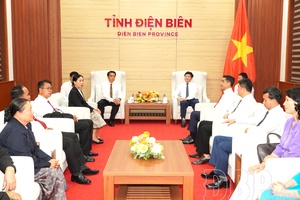
Deputy Director of the Department of Health Phạm Văn Mẫn stated: In 2025, the Department advised the Provincial People’s Committee to issue many important decisions and plans to promote digital transformation in the health sector. Typical examples include the health sector digital transformation program to 2025, with an orientation to 2030; the plan to implement electronic health records for the 2020 - 2025 period; and the pilot plan for integrated electronic health books on the VNeID application.
Information technology infrastructure has received synchronous investment attention from the provincial level to affiliated units. The Department of Health Office currently has 7 servers, 48 desktop computers, 10 laptops, a firewall system, LAN, and a separate server room, ensuring information safety and security. The entire sector currently has 75 servers, over 2,000 desktop computers, and over 200 laptops; 100% of units use fiber optic internet lines; 129 commune-level health stations are connected to the internet for professional purposes.
.jpg)
Notably, 3/4 of provincial-level hospitals, 1/4 of provincial specialized centers, and 10/10 of health centers have deployed online meeting systems, creating conditions to improve the efficiency of direction and administration throughout the sector.
The application of information technology in management and administration is deployed synchronously. 100% of directing and administrative documents of the Department of Health are exchanged in the network environment; 100% of outgoing electronic documents are digitally signed; over 90% of provincial-level officials and public employees and about 60% of grassroots-level officials regularly use email in their work.
In the field of medical examination and treatment, health facilities are gradually perfecting hospital management software systems, such as HIS, LIS, RIS/PACS, and EMR, ensuring compliance with domestic and international standards, aiming towards building smart hospitals. 100% of medical examination and treatment facilities in the province have connected data with the Health Insurance Assessment Portal and the Department of Health Data Portal; 100% of facilities are equipped with QR code scanners for citizen identity cards (CCCD) to serve patient reception.
.jpg)
The interconnection of data on birth certificates, death notices, and driver health check data is deployed synchronously, contributing to shortening the time for administrative procedure settlement and improving people’s satisfaction.
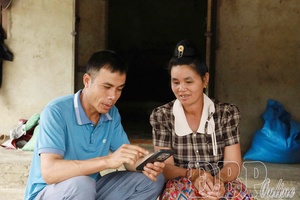
One of the outstanding results is the deployment of electronic health books integrated on the VNeID application. As of November 2025, the province has created 438,447 electronic health book records, reaching 65.7% of the population, exceeding the set progress despite many difficulties in funding and human resources.
In parallel, health facilities are promoting cashless payments. 100% of units pay salaries, allowances, and public service payments via bank accounts. Medical examination and treatment facilities diversify payment forms such as QR code, POS, Mobile Money, and integrate payment modules in hospital management software, contributing to financial transparency and reducing pressure on patients upon discharge.
.jpg)
As a leading unit, the provincial General Hospital has deployed the “Digital Mass Education” movement to officials and employees with the core goal of helping them grasp and master new technology platforms.
PhD, Dr. Trần Đức Nghĩa, Deputy Director of the provincial General Hospital, said: Responding to the “Digital Mass Education” movement, we deploy essential digital knowledge and skills equipment for 100% of officials and employees. The medical staff is knowledgeable and masters technology platforms such as electronic health records, online medical registration, cashless payment, and artificial intelligence applications in professional work and health communication.
“Through learning on the ‘Digital Mass Education’ platform and practical application at the hospital, the quality of patient service is gradually improved, the medical examination and treatment process is convenient and transparent, reducing waiting time. More importantly, the hospital aims to build a team of medical staff capable of popularizing digital skills to the people, taking the patient as the center in all activities. This is an inevitable path to build a modern, smart hospital, meeting the digital transformation requirements of the health sector in the current period,” added Deputy Director Trần Đức Nghĩa.
.jpg)
At the provincial General Hospital, many artificial intelligence solutions have been applied. Typically, using artificial intelligence to simulate PET images from available CT data brings opportunities for advanced diagnostic access to many patients. Dr. Trần Thanh Thủy Nhân, Deputy Head of the Department of Diagnostic Imaging, provincial General Hospital, said: “CT and PET/CT techniques are two types of techniques with very important significance in diagnosing diseases. However, the cost of PET/CT scanning is very expensive and has long been considered an economic burden for patients. Therefore, using artificial intelligence (AI) to create PET/CT from CT helps patients. After viewing the PET/CT image generated from the AI model, I found the image has a very high similarity compared to PET.”
With high political determination, application of science and technology, and digital transformation, the Điện Biên healthcare system is step by step realizing the goal of building modern healthcare, serving the people’s health care in the best way.
Diệp Chi


.jpg)

.jpg)
.jpg)

.jpg)
.png)
.jpg)
.jpg)
.jpg)
.jpg)
.jpg)
.jpg)
You have 500/500 characters left
Please enter 5 or more characters!!!