



However, investing in infrastructure and technical solutions remains insufficient without the companionship of local citizens, as the awareness and action of each individual serve as the decisive factor and the “key” to fundamentally resolving environmental challenges.
.jpg)
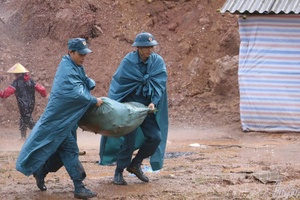
Over recent years, Điện Biên has been a locality bearing numerous impacts from natural disasters and climate change. In 2025 alone, the entire province recorded 15 extreme weather events ranging from severe cold and hail to flash floods and landslides, leaving 14 people dead and generating over VND 1,300 billion in total damages. This practical situation poses an urgent demand to construct a safe living environment that guarantees the lives and properties of residents to head toward green and sustainable development. Nevertheless, to achieve these set targets, the province is facing a major hurdle in collecting and treating community domestic waste.
According to the Report on environmental protection work in Điện Biên province, around 129,964 tons of domestic solid waste are generated province-wide each year. While the collection rate in urban areas reaches 96.5%, the rate in rural areas only hits 45%, and the overall treatment rate hovers around 40%. This discrepancy reflects substantial gaps in technical infrastructure and grassroots-level solid waste management methods.
.jpg)
This reality unfolds clearly in Mường Thanh ward, one of the central areas of the Điện Biên basin. With a population scale of around 24,000 people, the locality generates an average of over 50 tons of domestic waste per month. Despite the massive volume of waste, the ward has not yet constructed fixed and properly regulated waste gathering points. The collection unit currently has to temporarily arrange five garbage cart locations and increase the collection frequency from once a week to a daily routine.
However, this stopgap solution cannot thoroughly resolve the existing situation. Due to a lack of infrastructure and limited funding, waste collection remains perennially overloaded.
.png)
Trần Huy Hòa, Head of the Mường Thanh ward Economics, Infrastructure, and Urban Affairs Division, shared: “The greatest difficulty currently is the vast administrative boundary and dense population, which leads to a massive volume of waste in public areas, presenting major obstacles for centralized collection. The allocated financial resources only meet about 50% to 60% of the actual workload, creating immense pressure on maintaining environmental sanitation.”
Beside infrastructure and funding, a greater obstacle lies in the awareness of a segment of the population. Over the past period, despite the locality’s drastic campaigns to clear out four waste “black spots” and organize cleanups while placing prohibition signs at spontaneous dumping grounds, illegal littering still recurs. In Noong Nhai village, after enforcement forces cleared the area, some individuals intentionally moved the prohibition signs to continue dumping trash.
.jpg)
Bùi Quang Hợp from Noong Nhai village expressed his wishes: “The awareness of a segment of residents remains limited, and domestic waste has not been gathered in regulated places. Many pesticide container pits in the fields have turned into spontaneous dumping grounds. I hope authorized agencies will eliminate unsuitable gathering points and construct more reasonable collection locations. The village will also continue to propagate so that residents elevate their awareness and stop littering indiscriminately into the environment.”
While Noong Nhai village still wrestles with the situation of indiscriminate dumping, in Ten village of Mường Thanh ward, community awareness has created a distinct transformation in environmental sanitation. To overcome backlogged waste, more than 100 households in the village agreed to gather trash in front of their houses according to regulated hours for the sanitation team to collect, establishing a shared village convention.
.png)
Vì Văn Ánh, a resident of Ten village, shared: “When the village management board mobilized to build a green, clean, and beautiful environment, the villagers discussed and agreed to establish a waste collection team. Each household proactively places trash in front of their door or hangs it on racks without letting it spill, creating favorable conditions for the collection team at 7:00 AM every day. This simple, low-cost approach has cleared out spontaneous dumping points, contributing to protecting a clean and beautiful environment.”
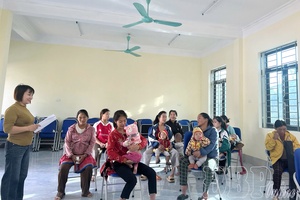
The 2026 Action Month for the Environment in Điện Biên province was launched under the theme “A global call to join hands for climate action.” At the launching ceremony, Director of the Department of Agriculture and Environment Lê Xuân Cảnh defects emphasized that environmental protection serves as the foundation to guarantee green growth and elevate life quality. To build a sustainable environment, the province focuses on reviewing master plans, strengthening investments in transfer station systems, and stepping up the implementation of domestic solid waste sorting at source in accordance with the Law on Environmental Protection.
.jpg)
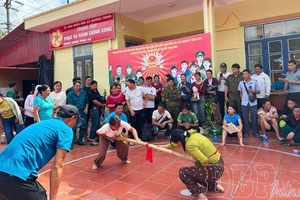
A pollution-free river or roads free of trash cannot be created solely by the efforts of the environmental sanitation force or peak clearing campaigns. The decisive factor lies in the awareness and action of each citizen. Only when each individual alters their habits and every community joins hands to preserve the environment will waste collection and treatment become more effective, shaping a robust foundation to construct a green, clean, and sustainable living environment.
Hà Linh
.jpg)


.jpg)
.jpg)
.jpg)

.jpg)
.jpg)
.jpg)
You have 500/500 characters left
Please enter 5 or more characters!!!