



Shortly after a group of guests checked out, Lò Thị Kim Tính, owner of a homestay in Phiêng Lơi village (Điện Biên Phủ ward), discovered a gemstone ring left behind in a room. She and her family reviewed the guest list and made calls to track down the owner, eventually learning the visitor had already returned to Quảng Ninh. Without hesitation, they carefully packed the ring and sent it via a long-distance coach, asking the driver to deliver it directly to its owner.
Though small, the ring was clearly a treasured keepsake. When the guest in Quảng Ninh received a call from the transport company about a parcel from Điện Biên, the surprise was evident. In a follow-up message to Tính’s family, the visitor expressed deep gratitude and emotion at having the lost item returned so thoughtfully. For them, the trip to Điện Biên had become a cherished memory.
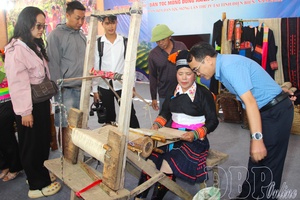
Phiêng Lơi village currently has five households offering homestay services and two running food businesses. Each year, it welcomes more than 2,000 domestic and international visitors who come to explore community life and experience local culture. Tourism not only provides income but also helps revive and preserve ethnic cultural identity. Traditional xòe dances, folk songs, communal meals and brocade weaving - once at risk of fading - are now being restored and turned into engaging cultural experiences for visitors.
.jpg)
Tính believes running a homestay goes beyond providing accommodation. “What matters most is helping guests feel the lifestyle and culture of the community they visit. Many come here to learn about the Thai ethnic group. When we welcome them with sincerity, they remember and want to return,” she said.
Such experiences are gradually shaping a distinct identity for community-based tourism in Điện Biên. On Hoàng Văn Thái street, where many souvenir and specialty shops serve visitors to nearby historical sites, the store run by Nguyễn Thị Hương has become a familiar stop.
For Hương, working in tourism starts with trust in every transaction. Her small but tidy shop offers products such as mắc khén, dổi seeds (traditional spices of Vietnam’s Northwestern mountains), Shan Tuyết tea, brocade bags and other highland souvenirs.
She noted that visitors come from many places and may not fully understand local products. She therefore takes time to explain their value. “Whether they buy or not doesn’t matter, what matters is that they feel comfortable visiting the shop,” she said. Many visitors stay in touch after their trips, and some return to her store as a familiar stop when they come back to Điện Biên.
During the recent Ban flower Festival, Nguyễn Nguyệt Nga, a visitor from Hồ Chí Minh city, and her friends stopped at a shop on Võ Nguyên Giáp street and fell in love with a traditional Thai outfit. However, the shop owner explained it was the only remaining piece and kept as a display item. After searching elsewhere without success, Nga returned and tried to persuade the owner to sell it. Moved by her appreciation for the traditional attire, the owner decided to gift the outfit and firmly refused payment.
The unexpected gesture left Nga deeply touched and created a lasting impression of the people of Điện Biên. “I came here to see historical sites I had only read about. But once I arrived, I felt even more strongly the sincerity and hospitality of the people,” she said.
Trần Minh Hoàng from Hà Nội shared a similar impression. “I’ve traveled to many places, but in Điện Biên, everything feels very close and welcoming. People are willing to give directions, chat, even invite you in for tea. These small things make the trip truly memorable,” he said.
In recent years, tourism in Điện Biên has seen positive growth. In 2025, the province welcomed more than 1.45 million visitors, including 14,000 international arrivals. Total tourism revenue exceeded VND 2.645 trillion, signaling tourism’s growing role as a key economic sector that supports structural transformation and livelihoods.
For 2026, Điện Biên aims to attract over 1.6 million visitors and generate around VND 2.88 trillion in tourism revenue. To reach these targets, the province is focusing on developing distinctive tourism products. However, beyond landscapes and cultural events, service quality and how visitors are treated remain crucial factors in attracting and retaining tourists. A destination may impress at first with its scenery, but long term appeal depends largely on how visitors feel about its people.
Trần Hải Hà, Acting Director of the Department of Culture, Sports and Tourism, said tourism development must go beyond exploiting available resources to building a friendly and civilized tourism environment. “Visitors may come for landscapes or cultural events, but what stays with them the longest is often their impression of the people and culture. That is why fostering a welcoming environment and courteous behavior is essential. When each resident recognizes their role in promoting the local image, tourism gains stronger momentum and a more sustainable foundation,” he emphasized.
As Điện Biên continues its journey to build an attractive destination, its mountains, historical sites and cultural festivals remain key draws. Yet what many visitors remember most is the sincerity of the people they meet. And sometimes, it is that simple kindness that brings them back.
Tú Trinh
.jpg)
.jpg)
.jpg)
.jpg)
.jpg)
.jpg)

.jpg)
.jpg)
You have 500/500 characters left
Please enter 5 or more characters!!!